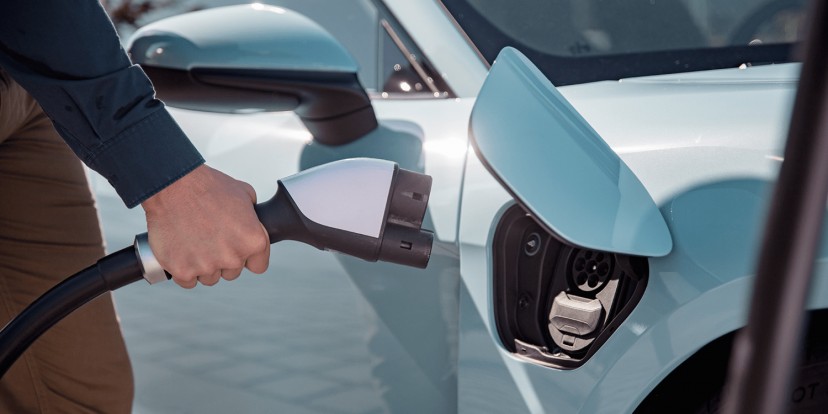
With peak power ratings such as 150 kW, 200 kW, and 250 kW dominating the DC charging conversation, it's essential to ask: Is the emphasis on maximum charging power for electric vehicles overstated? Given that the majority of charging sessions for electric cars occur at home, and that 95% of European drivers typically travel 50 km or less per day, the urgency for rapid charging diminishes.
The increased focus on DC charging is largely driven by manufacturers eager to showcase advancements in battery technology. Many consumers still draw comparisons between the charging power of electric vehicles (EVs) and the refueling times of internal combustion engine (ICE) vehicles.

While DC charging is crucial during long journeys, do vehicles capable of 200 kW, 250 kW, or even 300 kW really fulfill their promises? Let’s explore this further.
Peak Charging Power
Peak charging power is one critical dimension of EV performance. Recent advancements in 800V architecture have pushed the limits of DC charging, with models like the Lucid Air reaching 300 kW, and the Porsche Taycan and Audi E-tron GT achieving 270 kW.
Leading the 400V segment is Tesla, which offers 250 kW peak charging through its V3 superchargers. Conversely, vehicles with lower charging rates, such as the Nissan Leaf (50 kW) and the Skoda Citigo and VW e-up! (both at 40 kW), lag behind.
The following table summarizes peak charging rates and their associated expected range per minute based on the typical highway electricity consumption at 130 km/h when DC charging is most frequently utilized.
| Model | Peak Charging Power (kW) | Estimated Consumption at 130 km/h (kWh/100km) | Range/Minute of Charging at Peak Power (km) |
|---|---|---|---|
| Lucid Air | 300 | 21 | 23.8 |
| Porsche Taycan | 270 | 24 | 18.8 |
| Tesla Model S | 250 | 21 | 19.8 |
| 233 | 26 | 14.9 | |
| Mercedes EQS | 200 | 23 | 14.5 |
| Peugeot e-208 | 100 | 26 | 6.4 |
| Nissan Leaf e+ | 50 | 26 | 3.2 |
| VW e-up! | 40 | 23 | 2.9 |
The Charging Curve
While peak DC charging power illustrates technological advancement, what truly matters for everyday users is the average DC charging power when refilling from 10% to 80% capacity.
In theory, peak DC charging power should correlate with charging durations; however, this is often not the case. High-voltage batteries can only sustain peak power for limited periods and at specific charge levels.

Charging curves vary by vehicle and are primarily influenced by battery specifications and battery management systems (BMS). The reduction in charging power serves as a safety measure to prevent overheating, while high charge levels trigger cell balancing, further limiting charging power.
The table below highlights real-world data reflecting the expected range per minute when operating at the average power from 10-80%. The findings indicate that top-performing vehicles achieve a mean DC charging power of approximately 175-180 kW, despite having significantly higher peak capabilities. This mean power is derived from charging curve data provided by Fastned.
| Model | Mean Charging Power 0-80% (kW) | Estimated Consumption at 130 km/h (kWh/100km) | Range/Minute of Charging with Mean Power (km) |
|---|---|---|---|
| Lucid Air | 175 | 21 | 13.89 |
| Porsche Taycan | 147 | 24 | 10.21 |
| Tesla Model S | 180 | 21 | 14.29 |
| 175 | 26 | 11.22 | |
| Mercedes EQS | 180 | 23 | 13.04 |
| Peugeot e-208 | 65 | 26 | 4.17 |
| Nissan Leaf e+ | 43 | 26 | 2.76 |
| VW e-up! | 27 | 23 | 1.96 |
Conclusions
The analysis reveals that, regardless of maximum charging power, electric vehicles tend to plateau around a mean charging power of approximately 180 kW during typical DC charging sessions up to 80%. This phenomenon is substantiated by current technological limitations.
Most modern electric vehicles utilize lithium-ion NMC chemistry batteries, featuring minimal variations across models. This consistent mean charging power, independent of whether the system operates at 400V or 800V, suggests that current battery technologies limit performance. Future advancements, possibly in lithium-air or solid-state technologies, may pave the way for overcoming these boundaries.
 DC charging stations are the sign of the future