The automotive sector is increasingly betting on electric motors as the future of road transport. But there is still a fundamental choice in how to supply electricity to those motors: carry it in a battery pack or generate it onboard from hydrogen with a fuel cell. This article explains the fuel cell option, outlines how hydrogen is made and stored, and compares its real-world efficiency with battery-electric power.
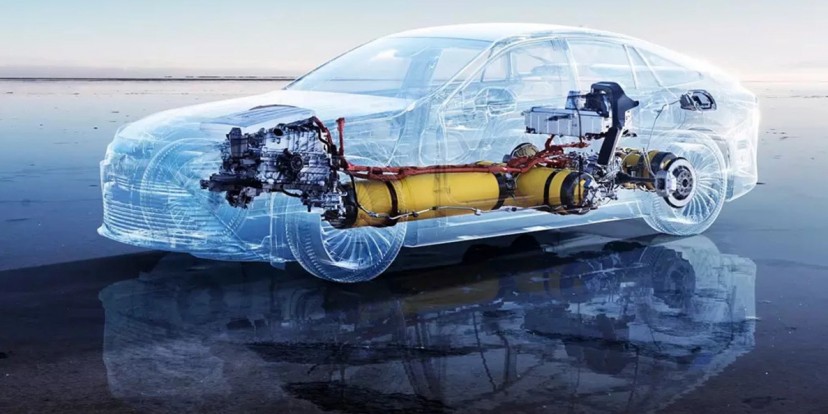
What is a fuel cell?
Fuel cells are not new. NASA employed them in the 1960s to generate electricity during the Gemini and Apollo missions. In cars, proton exchange membrane fuel cells, commonly called PEMFC, are the dominant type. A PEMFC has three key parts: an anode, a cathode, and a separator. Hydrogen enters at the anode and splits into protons and electrons. The protons travel through the separator, while the electrons follow an external circuit, creating electric current. At the cathode, oxygen from the air combines with those protons and electrons to form water, which leaves the vehicle as the main exhaust.
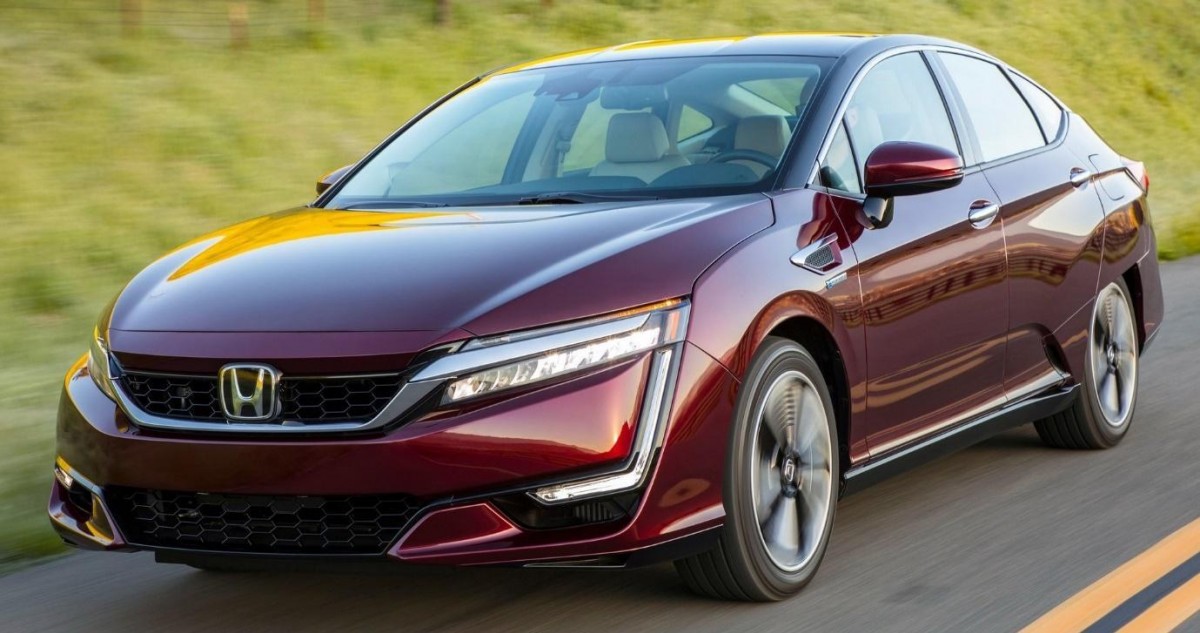
Honda Clarity Fuel Cell Vehicle
This onboard electricity generation avoids the heavy battery pack that a conventional electric vehicle must carry, but it comes with its own challenges in producing and storing hydrogen.
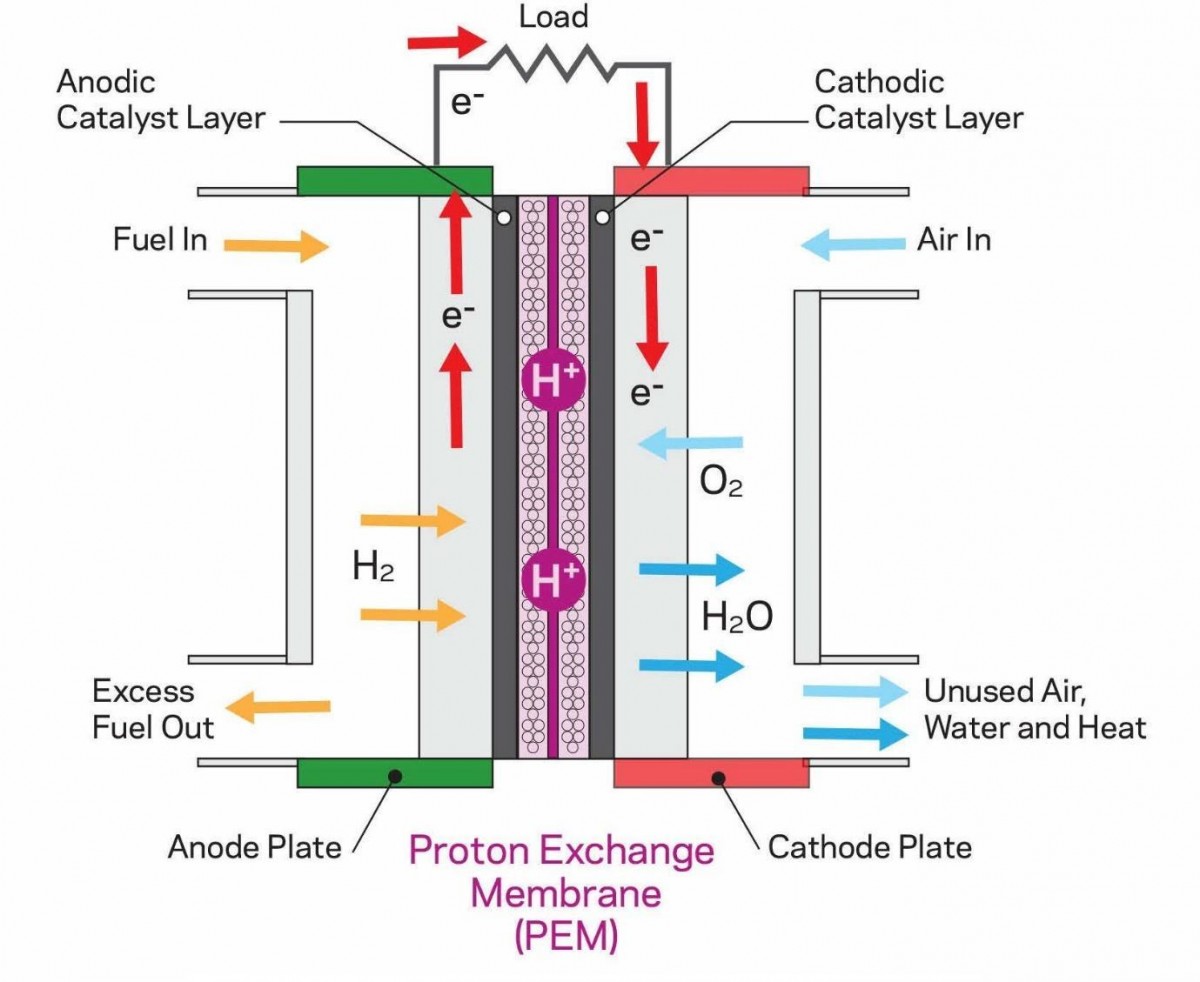
Nafion proton exchange membrane fuel cell
Hydrogen production
Hydrogen is the most abundant element in the universe, but it is rarely found in a usable free form on Earth. Today, hydrogen is mainly produced through several routes. Gray hydrogen comes from steam methane reforming of natural gas, a process that releases carbon dioxide. Blue hydrogen follows the same route but adds carbon capture and storage to prevent much of that CO2 from entering the atmosphere. Green hydrogen is made through electrolysis, using electricity to split water into hydrogen and oxygen. It is only truly sustainable if the electricity comes from renewable sources such as wind or solar. Turquoise hydrogen is an emerging method in which natural gas passes through molten metal, producing hydrogen and solid carbon rather than CO2. Among these, green hydrogen has the strongest long-term potential for environmentally friendly production.
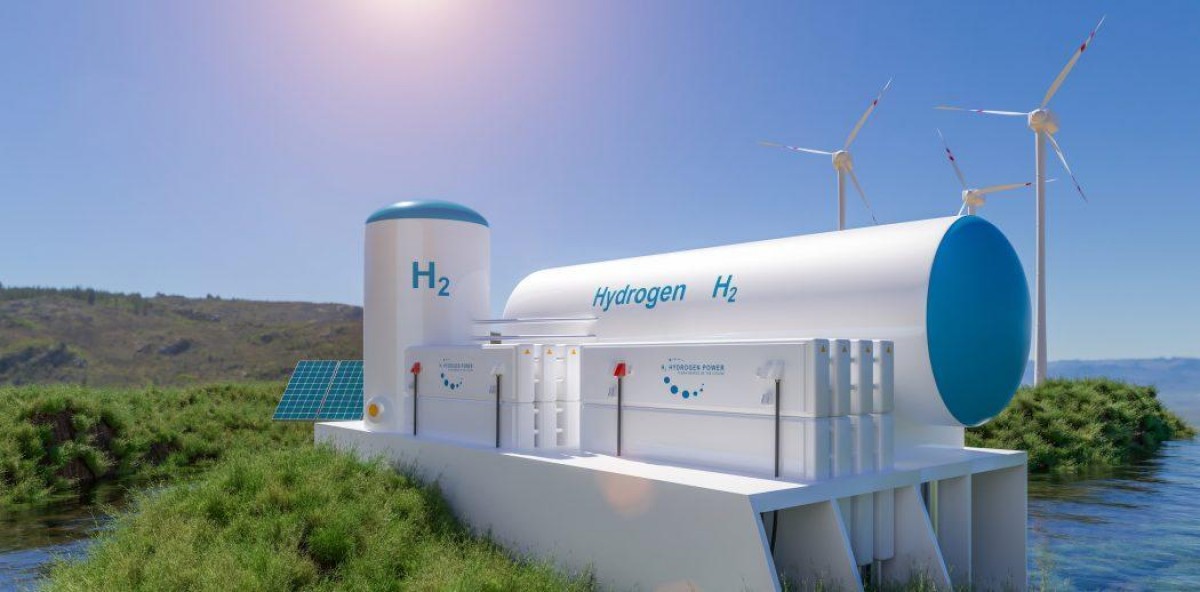
Hydrogen production through sustainable electrolysis
Hydrogen states
Because hydrogen is extremely light and diffuse, it must be compressed or liquefied for practical storage in a vehicle. Gaseous hydrogen is typically stored at around 700 bar, which requires very strong and expensive tanks. Liquid hydrogen must be chilled to roughly minus 253°C, just 20°C above absolute zero, to remain in liquid form. Both processes demand extra energy. However, the energy density is impressive: one kilogram of hydrogen carries about 33.3 kWh of energy, far exceeding the specific energy of even advanced lithium-ion batteries.
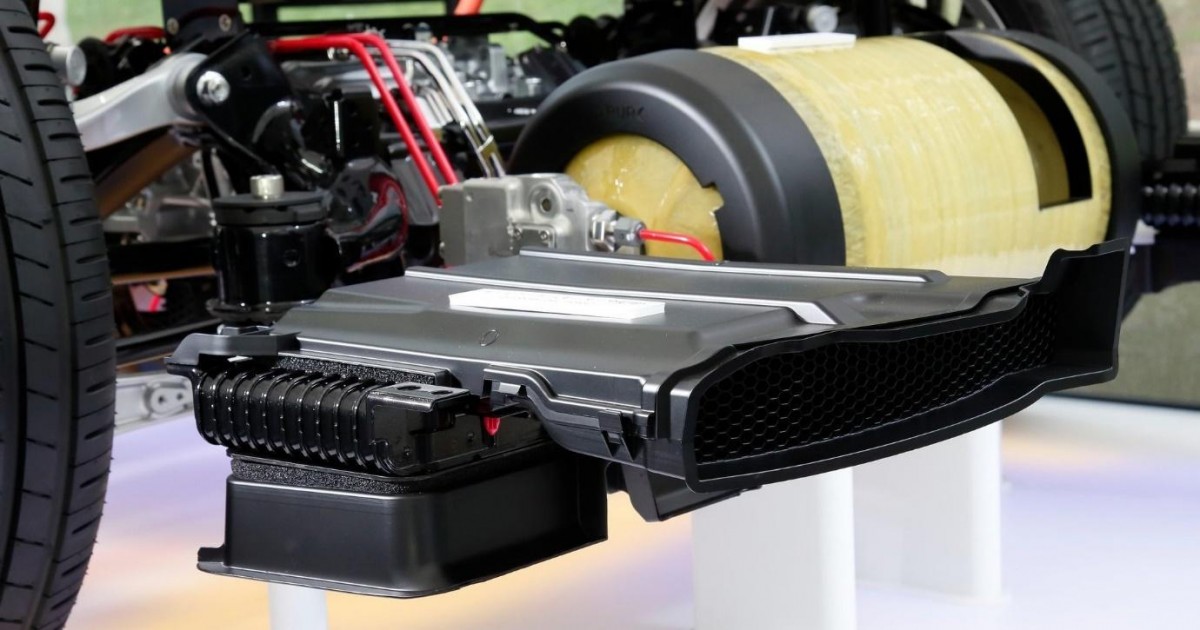
Toyota Mirai’s gaseous H2 tanks are made from polyamide and carbon fiber
Batteries vs Hydrogen
At first glance, that energy density makes hydrogen look very attractive. However, the overall efficiency from primary energy to wheel is much lower than for batteries. Hydrogen must be produced, compressed or liquefied, transported, and then converted back into electricity in the fuel cell, with losses at every stage. The table below compares a favorable hydrogen pathway with a battery-electric pathway.
| Efficiency comparison | Hydrogen | Battery pack |
|---|---|---|
| Electrolysis (%) | 75 | - |
| Hydrogen Compression (%) | 89 | - |
| Fuel/Grid transport (%) | 80 | 93 |
| Fuel cell (%) | 60 | 94 |
| Permanent magnet motor (%) | 94 | 94 |
| DC/AC conversion (%) | 93 | 93 |
| Charging (%) | - | 94 |
| Transmission (%) | 95 | 95 |
| Total efficiency (%) | 27 | 73 |
When the full energy chain is considered, hydrogen fuel cell vehicles in this scenario are only about 27% efficient, while battery-electric vehicles reach around 73%. That is roughly the same total efficiency as a conventional petrol engine, which weakens the environmental case for hydrogen in passenger cars. There is also a cost issue: for the same distance, refueling a hydrogen car can cost several times more than recharging an electric car at home. Hydrogen may still find a niche in heavy-duty transport, where its high energy density and faster refueling are valuable, but only if sustainable production methods become widely available.