SpaceX is making bold moves to expand its presence in the wireless industry, hinting at upcoming plans to combine satellite connectivity with traditional terrestrial networks. After investing heavily in acquiring AWS-4 spectrum from EchoStar for Mobile Satellite Services, the company also spent $2.6 billion on AWS-3 spectrum, which is designated for terrestrial use. This dual-spectrum strategy suggests that Elon Musk envisions Starlink providing wireless service not only from space but also through ground-based infrastructure like cell towers.
Starlink Could Break Boundaries with Hybrid Satellite and Ground Networks
The potential for Starlink to deliver cellular connectivity using traditional ground systems alongside its satellite service points toward a new hybrid Mobile Network Operator (MNO) model. EchoStar, which owns Boost Mobile—a wireless brand previously expected to compete with Sprint, T-Mobile, Verizon, and AT&T—ceased development of Boost’s standalone 5G network as part of its airwave sales. Boost now operates as a hybrid MNO relying on AT&T’s network through a wholesale arrangement, setting a precedent for how Starlink might position itself.
“Starlink Mobile” Trademark Filing Sparks Industry Buzz
SpaceX recently filed for trademark protection of the name “Starlink Mobile” with the US Patent and Trademark Office (USPTO) on October 16, 2025, signaling plans for a branded mobile service. The filing describes telecommunications and communication services, including video and data delivery to mobile devices, suggesting that Starlink Mobile could offer comprehensive mobile coverage. A notable advantage touted could be seamless international usage, allowing subscribers to avoid costly roaming charges when traveling worldwide by using Starlink’s satellite-enabled network.
SpaceX also trademarked the phrase “Powered by Starlink,” hinting that it may leverage its satellite technology as a unique selling point for its future mobile network services.
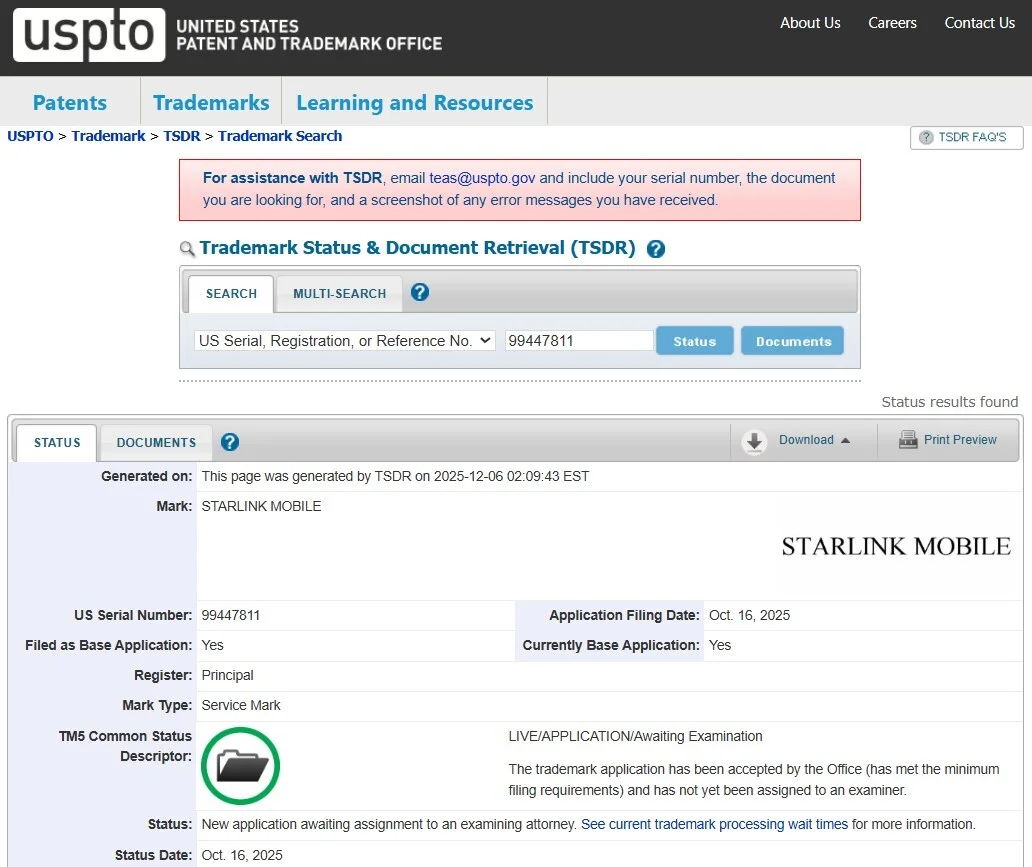
SpaceX’s USPTO trademark application for Starlink Mobile | Image credit: PCMag
Next Steps: Expansion Within Satellite and Terrestrial Domains
While speculation continues about whether the Starlink Mobile brand will launch a purely satellite-based service or include traditional cellular infrastructure, the expanded spectrum holdings give SpaceX the flexibility to enhance existing satellite connectivity. Current Starlink offerings provide low-speed internet access in rural and remote locations, supporting basic internet activities such as social media, Google Maps, and low-quality video calls and messaging. The new spectrum could enable higher capacity and more advanced features, potentially elevating Starlink’s performance to be competitive with 4G LTE connectivity offered by established carriers.
Community Perspective: Will Elon Musk Enter the Traditional Cell Service Market?
In a recent poll, a large majority (90.24%) of participants believe Musk is poised to capitalize on the lucrative wireless market by offering traditional cellular service in addition to satellite connectivity, while just 9.76% think he will avoid competing head-to-head with major network providers like T-Mobile, Verizon, and AT&T.
As SpaceX pioneers new pathways in connectivity, the fusion of satellite and ground-based wireless technologies through Starlink Mobile could redefine how users around the globe stay connected, particularly those in underserved or international locations.