Introduction
The European Union is edging closer to an official ban on Huawei and ZTE equipment within its telecom infrastructure, aiming to safeguard network security and reduce reliance on Chinese technology. However, this move has sparked intense reactions across the continent, highlighting a complex balance between security concerns, economic factors, and industry practicality.
Rising Tensions Within Europe

The European Commission is advancing toward a formal EU-wide prohibition targeting Huawei and ZTE telecom infrastructure equipment. This ban would not extend to consumer devices like smartphones. The initiative would transform previous EU guidance on “high-risk” suppliers into legally binding regulations for all 27 member states. Networks that fail to comply with the removal of Chinese equipment from their 5G and broadband infrastructure may face penalties.
Security vs. Practicality
EU officials defend the ban as a necessary step to protect critical telecom networks and decrease dependence on Chinese technologies, mirroring US actions instituted since 2019. Huawei, on the other hand, vehemently contests the decision, warning that dismantling its gear could result in increased costs for telcos and potentially disrupt the timely rollout of 5G services across Europe.
Pushback From Telecom Providers
Executives from major telecom companies such as T-Mobile’s parent company have voiced opposition to a full-scale removal of Huawei equipment. Their argument centers on the fact that certain non-core components like antennas do not introduce significant security risks since Chinese technology is already excluded from core network elements. Replacing these parts would lead to unnecessary expenditures without proportional security benefits.
The Underlying Economic Considerations
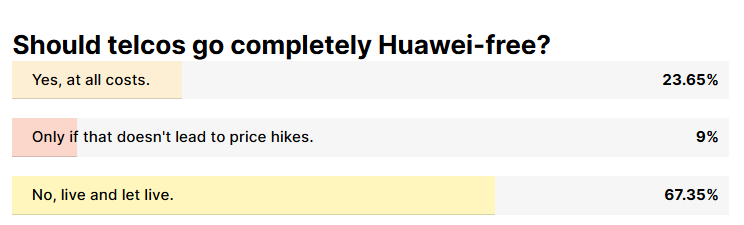
One reason many appear reluctant to fully exclude Huawei might stem from economic realities. Chinese technologies are often more affordable and accessible compared to Western alternatives, making them particularly attractive for telecom operators and consumers alike. Financial concerns and the cost implications of switching suppliers play a significant role in shaping the debate.
Public Sentiment on Privacy and Technology
Yes, I often do, but I won't ditch it. – 5.88%
I give it a thought every now and then. – 11.76%
I'm seriously considering it – if AI gets out of hand. – 2.94%
No, I don't care, I trust my government. – 2.94%
I don't trust any government, but I like smartphones. – 76.47%