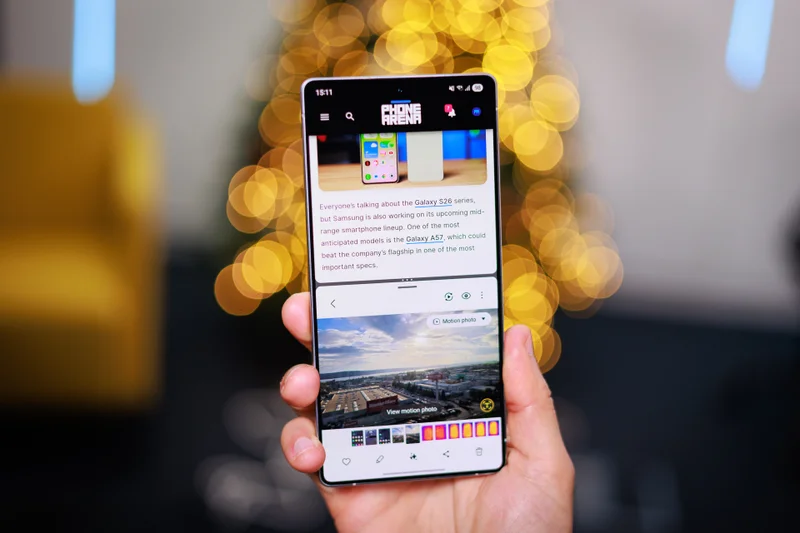
With the release of Android 16, Google introduced a clever new way to multitask on mobile devices: the 90:10 split-screen feature. This update is a notable improvement over previous multitasking options, allowing users to allocate a larger portion of the screen to one app while keeping another app accessible in a smaller portion. Despite the technical ingenuity, I find myself rarely using this feature in daily life. Here’s why.
Phones Remain Primarily Single-Task Devices
Even though smartphones today boast larger displays and powerful processors, they remain fundamentally designed for single-task use. The environments in which we use phones—on the go, in noisy or busy places—aren’t always conducive to focusing on multiple apps at once.
When I need to dive into serious work or meaningful multitasking, a laptop or desktop remains my preferred choice. These devices are built to support multiple applications simultaneously, unlike phones.
Narrow Real-World Use Cases
Manufacturers like Samsung and Google often showcase split-screen use cases like editing documents side-by-side, dragging text between apps, or researching while taking notes. While these examples sound impressive, how often do most people genuinely perform these tasks on their phones? And even if they do, it tends to be rare rather than routine.
Too Many Steps to Activate Split-Screen
- Open Recent Apps
- Tap the app icon
- Select “Split Screen”
- Choose the second app
- Adjust the split ratio
This sequence feels cumbersome, turning what should be a quick action into a multi-step chore. Many users simply forget the feature exists because it doesn’t naturally fit into the daily phone interaction flow.
Phones Just Aren't Built for Heavy Multitasking
Android 16’s 90:10 split-screen is a thoughtful and well-designed solution to a niche problem. It is technically impressive and highlights Android’s multitasking flexibility compared to iOS. However, multitasking itself isn’t a high-frequency need for most phone users, making this feature more of an interesting experiment than a staple function.
In summary, 90:10 split-screen multitasking is a fantastic technical achievement but remains underutilized due to user habits and the nature of smartphone use.