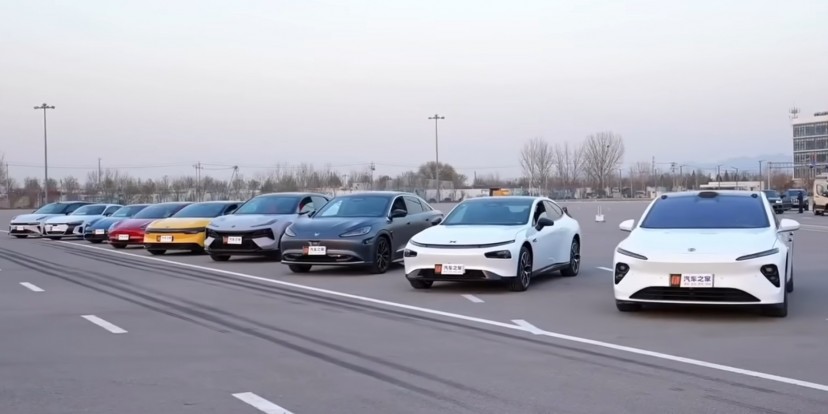
Electric vehicles (EVs) are celebrated for their efficiency, quiet operation, and advanced technology. Yet, their instant torque and immense power deliver an exhilarating driving experience. A Chinese testing team recently conducted a comprehensive comparison to determine the fastest mass-market EV, pitting the top 10 models head-to-head in acceleration and braking tests.
Although some participating cars are less familiar outside China, the lineup included the Neo ET7, XPeng P7 (known locally as P7i), Arcfox Alpha S, Tesla Model 3 Performance, Porsche Taycan Turbo, Audi RS e-tron GT, Tesla Model S Plaid, Zeekr 001 FR, Lotus Eletre R+, and the latest Zeekr 007. All vehicles were charged to 80%, and tire pressures were set according to manufacturer specifications prior to testing.
The ambient temperature was around 0°C, affecting all vehicles equally, ensuring a fair comparison. Each car was fitted with precise measurement equipment for accurate data collection.
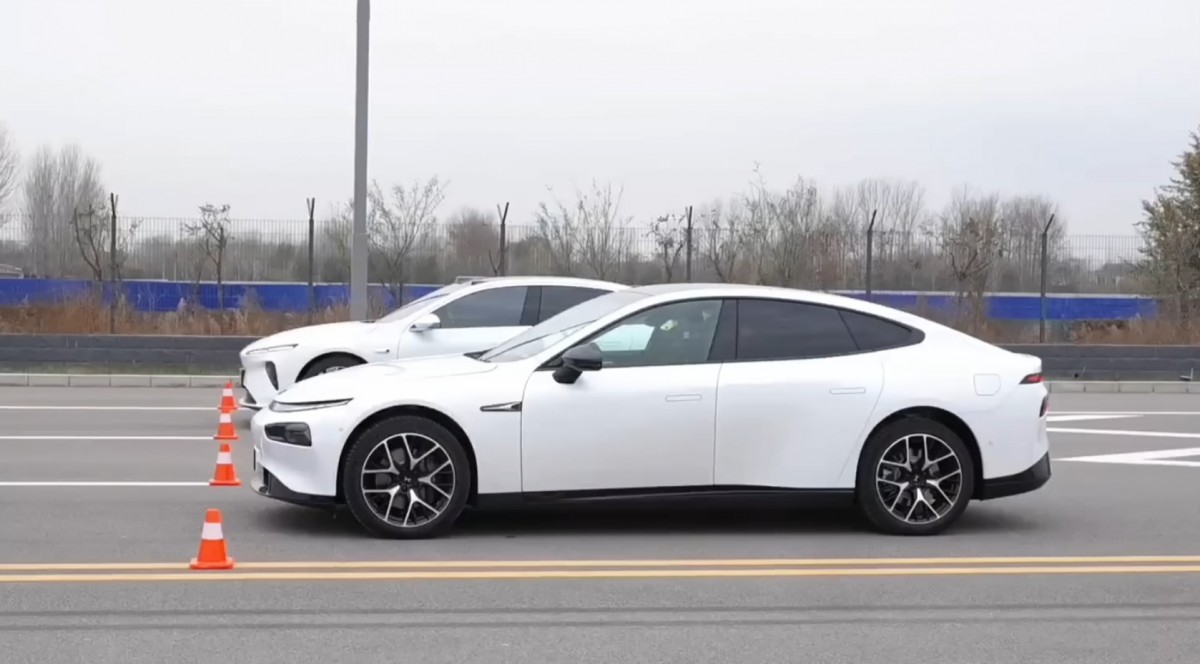
Here is an overview of the participants, their power outputs, and manufacturer-claimed 0–100 km/h acceleration times:
| Vehicle | Power | Claimed 0–100 km/h Time |
|---|---|---|
| Zeekr 001 FR | 930 kW | 2.02 s |
| Tesla Model S Plaid | 760 kW | 2.1 s |
| Zeekr 007 | 468 kW | 2.84 s |
| Lotus Eletre R+ | 675 kW | 2.95 s |
| Porsche Taycan Turbo | 500 kW | 3.2 s |
| Audi RS e-tron GT | 475 kW | 3.3 s |
| Tesla Model 3 Performance | 377 kW | 3.3 s |
| ArcFox Alfa S | 487 kW | 3.5 s |
| Nio ET7 | 480 kW | 3.8 s |
| XPeng P7 | 348 kW | 3.9 s |
During the actual tests, the Zeekr 001 FR significantly outpaced the Tesla Model S Plaid, despite neither vehicle achieving their advertised acceleration times. The Zeekr 007 secured third place, narrowly trailing the Model S, with the Lotus Eletre R+ close behind.
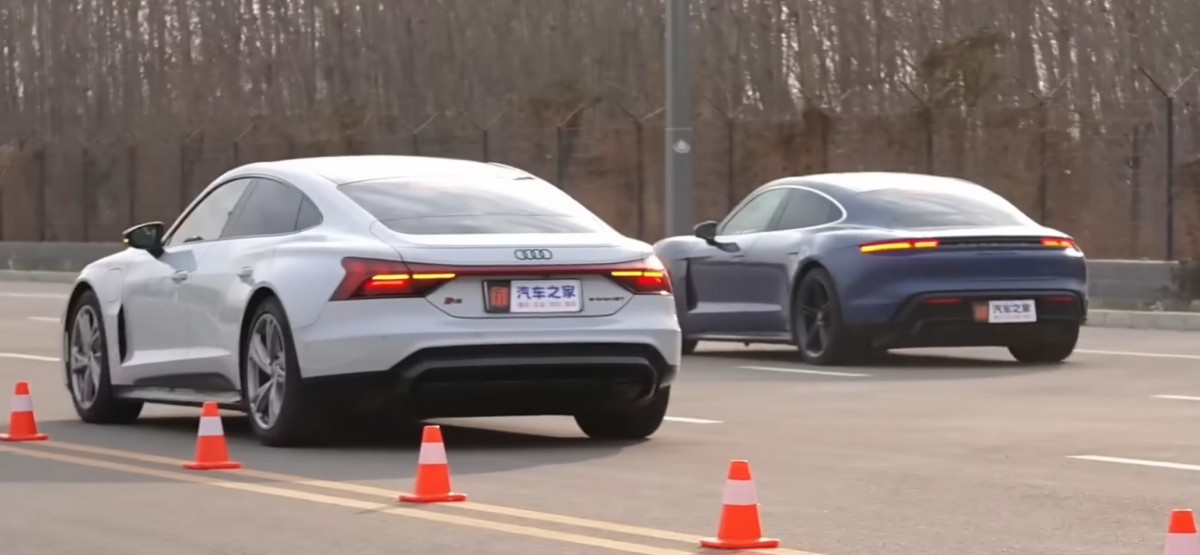
The Audi RS e-tron GT was one of the only cars to meet its claimed acceleration time, despite the cold conditions. This allowed it to outperform the Porsche Taycan Turbo, which theoretically has faster specs, and maintain a comfortable margin over the Tesla Model 3 Performance, which shares similar performance claims.
The Nio ET7 was the other model to fulfill its promised acceleration, finishing eighth ahead of the ArcFox Alfa S. It further expanded the gap to the tenth-placed XPeng P7 during on-road testing.
0–100 km/h Acceleration Test Results (seconds)
| Zeekr 001 FR | 2.63 |
| Tesla Model S Plaid | 3.01 |
| Zeekr 007 | 3.22 |
| Lotus Eletre R+ | 3.30 |
| Audi RS e-tron GT | 3.31 |
| Porsche Taycan Turbo | 3.56 |
| Tesla Model 3 Performance | 3.70 |
| Nio ET7 | 3.81 |
| ArcFox Alfa S | 3.91 |
| XPeng P7 | 4.43 |
In the braking tests, the Zeekr 001 FR dominated by stopping 2.5 meters shorter than the second-place Audi RS e-tron GT — a remarkable margin highlighting its exceptional sports car capabilities and unmatched braking performance in this elite group.
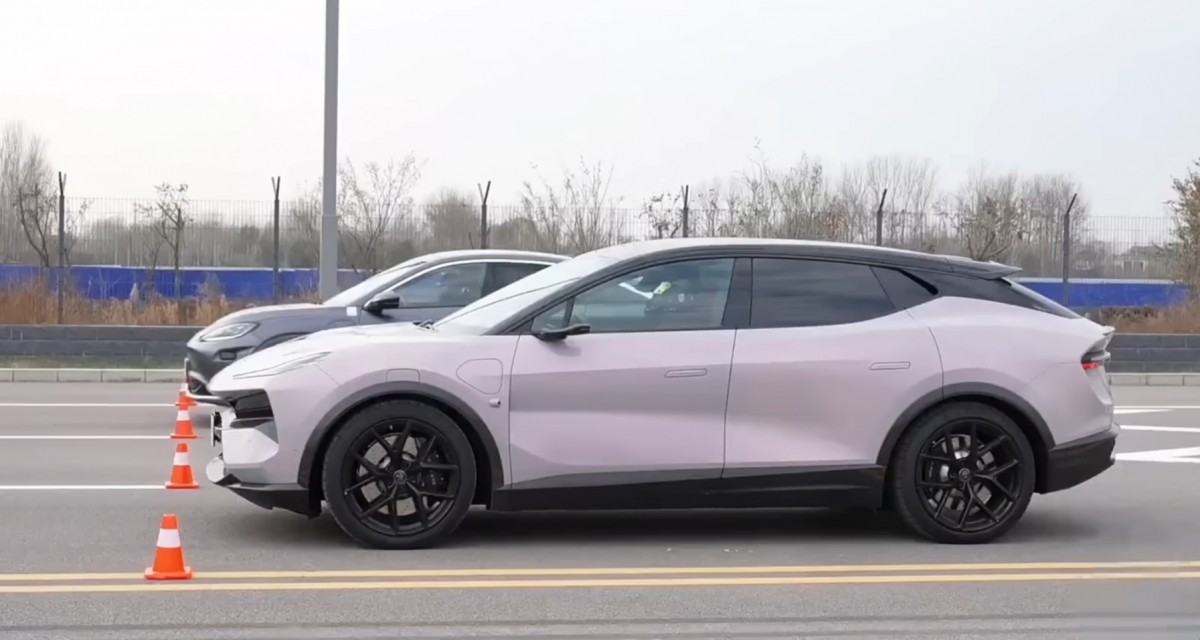
Following closely behind the Audi RS e-tron GT were the XPeng P7, Lotus Eletre R+, and Zeekr 007, forming a solid mid-tier group with respectable stopping distances given the vehicle weights and near-freezing temperatures, though not quite suitable for track conditions.
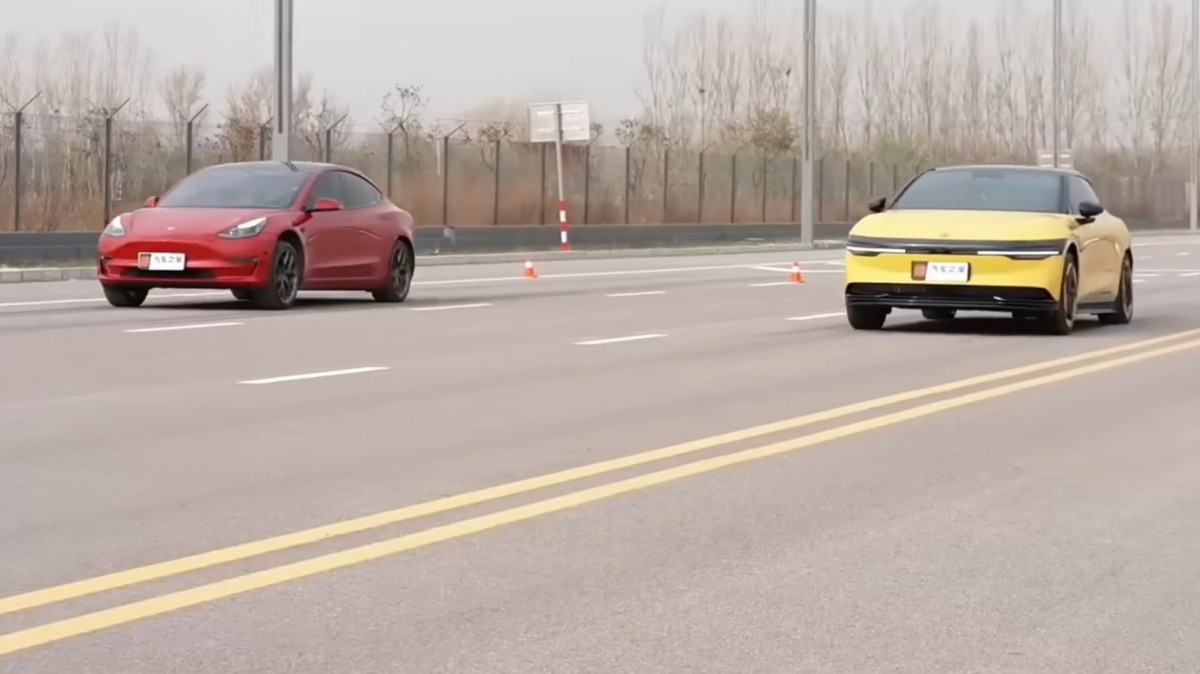
The Tesla Model 3 Performance, Porsche Taycan Turbo, and ArcFox Alfa S required over 39 meters to come to a halt, which is underwhelming considering their performance credentials.
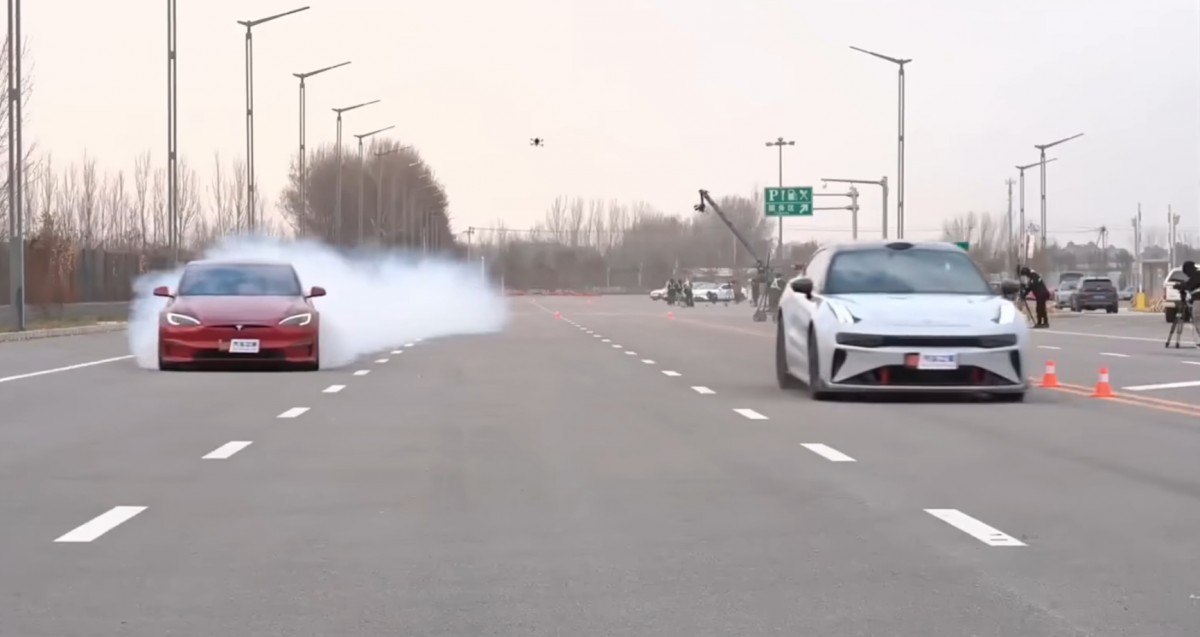
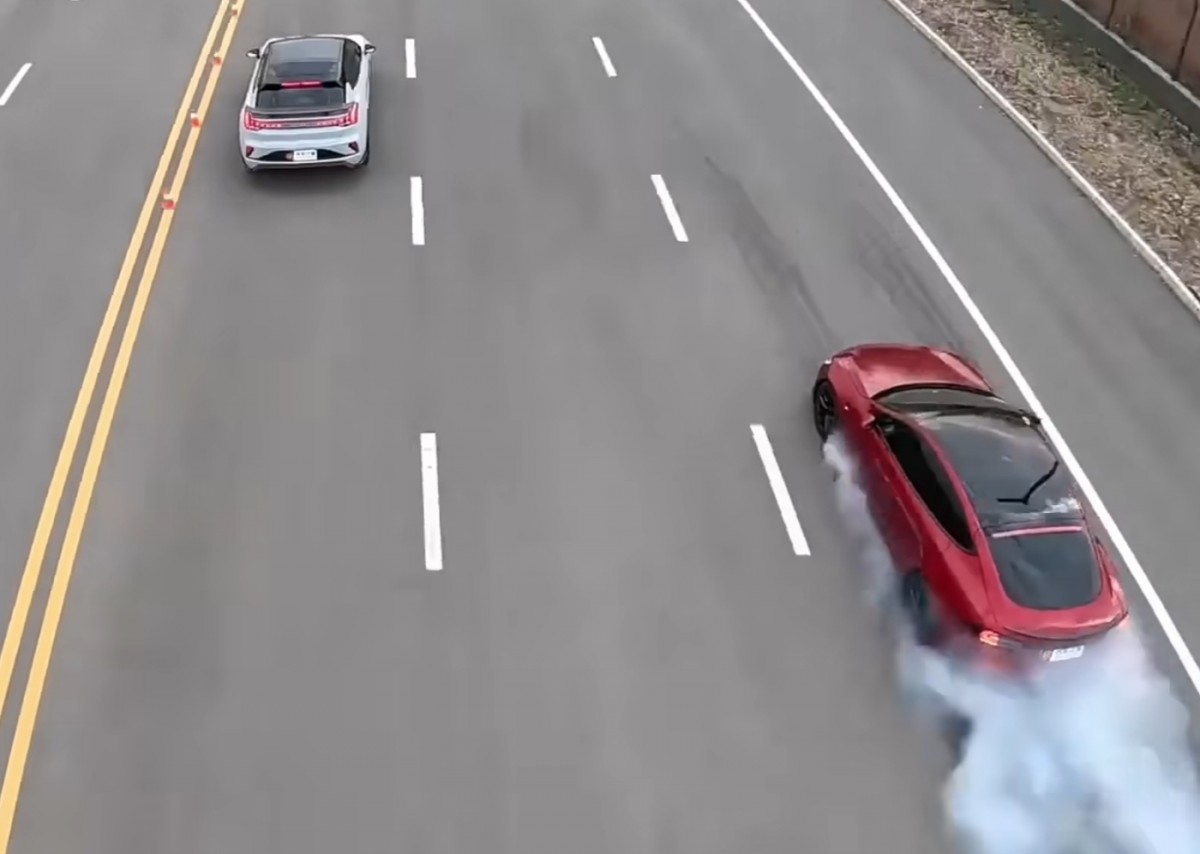
Unfortunately, the Tesla Model S Plaid faced a significant braking issue during testing. Equipped with a Track Package and ceramic brakes, the car experienced a malfunction where all four brakes locked simultaneously, forcing the driver off course. Thankfully, no accidents occurred, but the tires sustained serious damage.
100 km/h to 0 Braking Test Results (meters)
| Zeekr 001 FR | 33.73 |
| Audi RS e-tron GT | 36.21 |
| XPeng P7 | 36.33 |
| Lotus Eletre R+ | 36.39 |
| Zeekr 007 | 36.85 |
| Nio ET7 | 37.90 |
| Tesla Model 3 Performance | 39.18 |
| Porsche Taycan Turbo | 39.67 |
| ArcFox Alfa S | 39.67 |
| Tesla Model S Plaid | Failure |
Source: Chinese testing team