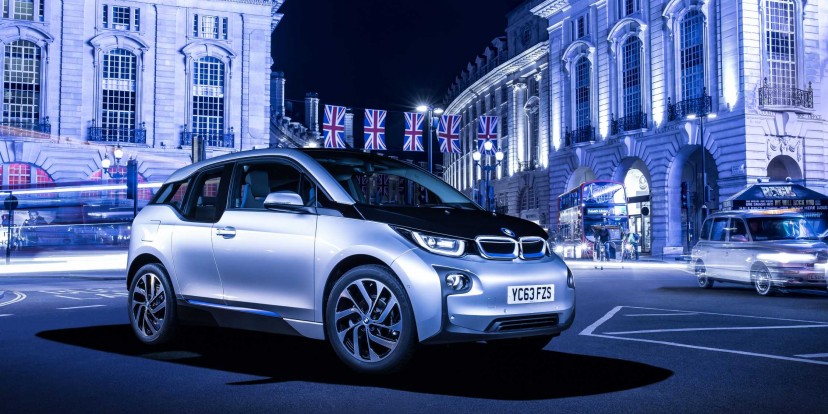
Introduced in late 2013, the BMW i3 was a compact, fully electric vehicle that came in two versions: all-electric and range extender. Nearly a decade later, its innovative technology still surpasses many mainstream electric cars in several key areas. This article explores why the BMW i3 was ahead of its time and assesses its value as a used car today.
 2013 BMW i3
Body and Chassis
Inspired by Colin Chapman’s philosophy of "adding lightness," BMW extensively used advanced materials such as carbon fiber reinforced plastic (CFRP), aluminum, and magnesium in the i3. These materials are rare and costly in mainstream vehicles, especially carbon fiber, which is difficult to mass-produce.
The i3 featured two main modules: the Life module and the Drive module. The Life module, essentially the passenger compartment, was crafted from CFRP, ensuring exceptional rigidity and safety—so much so that the B-pillar was eliminated. The Drive module, constructed from aluminum, housed the chassis and drivetrain components, while magnesium was used for the instrument panel’s support structure. These innovations paid off, resulting in a lightweight car weighing just 1,270 kg with the 18.8 kWh battery. The use of such materials set the i3 apart in mass production history.
 The carbon and aluminum construction of the BMW i3
Powertrain and High-Voltage System
Built on a dedicated electric vehicle platform, the i3 positioned its electric motor at the rear, powering the rear axle—a layout ideal for electric cars due to instant torque availability. It employed a 3-phase permanent magnet synchronous motor with up to 94% theoretical efficiency.
The i3 offered two power outputs: 170 hp for the base model and 184 hp for the later “S” version, delivering 250 Nm and 270 Nm of torque respectively. Its single-speed gearbox with a reduction ratio of 9.67:1 provided wheel torque of 2,418 Nm and 2,611 Nm for the S variant. These specifications enabled strong acceleration, with 0-100 km/h times of 7.2 seconds for the base model and 6.9 seconds for the S, while top speeds were electronically limited.
Battery options evolved over time, offering 60Ah, 94Ah, and 120Ah lithium-ion liquid-cooled packs, equating to net capacities of 18.8 kWh, 27.2 kWh, and 37.9 kWh, with ranges between 160 km and 285 km. To offset the limited range of the initial 18.8 kWh battery, BMW introduced a range extender version featuring a two-cylinder 647 cc motorcycle engine solely acting as an electric generator, extending range to roughly 300 km for the 60Ah model.
 The 120 Ah/37.9 kWh high voltage battery of the BMW i3
Suspension and Wheels
The i3 came equipped with fully independent suspension, featuring MacPherson struts with lower wishbones on the front axle and a sophisticated five-link setup at the rear—one of the best suspension designs available. These choices balanced excellent handling with ride comfort.
The car’s wheel and tire dimensions were unusual, with narrow 155/70 R19 tires chosen primarily to reduce aerodynamic drag and rolling resistance. The sportier i3 S used asymmetric tire sizes: 175/55 R20 at the front and 195/50 R20 at the rear. Braking included ventilated discs on all wheels, but most deceleration was managed by the electric motor’s regenerative braking system, which could capture up to 50 kW of energy.
Aerodynamically, the i3 performed well, with a drag coefficient (Cd) of 0.29 and a frontal area of 2.38 m², resulting in a projected area of 0.69 m².
 The advanced 5 link rear suspension of the BMW i3
Interior Design and Materials
The innovative design extended to the interior, where the absence of a B-pillar, rear-hinged rear doors, and flat floor created an unusually spacious cabin for a supermini. The layout featured a small instrument cluster paired with a larger infotainment screen, both free-standing—a design now widely adopted across the automotive industry.
BMW emphasized sustainability by incorporating recycled plastics, eucalyptus wood, olive leaf extract tanning, and kenaf fibers, reinforcing the car’s environmentally friendly ethos.
 BMW i3 interior
Is the BMW i3 Still Relevant?
Absolutely. The BMW i3 remains technologically advanced in materials and design. Its main limitation is the battery capacity, with a maximum of 37.9 kWh, which is modest by current standards. While adequate for city driving and short excursions, it may restrict longer journeys. Despite this, the i3 is a compelling choice for those seeking an urban-focused electric vehicle with occasional countryside trips.
 BMW i3S
Used prices have risen notably: CarGurus lists an average price of $26,178, reflecting a 33.9% increase in the last year, with 446 units available ranging from $13,990 to $47,500. On the European market, mobile.de shows 837 BMW i3 models for sale, priced between €14,400 for a 2016 model with 68,000 km and €47,900 for a 2021 i3S with just 1,300 km. The UK market exhibits slightly higher starting prices, with Auto Trader listing 177 cars between £21,795 and £40,900.