T-Mobile customers will no longer be able to contact the carrier via Apple Messages after December 31. Instead, the company is directing users to its dedicated T-Life app for all customer service needs, a shift spotted by a vigilant customer and confirmed by recent updates.
Transition to the T-Life App
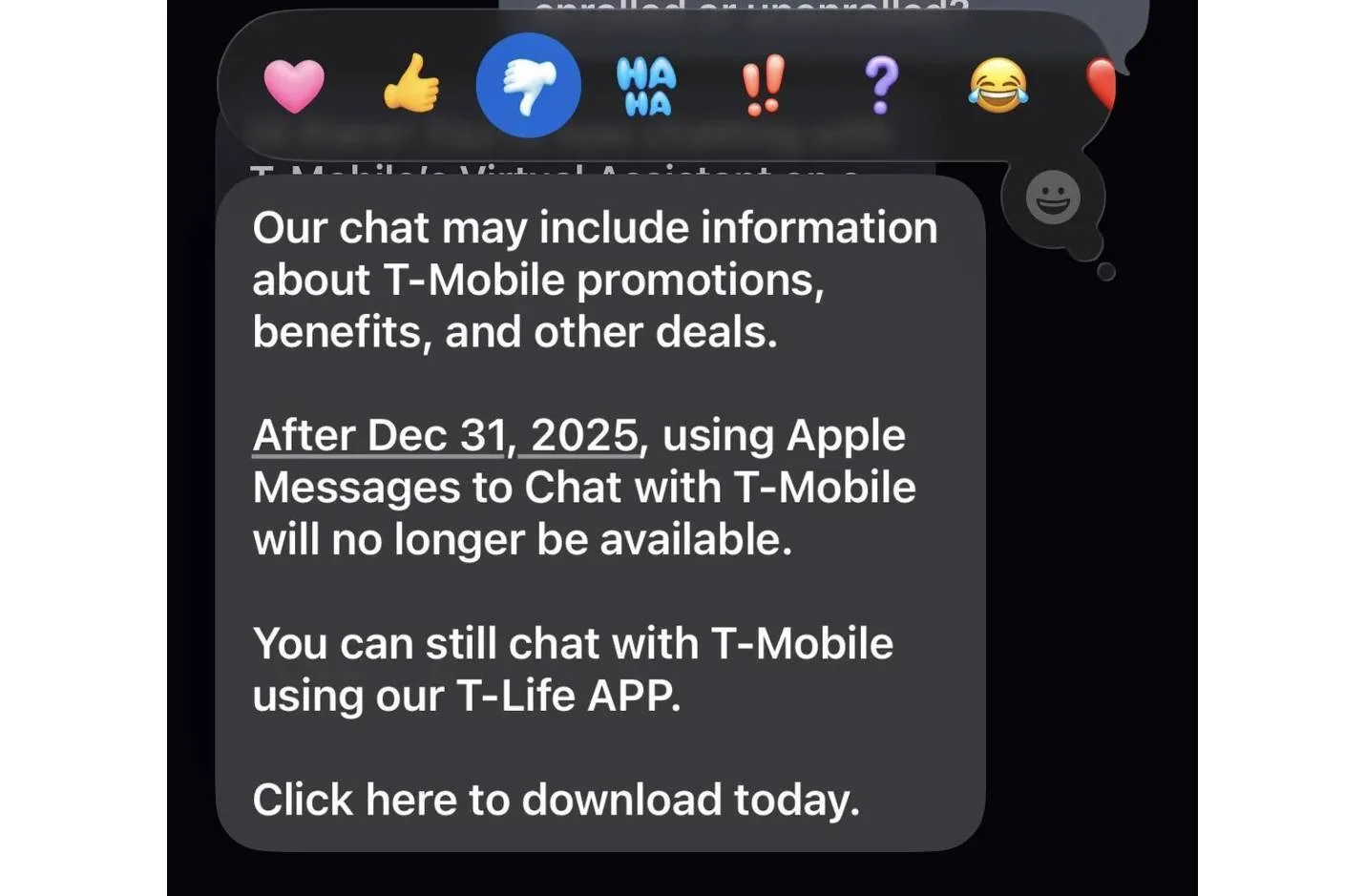
Until now, T-Mobile customers have been able to manage their accounts simply by texting through Apple Messages, performing actions like plan adjustments, address updates, device purchases, and inquiries. This familiar and convenient communication method will be discontinued, requiring customers to use the T-Life app to interact with T-Mobile moving forward.
Will T-Force Support Be Affected?
The appeal of Apple Messages lies in its ease of use and the assurance customers receive when chatting directly with verified T-Mobile representatives, rather than automated systems. However, as T-Mobile continues to consolidate its functionalities within the T-Life app, this may signal broader changes, including the potential phase-out of T-Force, the well-regarded social media support team that serves customers on platforms such as Facebook, Instagram, and X.
T-Force has earned a strong reputation for its fast and helpful responses, but with T-Mobile’s announcement of an always-on AI assistant within the T-Life app, the company appears to be leaning further into digital customer service. While the AI companion is designed to efficiently support users, customers may worry about what happens if the system fails or cannot provide the needed assistance.
Customer Poll: Is This a Letdown?
Is This a Step Backward?
T-Mobile initially introduced Apple Business Chat in 2018, hailing it as a “game changer” designed to meet customers on familiar communication platforms. From that perspective, removing Apple Messages support complicates what was once a simple and direct way to get customer help.
However, since T-Life is already a required app for many T-Mobile subscribers, the inconvenience might be limited. The bigger concern is that this shift may reflect a wider strategy geared towards minimizing live human interaction in favor of automated and streamlined customer service, aiming for greater operational efficiency.