As the U.S. 5G landscape continues to evolve, the Federal Communications Commission (FCC) is preparing for its first new auction of C-band spectrum since 2021. This upcoming event is a pivotal moment for the major wireless carriers—T-Mobile, Verizon, and AT&T—all competing to expand their mid-band spectrum holdings and solidify their 5G networks nationwide.
T-Mobile’s Mid-Band Strategy Disrupts the 5G Race
While Verizon and AT&T initially invested heavily in millimeter wave (mmWave) technology—which delivers ultra-fast speeds but has a limited range—T-Mobile took a different approach by focusing on the 2.5GHz mid-band spectrum. This strategy was fueled by its acquisition of Sprint, a $26 billion deal largely motivated by the desire to capture mid-band spectrum that offers an ideal balance of coverage and speed. Mid-band frequencies travel farther than mmWave but offer faster data speeds than low-band, effectively making them the "Goldilocks" zone of wireless spectrum.
The 2021 C-Band Auction Set the Stage
AT&T and Verizon soon realized their mmWave focus left them at a disadvantage for nationwide 5G coverage. To catch up, both carriers invested heavily in the FCC’s C-band auction held in February 2021, which generated over $81 billion in winning bids. Verizon spent more than $45 billion acquiring 3,500 licenses, AT&T over $23 billion for 1,600 licenses, and T-Mobile around $9 billion for 162 licenses. The C-band, covering frequencies from 3.7 to 3.98 GHz, is a crucial range for mid-band 5G rollout.
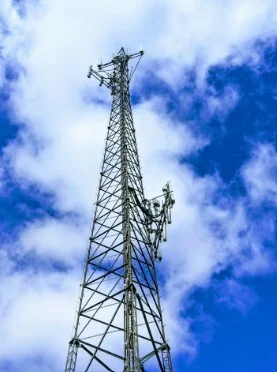
Cell tower currently deployed by Verizon. | Image credit: Verizon
FAA and Carriers Reach Compromise on C-Band Near Airports
Initially, Verizon and AT&T were restricted from using some C-band spectrum close to airports due to concerns about interference with airplane radio altimeters. However, in 2023, the Federal Aviation Administration (FAA) and the wireless carriers reached a compromise, allowing both industries to use the C-band spectrum while safely avoiding interference issues.
The Upcoming C-Band Auction and Its Implications
Following a recently passed FCC Notice of Proposed Rulemaking (NPRM), the agency is now soliciting public comments ahead of the auction of an additional 100 to 180 MHz of upper C-band spectrum. Congress has mandated this auction occur by July 4, 2027. The new rules aim to ensure 5G and future 6G signals can coexist alongside aviation instruments safely.
Verizon and AT&T are widely expected to be the largest bidders once again, aiming to augment their mid-band holdings for improved nationwide coverage. Although T-Mobile continues to strengthen its 2.5GHz spectrum portfolio, it is likely to participate and acquire some additional C-band licenses.
SpaceX’s Spectrum Purchase Eases Pressure on Auction Demand
Elon Musk’s SpaceX/Starlink satellite internet ventures have been a driving force behind pressure on the FCC to release more mid-band spectrum. However, SpaceX recently agreed to purchase 2 GHz and AWS-3 spectrum from EchoStar in a $17 billion transaction, lessening the company’s reliance on the upcoming C-band auction. Despite this, SpaceX/Starlink could still play a role in the bidding process.
From the scrapbook: Verizon and AT&T winning C-band licenses during the FCC auction in February 2021. | Image credit: PhoneArena
Are you satisfied with your carrier’s current coverage?
Poll results so far:
Yes, I have no complaints: 56.2%
No, my wireless provider has too many dead zones: 43.8%
Votes: 137