With each new smartphone generation, display technology continues to evolve, offering brighter panels and improved visibility even under challenging lighting conditions. The latest flagship models like the Samsung Galaxy S24 Ultra and Galaxy S25 Ultra come equipped with advanced Corning Gorilla Armor glass combined with DX anti-reflective coatings that help reduce glare significantly. Meanwhile, Apple has introduced a comparable but somewhat less effective anti-reflective technology in the iPhone 17 Pro Max, and the OnePlus 15 surprises with industry-leading brightness levels. In this article, we dive deep into how brightness and anti-reflection treatments affect real-world screen visibility, comparing these three flagship smartphones.
Brightness vs. Reflection Control: What the Numbers Say
One of the critical factors affecting screen visibility outdoors or under bright lights is a display’s peak brightness and its ability to control reflections. Below is a summary of key screen measurements from lab testing:
| Model | Max Brightness (20% APL) Higher is better |
Max Brightness (100% APL) Higher is better |
Min Brightness Lower is better |
Color Temperature (K) | Gamma | Delta E RGBCMY Lower is better |
Delta E Grayscale Lower is better |
|---|---|---|---|---|---|---|---|
| OnePlus 15 | 3472 (Excellent) | 1119 (Good) | 1.8 (Good) | 7237 | 2.25 | 1.73 (Excellent) | 3.89 (Good) |
| Apple iPhone 17 Pro Max | 2689 (Excellent) | 1098 (Good) | 0.9 (Excellent) | 6801 | 2.21 | 2.01 (Good) | 5.61 (Average) |
| Samsung Galaxy S25 Ultra | 2373 (Excellent) | 1284 (Excellent) | 0.8 (Excellent) | 6515 | 1.98 | 2.84 (Good) | 5.56 (Average) |
Understanding APL and Its Impact on Brightness
APL stands for Average Picture Level and represents the average brightness of the content displayed on the screen. Testing at 20% APL means the screen is showing mostly darker content, allowing the panel to achieve higher peak brightness. At 100% APL, the screen is fully bright, showing a white image, which is typically more challenging for the display to maintain peak brightness.
The OnePlus 15 boasts the brightest display in 20% APL tests, shining nearly 30% brighter than the iPhone 17 Pro Max and almost 50% brighter than the Galaxy S25 Ultra. However, brightness alone doesn’t guarantee visibility in direct sunlight.
Real-World Reflection and Visibility Comparison
While the OnePlus 15 excels in pure brightness, its screen reflects a noticeable amount of ambient light in certain viewing angles, which can reduce practical visibility. On the other hand, the Galaxy S25 Ultra, with its advanced DX anti-reflective coating, almost completely eliminates reflections, offering superior clarity under strong lighting conditions. The iPhone 17 Pro Max falls in between, performing admirably with less reflection than the OnePlus but more than the Galaxy.
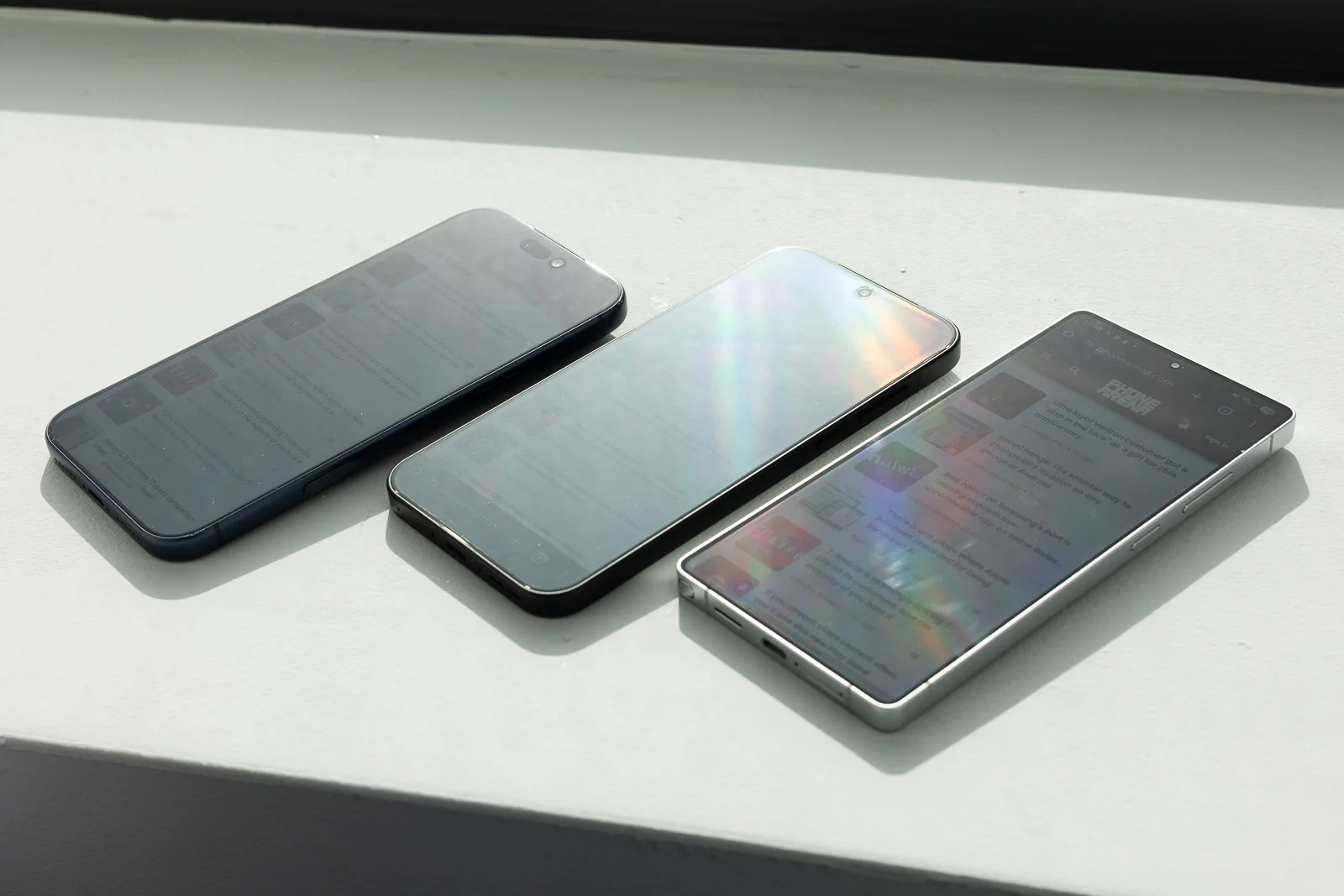
From right to left: iPhone 17 Pro Max, OnePlus 15 (middle), Galaxy S25 Ultra. Image credit: PhoneArena
Why Anti-Reflection Matters
Anti-reflective coatings significantly improve screen visibility by reducing glare and reflections, especially outdoors or under bright lights. The Galaxy S25 Ultra’s coating effectively eliminates distracting reflections even at high brightness. However, it’s important to note that anti-reflective coatings can degrade over time, as some Galaxy S24 Ultra users have reported loss of these properties after a year of device use.
The Balance Between Brightness and Anti-Reflection
While the OnePlus 15 currently leads in raw brightness, the enhanced anti-reflective coatings of the Galaxy S25 Ultra provide better interaction with ambient light, ensuring more consistent readability in everyday situations. The iPhone 17 Pro Max offers a middle ground with solid brightness coupled with an effective, though not industry-leading, anti-reflective layer.
Color and Grayscale Accuracy
Beyond brightness and reflections, display accuracy is key to a quality viewing experience. Using Portrait Displays’ CalMAN calibration software, the color gamut, color accuracy, and grayscale accuracy were tested on all three devices:
- Color gamut charts show how much of the sRGB color space each phone covers and how well colors match the targets.
- Color accuracy charts compare measured colors (actual output) to reference target colors, where closer alignment indicates better accuracy.
- Grayscale accuracy charts evaluate white balance consistency across various grey shades from dark to bright.

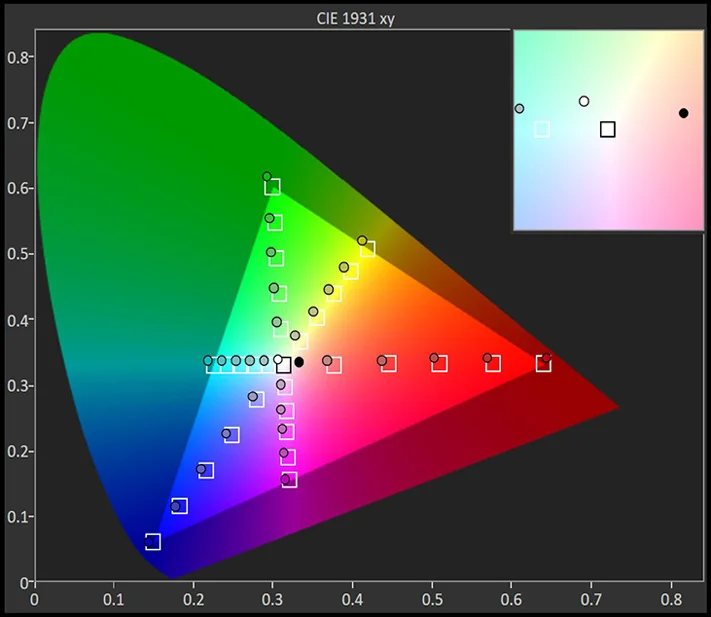
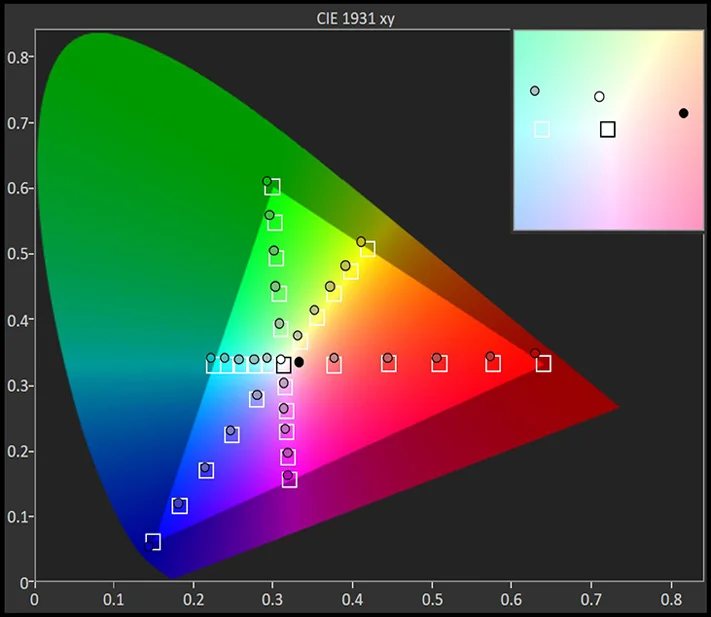
Each device offers strong color reproduction and reasonable calibration accuracy, with minor differences that may only be noticeable in color-critical use cases.
Conclusion
When considering phone screen visibility under bright conditions, both brightness and anti-reflective coatings play crucial roles. The OnePlus 15 leads in sheer brightness, but its lack of advanced anti-reflection results in visible reflections in challenging lighting. The Samsung Galaxy S25 Ultra, while not the brightest, provides the best overall readability thanks to its effective anti-reflective coating, making it ideal for outdoor use. The iPhone 17 Pro Max strikes a balance between these two, with good brightness and reflection control.