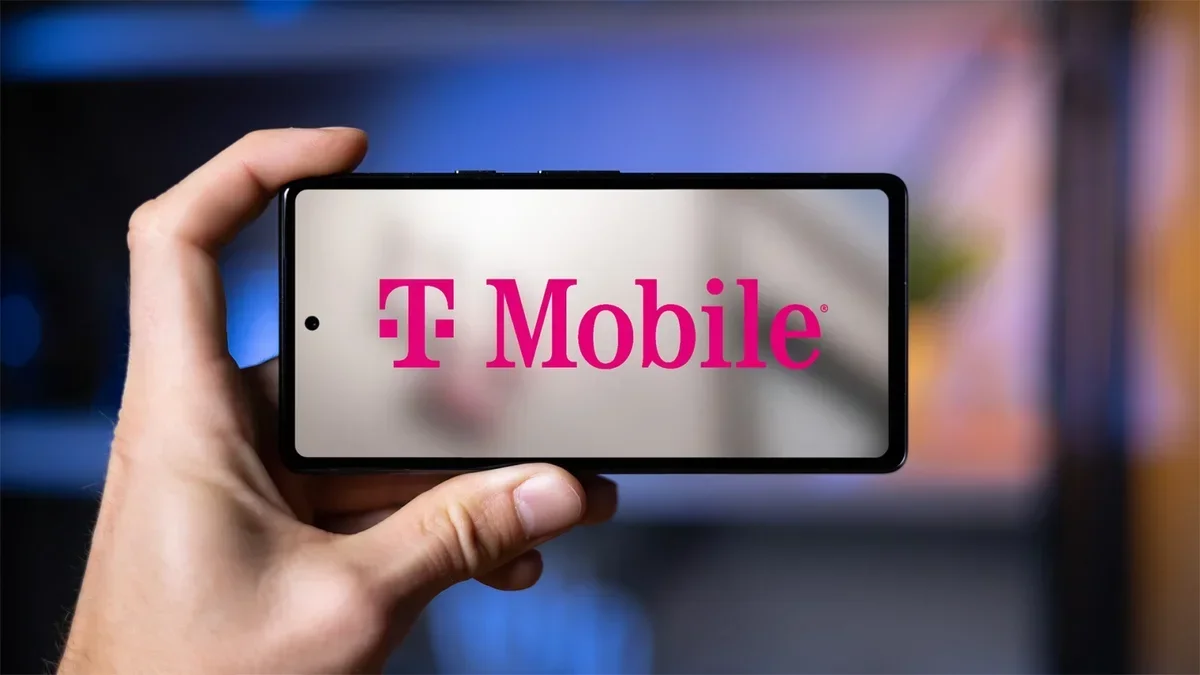
T-Mobile's Fixed Wireless Access (FWA) service, once primarily associated with rural areas, is now rapidly gaining traction in suburban and urban markets, according to Fierce Wireless. The company is seeing 65% of its 5G internet activations come from these more densely populated regions, highlighting the growing demand for high-speed 5G internet everywhere.
Demand for 5G Internet is Universal
Allan Samson, Chief Broadband Officer at T-Mobile, confirmed that 5G internet is no longer just a rural solution heading toward remote areas. It is an evolving technology that’s being embraced by customers across the country. Thanks to T-Mobile’s move to standalone (SA) 5G technology for all FWA customers, average download speeds now reach 239 Mbps with latency reduced to just 34 milliseconds. The company continues to innovate and sees considerable room for future growth in this sector.
“From a technology perspective, this so-called cell phone quality internet has not only made a lot of progress but has so much more room to run in terms of the innovation.”

Subscribe to receive the latest updates from T-Mobile.
In addition to expanding its wireless internet reach, T-Mobile is also growing its fiber-optic footprint — but rather than building wireline networks internally, the company is pursuing acquisitions. Samson noted that T-Mobile doesn’t excel at constructing wireline infrastructure and has decided to focus on acquiring fiber providers instead. The goal is to pass more than 3 million homes and gain between 900,000 to 1 million fiber customers by the end of 2025.
T-Mobile aims to enhance the fiber internet value proposition by improving pricing and bundling fiber and wireless services—known as convergence—a common strategy among leading telecom firms. However, the company plans to differentiate itself by avoiding common industry practices such as deeply discounted introductory rates that spike later or charging extra for Wi-Fi routers, which Samson criticized.
“Our approach is real simple. We don't build wireline networks; you've got to know what you’re not good at.”
T-Mobile's 5G Standalone Advantage
While T-Mobile has long offered 5G standalone (SA) technology to mobile customers, internet users initially accessed 5G through a non-standalone network. That changed in March 2025, when the company launched a 5G SA gateway for FWA customers, elevating service quality. Business clients have also benefited from newer 5G Advanced-based offerings that provide better performance.
Competitors like AT&T and Verizon are beginning to roll out 5G SA for their mobile and potentially FWA customers. Verizon's recent acquisition of Starry Internet aims to strengthen its urban FWA presence, and AT&T is leveraging new spectrum to boost speeds. T-Mobile's success with FWA underscores that 5G fixed wireless internet is becoming a preferred choice across diverse communities, not just a fallback in underserved areas.
Unusually humble for a company that often takes bold risks, T-Mobile openly acknowledges its limitations and chooses acquisition over building wireline from scratch—a move that sets it apart in the competitive fiber market.
Customer Overlap and Market Strategy
Significantly, 70% of T-Mobile’s FWA subscribers are also mobile customers, emphasizing the synergy between its wireless and internet services.