In January 2024, Apple disabled the blood oxygen (pulse oximeter) feature on its latest Apple Watch models—including the Series 9, Ultra 2, and subsequently the Series 10 and Series 11—due to a patent infringement claim made by medical technology company Masimo. The U.S. International Trade Commission (ITC) sided with Masimo, issuing an import ban that prevented Apple Watch units with the built-in feature from being shipped to the United States.
Apple’s Workaround and ITC Review
Faced with the ban, Apple developed a workaround included in watchOS 11.6.1 and iOS 18.6.1. This updated solution shifts the processing and analysis of blood oxygen data from the watch itself to a paired iPhone, displaying results exclusively in the Health app under the Respiratory section. Despite this redesign, the ITC has initiated new proceedings to determine if Apple’s revised technology still infringes Masimo’s patents, highlighting that the redesigned feature was not part of the original investigation.
Legal Battle and Industry Implications
Apple has declined to license Masimo’s technology and opted to disable the feature rather than pay for a license, asserting that Masimo’s domestic product—the Masimo W1 watch—has seen limited sales and does not justify the exclusion. Apple’s latest court filings accuse Masimo of attempting to exceed the ITC’s authority to block Americans from accessing the redesigned blood oxygen feature.
User Opinion Poll
Current poll results show 100% favor licensing the technology, based on 27 votes.
Understanding the Blood Oxygen Feature
The pulse oximeter on the Apple Watch measures the oxygen saturation level in blood, specifically how much oxygen red blood cells carry from the lungs throughout the body. Normal values range from 95% to 100%, while readings below 90% typically indicate a possible medical concern. The feature gained increased attention during the COVID-19 pandemic, as dangerously low levels could signal severe cases requiring immediate medical attention.
View the official ITC order here.
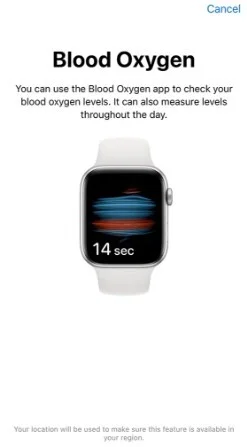
Apple’s redesigned pulse oximeter feature now relies on paired iPhone for analysis. | Image credit: Apple