Apple’s iOS 17 brought an innovative feature called 'NameDrop’, enabling iPhone users to effortlessly share their personalized Contact Posters and phone numbers simply by bringing two devices close together. This seamless exchange works not only between iPhones but also between an iPhone and an Apple Watch, streamlining the process of exchanging contact information.
NameDrop: Simplifying Contact Sharing for iPhone Users
NameDrop is designed as a major convenience for iPhone users meeting someone new. Initiated within AirDrop range, it allows the contact details exchange to complete securely over the internet if the devices move out of range. Users can choose whether to share their Contact Posters or just receive someone else’s contact information without reciprocating.
The technology behind NameDrop utilizes Near Field Communication (NFC) to trigger the initial handshake between devices, signaling the intent to share contacts. After this, AirDrop leverages Bluetooth for device discovery and Wi-Fi for transferring the contact data, effectively combining NFC and AirDrop to complete the exchange.
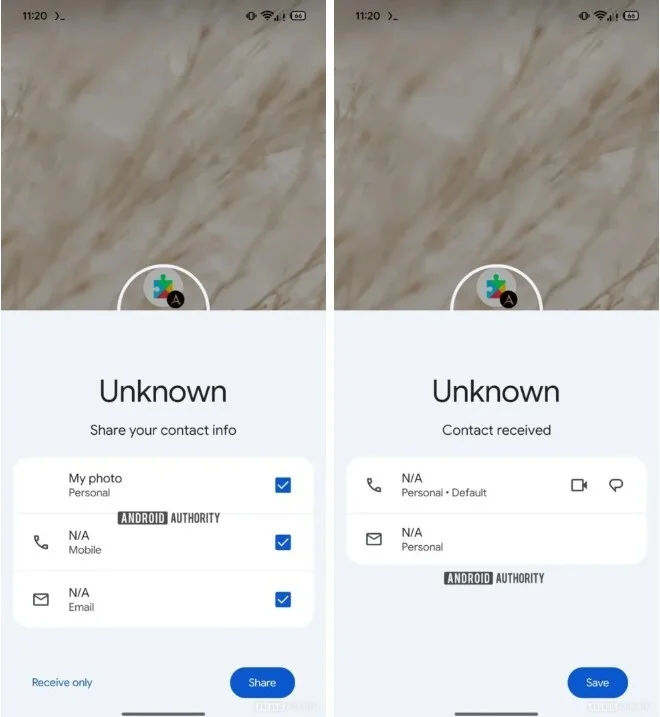
On the other hand, Google is reportedly developing a similar contact-sharing feature for Android users, currently codenamed "Gesture Exchange" or "Contact Exchange." Android Authority managed to enable parts of this feature embedded in Google Play Services version 25.46.31, revealing an interface that allows users to select which information to share.
- Photograph
- Mobile phone number
- Email address
Users can send any combination of these three details to fellow Android users. There is also an option labeled "Receive only," allowing someone to obtain another person’s contact information without sharing their own. The received contact appears as a card reading “Contact received,” which can be saved to the phone’s address book. The card includes quick action icons to initiate a video call or send a text message to the contact.
Community Feedback on Google’s Contact Exchange
Readers were asked if they hope Google will add this feature to Android. Approximately 88.76% voted “Yes, I do!”, while 11.24% responded “No, I don’t,” from a total of 89 votes.
Google is expected to use NFC to kickstart the connection on Android devices. The subsequent transfer would likely utilize Bluetooth or NFC to complete sharing the data. As of now, the release timeline for this feature remains unknown. Nonetheless, it promises to become a valuable addition to the Android ecosystem, improving how users share contact details quickly and intuitively.