The DJI Neo 2 has now made its way to markets across the globe following its initial release in China last October. While the drone is available in most countries, it notably remains unavailable in the United States due to ongoing geopolitical and market challenges surrounding new DJI products.
Below are the official pricing details for the DJI Neo 2 in various regions. Interestingly, the price listed for Canada is in USD rather than Canadian dollars, raising questions about possible purchasing channels for North American customers, though US buyers should be wary as after-sales support is not provided.
| Region | Price |
|---|---|
| Canada | USD 230 |
| United Kingdom | GBP 210 |
| Europe | EUR 240 |
| Japan | JPY 38,400 |
| Australia | AUD 410 |
| New Zealand | AUD 440 |
These prices reflect the base drone only. The DJI Neo 2 targets beginners and casual users who want an effortless flying experience, offering intuitive control through gestures or smartphone apps.
For those seeking more advanced options, DJI offers the Fly More Combo priced at $400/£350/€400. This bundle includes the RC-N3 remote controller, two additional batteries, and a charging hub capable of handling three batteries simultaneously. For an immersive first-person view (FPV) flying experience, the Motion Fly More Combo is available at $550/£510/€580 and adds the DJI Goggles N3 headset along with the RC Motion 3 controller.
 Multiple control modes available, from simple gestures to immersive FPV flight
Weighing in at just 151 grams (160 grams including the Digital Transceiver), the Neo 2 remains extremely lightweight and easy to carry. This marks a slight increase over the original Neo's 135 grams but safely retains the sub-250g classification that exempts it from certain regulatory restrictions.
The Neo 2’s upgraded performance includes a top speed of 5 meters per second in sports mode – more than double the original’s 2 m/s – and extended flight time up to 19 minutes. It also handles windy conditions better with a Level 5 wind resistance rating (up to 10.7 m/s), compared to Level 4 for its predecessor.
An increase in internal storage to 49GB offers users ample space for photos and videos.
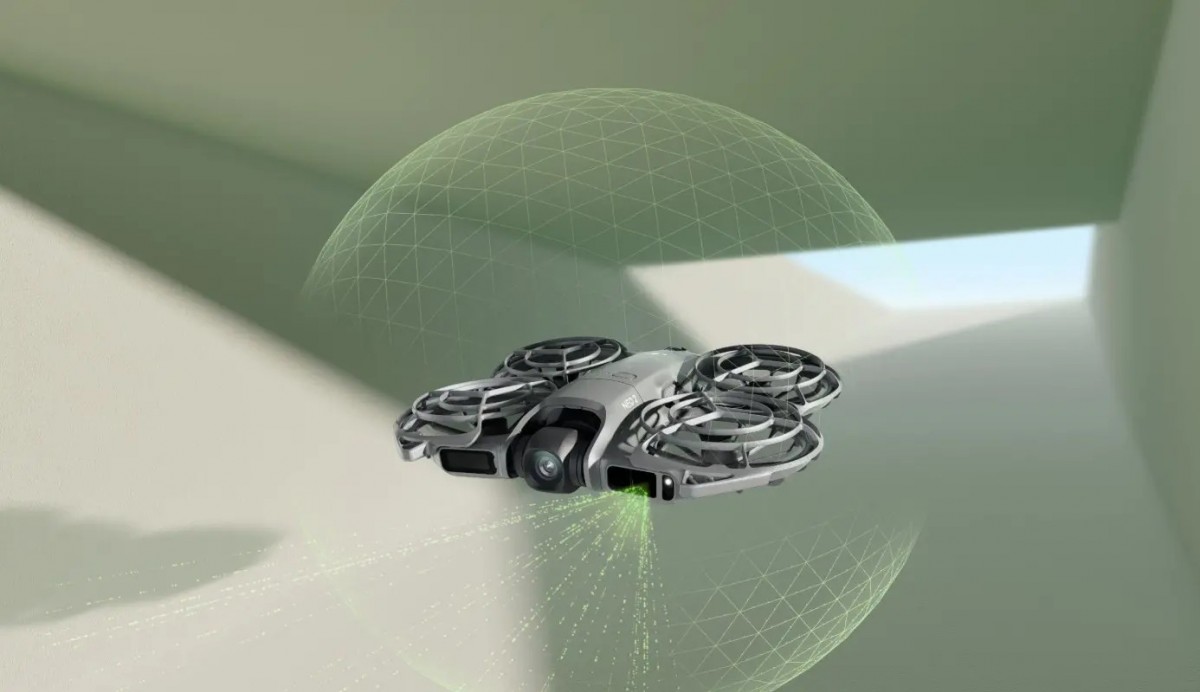
Advanced front-facing LiDAR and omnidirectional vision system enhance navigation
The drone’s sensor package has received a significant upgrade. Earlier models featured only downward-facing positioning sensors, but the Neo 2 is equipped with an omnidirectional vision system complemented by forward-facing LiDAR. This powerful combination enables sophisticated obstacle avoidance and supports new tracking functions including a Cycling mode within ActiveTrack.
Camera enhancements include the retention of a 1/2” sensor paired with a broader f/2.2 lens aperture, improving image quality and low-light performance over the previous f/2.6 lens. Additionally, the single-axis gimbal found on the earlier Neo has been replaced by a two-axis gimbal stabilizing tilt and roll movements.
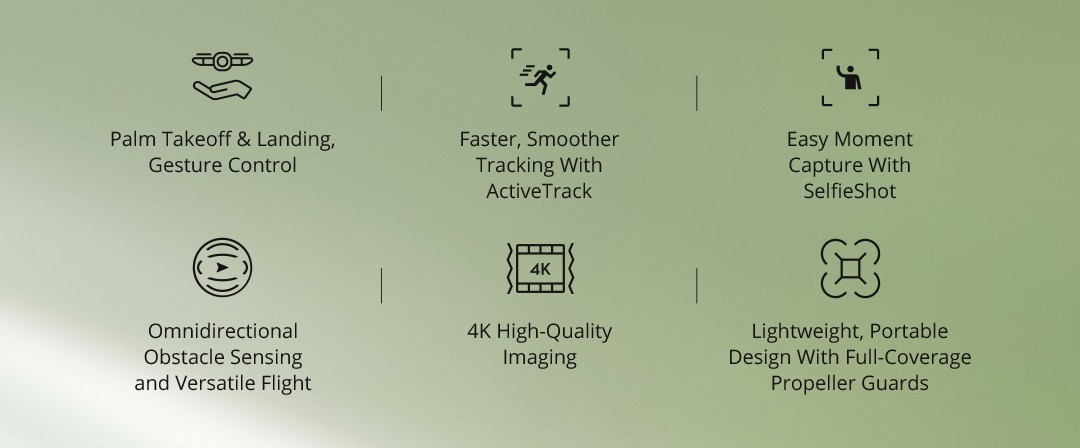
Key DJI Neo 2 features at a glance
Video capture capabilities have also been enhanced, supporting 4K recording at 60 frames per second when flown horizontally, a step up from the previous 4K 30fps. In vertical orientation, it moves from 1080p 60fps to 2.7K 60fps. Standard video transmission utilizes a Wi-Fi system with a 500-meter range, but users can opt for the DJI O4 transmission system for extended range up to 10 kilometers. The O4 transceiver is sold separately or included with the Fly More combos.