Apple has finally introduced the ultra-thin iPhone Air to the Chinese market, featuring an eSIM-only setup. This move signifies a major shift in the tech industry, prompting a significant transition towards the future of connectivity in one of the largest smartphone markets globally.
Exploring the iPhone Air Arrival in China
After a brief delay, Apple has officially announced the debut of the sleek iPhone Air in mainland China. CEO Tim Cook revealed that preorders will commence on October 17, with the phone hitting stores on October 22. The delayed launch, as reported by Bloomberg, was to allow local carriers to prepare their networks for the phone's key feature: being eSIM-only.
The remarkable aspect of the iPhone Air is its omission of a physical SIM card tray, giving Apple room to accommodate a larger battery in exchange for the device's ultra-thin design. While standard iPhone 17 models in China still incorporate physical SIM slots, the Air necessitates a shift in the industry. This was made feasible after China Mobile, a prominent carrier, obtained approval to introduce eSIM services.
Significance of the iPhone Air Launch
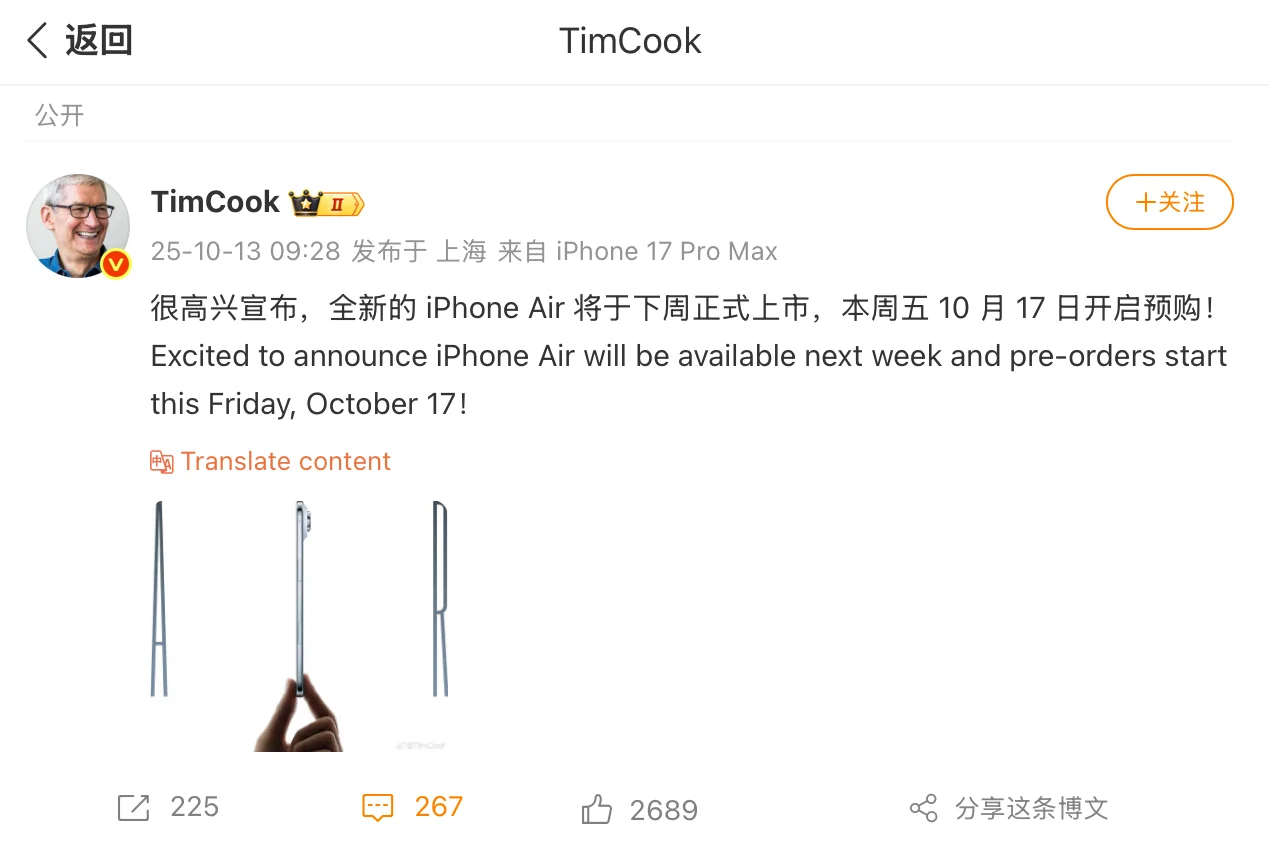
Tim Cook announces that iPhone Air preorders will start on October 17th in China. | Image credit — Weibo
Apple's initiative to advocate for eSIM adoption in China marks a pivotal strategic move. China stands as a crucial and substantial market, with carriers experiencing hindrances in embracing eSIM technology due to regulatory challenges. While some competing Android flagships like Huawei's Pura 70 Pro offer eSIM functionality, it remains far from being a standard practice. Many domestic high-end smartphones in China still rely on traditional dual-SIM configurations, a familiar choice among users in the region.
By introducing a high-profile, eSIM-only device like the iPhone Air, Apple is driving an industry-wide transformation. It's a calculated risk, banking on the allure of the iPhone Air to incentivize both carriers and consumers to embrace this emerging standard. In a market that values flexibility, this transition may pose challenges, but it is poised to expedite the phasing out of traditional plastic SIM cards for a more advanced connectivity experience for everyone.
Embracing the Inevitable Transition
The move towards an eSIM-only future has been met with resistance, including my own reluctance. Adjusting to a new standard, especially when it eliminates the tangible presence of a physical SIM card, can be challenging. The convenience of a simple swap when traveling or testing new devices is unmatched by digital alternatives like software menus and QR codes. It appears to address a non-existent problem.
However, history shows that when Apple discontinues a feature, the industry ultimately follows suit. Witnessing Apple's push for eSIM adoption in a complex market like China signifies the dwindling prospects for physical SIM cards in flagship smartphones. Despite personal reservations and attachment to traditional SIM cards, it seems inevitable that the industry is heading towards a digital connectivity era, whether embraced willingly or not.
Recommended Stories

Discover the most iconic and unforgettable phones from the last two decades! Iconic Phones offers a visually captivating book crafted over a year, set to launch soon. Iconic Phones: Revolution at Your Fingertips serves as the ultimate coffee table read for mobile enthusiasts, featuring narratives of over 20 beloved devices, capturing the essence of the mobile revolution. Secure your early-bird discount by signing up today!
Travel Easy with Nomad eSIM – 30% Off
Data-only plans & global coverage – use code IPHONEARENA30
We may earn a commission if you make a purchase