Apple Commits to Increased U.S. Manufacturing Amid Tariff Threats
Following discussions with President Trump, Apple has announced plans to invest an additional $100 billion in U.S. manufacturing facilities. This decision comes in response to the threat of increased tariffs on products imported from India, where a significant portion of Apple's products are currently assembled.
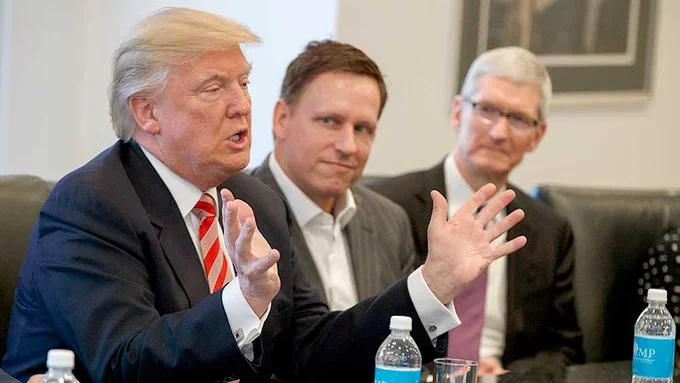
Apple CEO Tim Cook attended Trump's tech summit during the president's first term. | Image credit-Unknown
Implications of Trump's Trade Policies on Apple's Operation Strategy
President Trump's recent decision to double tariffs on imports from India has forced Apple to reconsider its manufacturing plans. While most iPhones sold in the U.S. are currently made in India, other Apple devices, such as iPads and MacBooks, are manufactured in Vietnam. The escalating trade tensions have prompted Apple to explore domestic production options to avoid tariff-related challenges.
The president has long advocated for Apple to shift production to the U.S., particularly focusing on the iPhone. Despite previous discussions between Trump and Cook regarding U.S.-based manufacturing facilities, challenges persist in establishing a supply chain and recruiting skilled labor for local assembly operations. Apple's commitment to invest an additional $100 billion demonstrates a significant step towards enhancing its U.S. manufacturing presence.
Prospect of iPhone Manufacturing in the U.S.
As Trump prepares to announce additional tariffs on products containing semiconductors, Apple faces increased pressure to strengthen its domestic manufacturing capabilities. The company's recent pledge to invest $500 billion over the next four years aligns with its goal of expanding U.S. production and creating thousands of job opportunities. The decision to prioritize U.S.-based manufacturing reflects Apple's strategic response to evolving trade dynamics.

Receive the latest Apple news
By subscribing you agree to our terms and conditions and privacy policy.
Despite previous tensions between Trump and Cook regarding Apple's manufacturing decisions, the company's commitment to bolster U.S. production showcases its dedication to navigating complex trade challenges. As Apple navigates the evolving trade landscape, its investments in U.S. manufacturing signal a strategic shift towards building a resilient and sustainable production ecosystem.
Past Presidential Calls for Apple's U.S. Manufacturing Expansion
President Trump's push for Apple to enhance its U.S. manufacturing footprint echoes similar calls made by past administrations. In 2011, President Barack Obama urged Apple, under the leadership of Steve Jobs, to consider domestic iPhone production. The evolving dialogue between Apple and U.S. authorities underscores the importance of aligning manufacturing strategies with geopolitical dynamics.
"Today’s announcement with Apple is another win for our manufacturing industry that will simultaneously help reshore the production of critical components to protect America’s economic and national security."
-Taylor Rogers, White House spokesman
Apple's commitment to expanding its U.S. manufacturing presence signals a strategic response to evolving trade dynamics and geopolitical pressures. By investing in domestic production capabilities, Apple aims to navigate tariff challenges and bolster its long-term competitiveness in the global market.