Epic Games has emerged victorious in a legal dispute with Google, resulting in the ability for third-party app stores to operate on Android devices. The recent court ruling found Google's control over the Play Store and its payment system to be in violation of antitrust laws, paving the way for Epic to launch its own app store within the Play Store.
The Ninth Circuit Court of Appeals upheld a previous jury verdict that deemed Google's practices as monopolistic and illegal. As a result, other companies will now have the opportunity to create competing app stores on Android for the next three years, with the freedom to utilize their own billing systems.
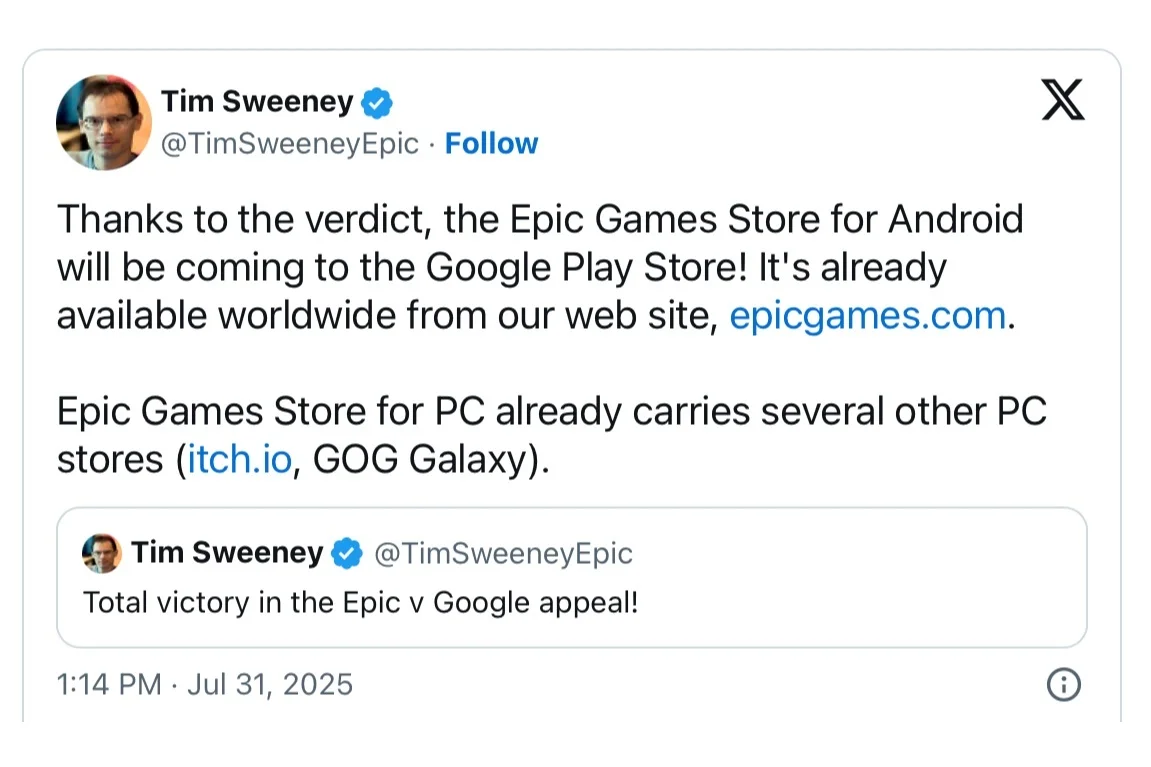
Epic Games CEO announces the imminent arrival of the Epic Games Store to the Play Store. | Image credit — @TimSweeneyEpic (X)
This legal battle originated when Epic sued both Apple and Google in 2020 after Fortnite was removed from their app stores. While Epic's case against Apple did not result in a favorable outcome, the ruling against Google marks a significant shift in the app store landscape for Android users and developers.
Google intends to appeal the decision to the Supreme Court, citing concerns about user safety, choice reduction, and innovation stagnation. However, the court's decision underscores Google's monopoly over Android app distribution and billing, setting a precedent for increased competition and choice in the Android app market.
Developers may benefit from more flexibility in selling their apps and utilizing diverse payment methods, while users can look forward to a broader array of options. This landmark case heralds a new era for app store regulation and operation on the Android platform, poised to impact the future of the Play Store significantly.