This year, Apple introduced its C1 cellular modem on the iPhone 16e, which was well-received. Looking ahead, the company aims to integrate its own modems into more devices, including the upcoming iPhone 17 models. By doing so, Apple can reduce its reliance on Qualcomm and save on fees. CFO Akash Palkhiwala hinted at Qualcomm having a lower share in the iPhone 17 lineup, indicating that Apple's cellular modems may be included in the base model iPhone 17 and the rumored iPhone 17 Air. However, the iPhone 17 Pro and Pro Max are likely to continue using Qualcomm modems for now. Apple's development of its own modem is part of a long-term strategy to enhance hardware and software integration.

Receive the latest Apple news
By subscribing you agree to our terms and conditions and privacy policy.
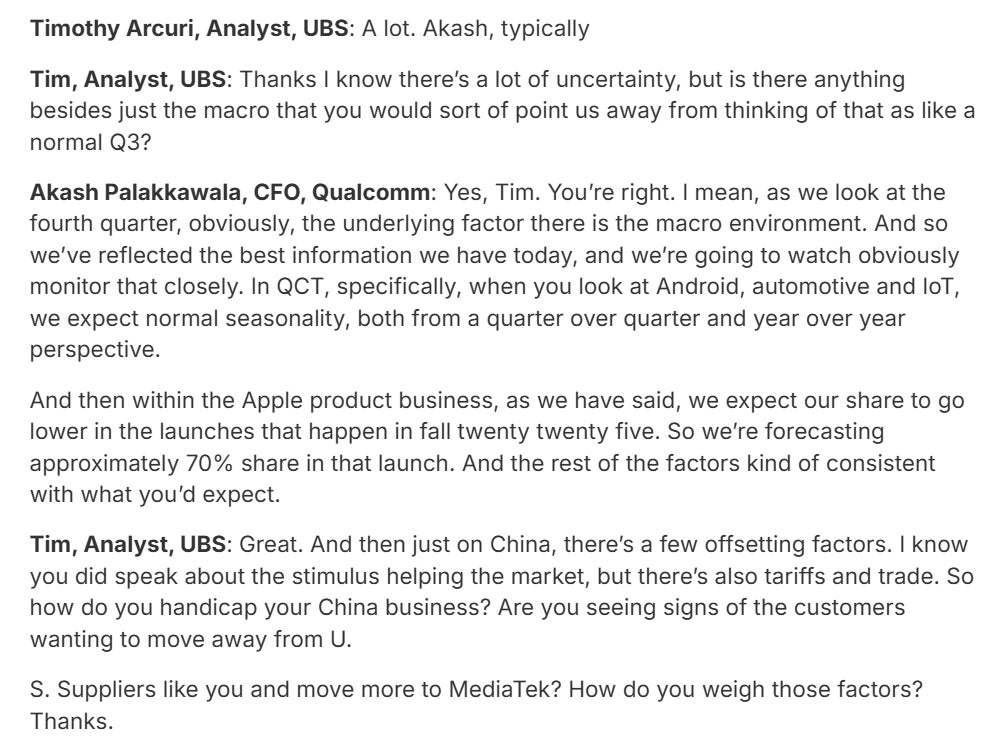 Relevant transcript from Qualcomm’s earnings call. | Image credit — Investing
Apple's efforts to develop its own cellular modem have been ongoing, with the iPhone 16e serving as a testbed for the technology. The modem has shown promising results and may contribute to improved performance and battery life in future models. The iPhone 17 Air, positioned as a successor to the iPhone Plus, could benefit from Apple's in-house modem technology to optimize its slim design and battery efficiency.