New EU Label to Enhance Battery Life Transparency for Smartphones and Tablets
As part of its ongoing effort to promote consumer transparency, the European Union is set to implement a new labeling requirement for smartphones and tablets starting June 20, 2025. This initiative aims to provide consumers with clear information regarding device battery performance and efficiency, similar to existing energy labels on household appliances. By enhancing product visibility, the EU hopes to empower consumers to make informed choices while encouraging manufacturers to improve product durability and sustainability.
According to the new regulations, all smartphones and tablets sold within the EU must bear a label inside the packaging that details essential battery life metrics and energy efficiency. This label is part of a larger strategy by the EU to ensure that devices available on the market meet high standards of performance and environmental responsibility.
Which Products Are Affected?
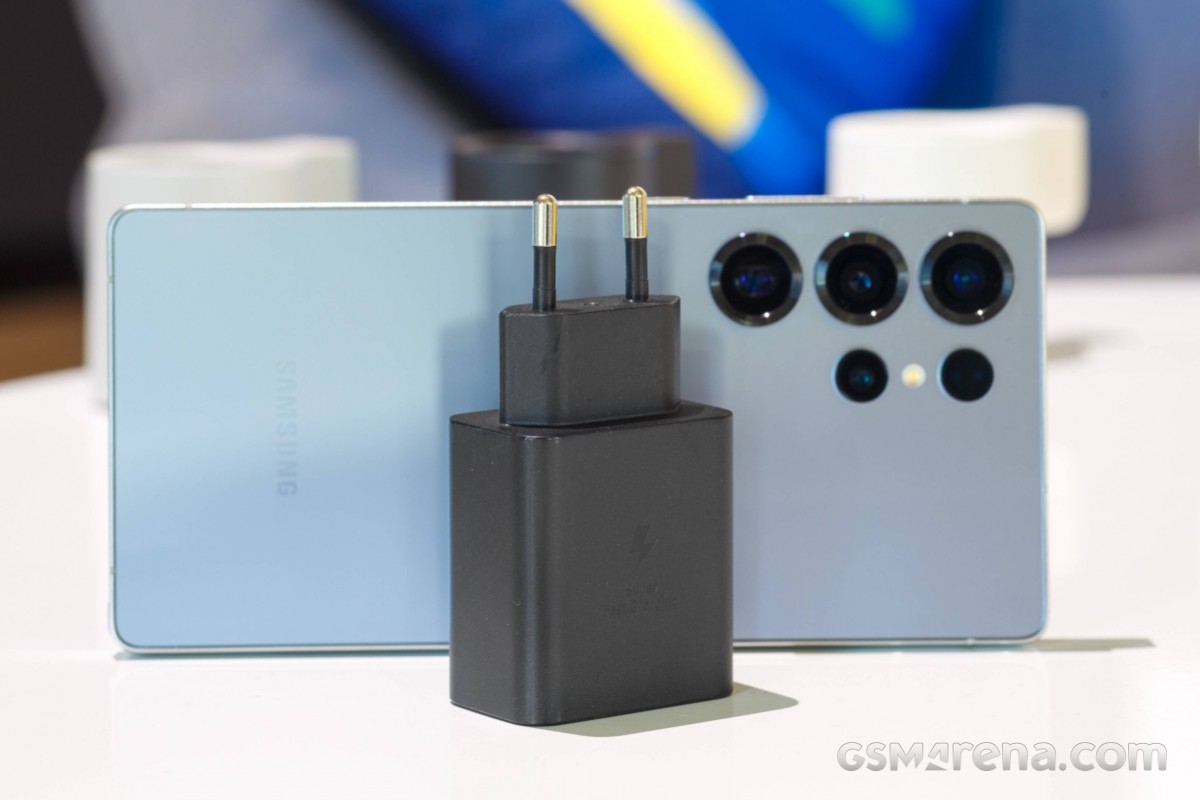
The regulation’s scope includes cordless phones designed for landline use, smartphones that operate on cellular or satellite networks, feature phones without internet capabilities, and tablets with screen sizes ranging from 7 to 17.4 inches. It is important to note that only devices launched in the market on or after June 20, 2025, will fall under this requirement. Additionally, devices featuring flexible main displays that can be partially or fully unrolled, as well as those already available in the EU prior to this date, are exempt from the new labeling.
What Are the Requirements?
Manufacturers must ensure their devices meet five key ecodesign criteria:
- Durability: Devices must withstand accidental drops and be protected against dust and water.
- Battery Longevity: Batteries should endure a minimum of 800 full charge and discharge cycles, retaining at least 80% of their initial capacity.
- Repairability: Critical spare parts must be available within 5 to 10 working days and offered for 7 years after the product is no longer sold.
- Software Support: Devices must receive operating system updates for at least 5 years post end-of-sale.
- Repair Access: Professional repairers must have non-discriminatory access to necessary software or firmware.
What Will the Label Look Like?
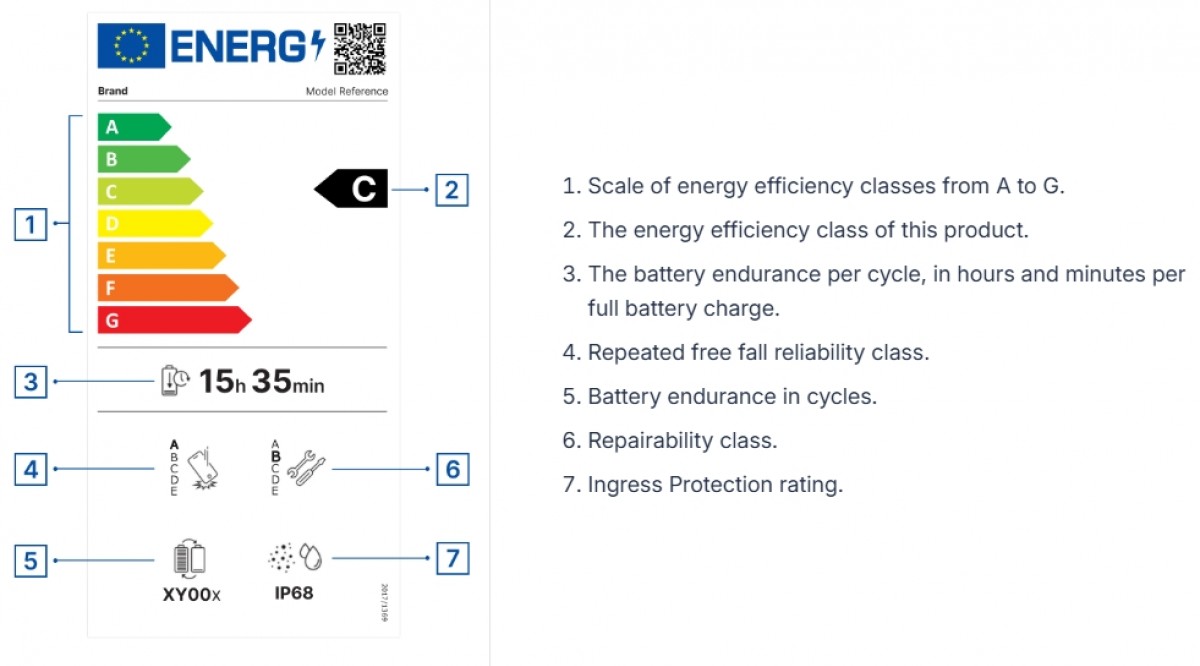
The European Product Registry for Energy Labelling (EPREL) sticker will provide key information visually. A model sticker has already been spotted on devices intended for the European market, confirming the initiative's implementation.
How Is Data Verified?
To ensure accuracy, all suppliers—including manufacturers, importers, and authorized representatives—must register their product models on the EPREL platform, which is overseen by the European Commission. While manufacturers are accountable for accuracy, the Commission will validate claims relating to ingress protection, repairability, and battery longevity.
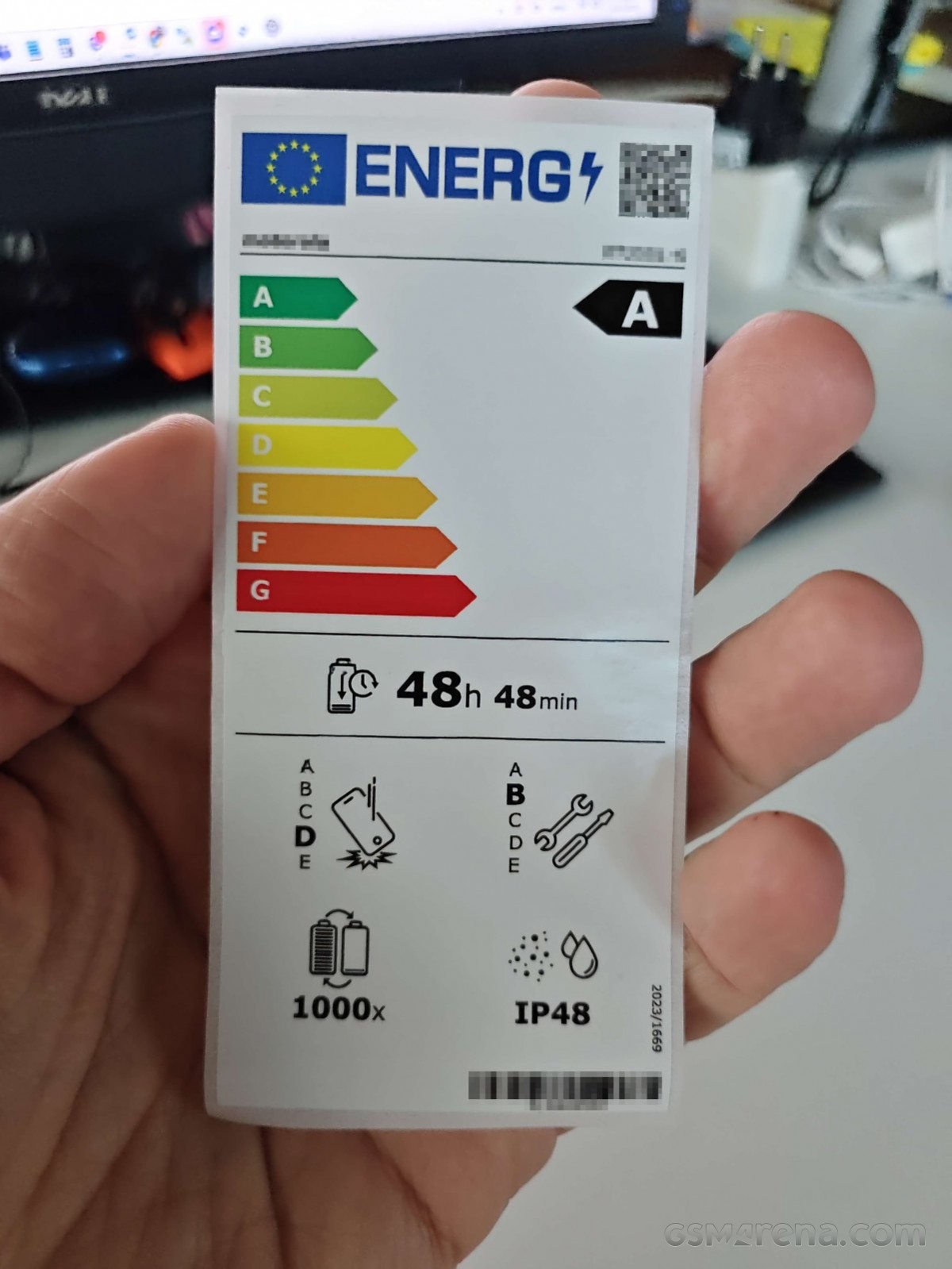
A genuine sticker; device specifics have been omitted for privacy.
Implications for Consumers
The introduction of the Ecodesign label forms part of a broader EU initiative focused on enhancing energy efficiency by the year 2030. It is anticipated that this step will lead to a reduction of 46 million tonnes in CO₂ emissions, alongside an estimated annual saving of €150 for each household, complementing existing energy-saving measures.
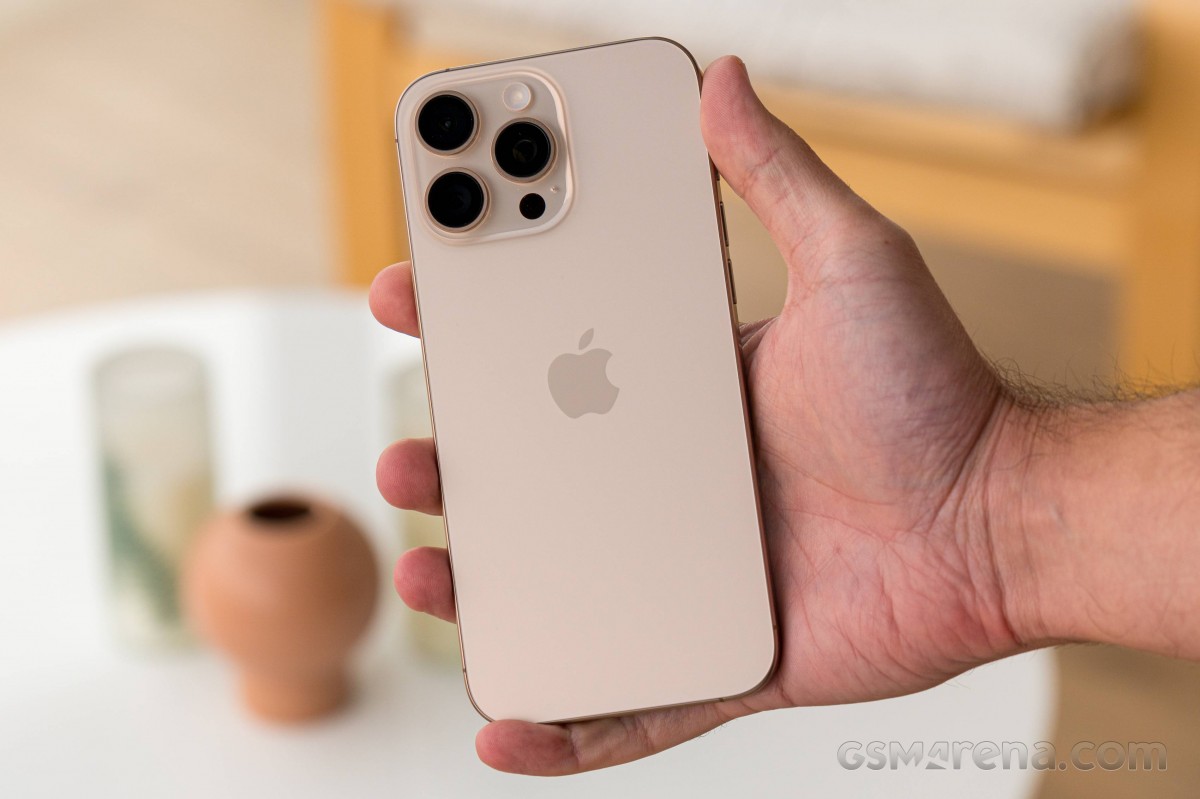
Although these regulations are confined to the EU, their effects promise to resonate globally. Many smartphone manufacturers are already extending software support and enhancing device durability and reparability worldwide, in response to growing consumer demand. As this trend continues, it is plausible that manufacturers might adopt EU standards on a global scale, streamlining production processes rather than developing separate models for different regions.