Introduction: In a significant blow to its financial outlook, Nvidia has announced a staggering $5.5 billion loss due to new restrictions imposed by the US government on the export of its H20 AI chips to China. As the demand for AI technology surges in China, the company now finds itself navigating the complexities of regulatory hurdles, which are also affecting fellow semiconductor producer AMD. This article delves into the implications of these export controls for Nvidia, its clients, and the broader AI industry.
Nvidia has disclosed that it will incur $5.5 billion in charges following the US government's restriction on the export of its H20 AI chips to China. The news triggered a notable decline in Nvidia's stock price, a trend mirrored by AMD, which is likewise contending with challenges stemming from the export ban on its MI308 chip.
A spokesperson for the US Commerce Department emphasized their commitment to "safeguard our national and economic security," underscoring the rationale behind the export controls.
The H20 chip, part of Nvidia's offerings, is particularly tailored for the flourishing AI market in China. Notable clients such as Tencent, Alibaba, and ByteDance have ramped up their orders for the H20, reflecting the chip's demand within the booming Chinese tech sector.
While the H20 chip is engineered with a focus on inference—optimizing response times for AI models—it is less powerful than alternatives marketed overseas. In light of previous restrictions from the Biden administration, Nvidia has already modified the chip's architecture, but these adjustments appear insufficient under the current regulatory landscape.
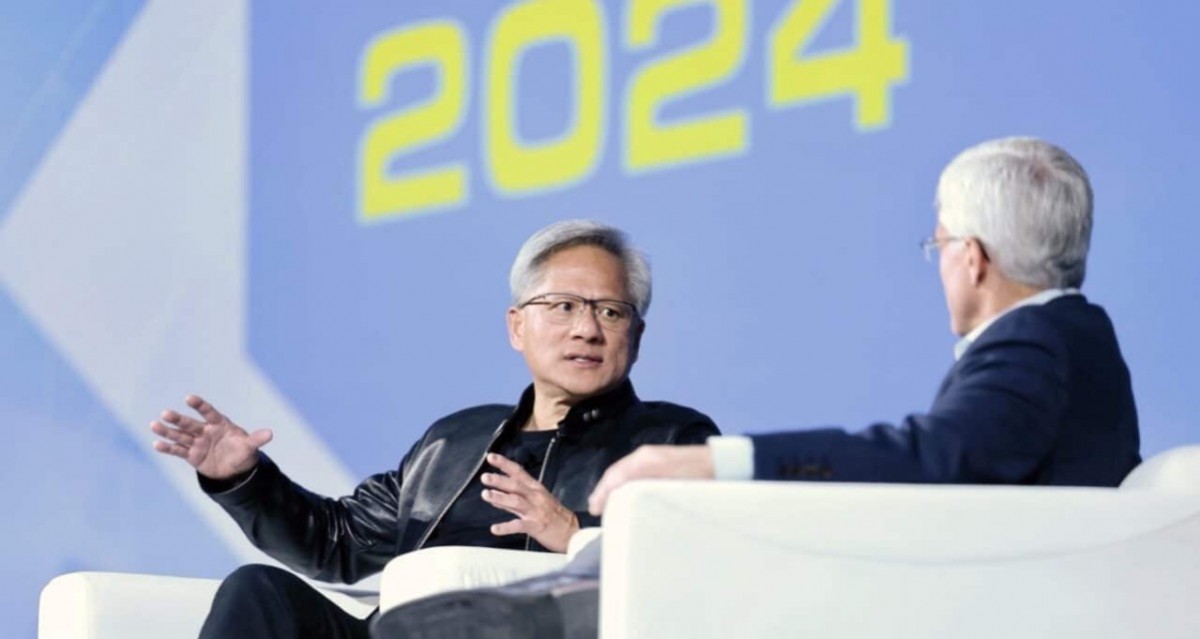
Jensen Huang, CEO of Nvidia
The US government's concerns center around the potential application of H20 chips in supercomputers. Even though the chip’s computational capabilities are limited, utilizing multiple memory chips can still achieve impressive processing speeds. A nonpartisan think tank in Washington, D.C., reported that Tencent has already begun utilizing H20 chips for model training, suggesting that Chinese companies may find ways to benefit despite export restrictions.
Nvidia was informed that, henceforth, a license would be required for exporting the H20 chip, with subsequent communications clarifying that these regulations would be enforced indefinitely.
Nvidia explained that the $5.5 billion charge encompasses H20 products linked to inventory, purchase obligations, and reserved commitments.
Following this announcement, Reuters highlighted Nvidia's pledge to invest $500 billion in AI server production within the United States over the next four years, aligning with broader efforts to bolster domestic manufacturing in the technology sector.