Apple C1 Modem Outperforms Qualcomm's 5G Modem in Low-Speed Scenarios
In a recent analysis, it appears that Apple’s innovative C1 modem is emerging as a formidable competitor to Qualcomm’s established 5G technologies. As users increasingly depend on consistent connectivity, especially in less-than-ideal network conditions, new benchmarks by Ookla highlight the strengths of Apple’s silicon. The results reveal that while Qualcomm's modems typically excel in high-speed situations, Apple’s C1 offers better performance for users experiencing slower network speeds. This finding has significant implications for consumers evaluating the latest smartphones.
According to Ookla's Speedtest report, the performance of the Apple C1 modem, included in the new iPhone 16e, is compared against Qualcomm's 5G modem found in the iPhone 16 featuring the Snapdragon X71 modem. While the Qualcomm device showcases higher peak speeds, the C1 modem proves more effective in scenarios where network connectivity is limited. The analysis assesses the performance across the top three U.S. carriers: AT&T, T-Mobile, and Verizon.
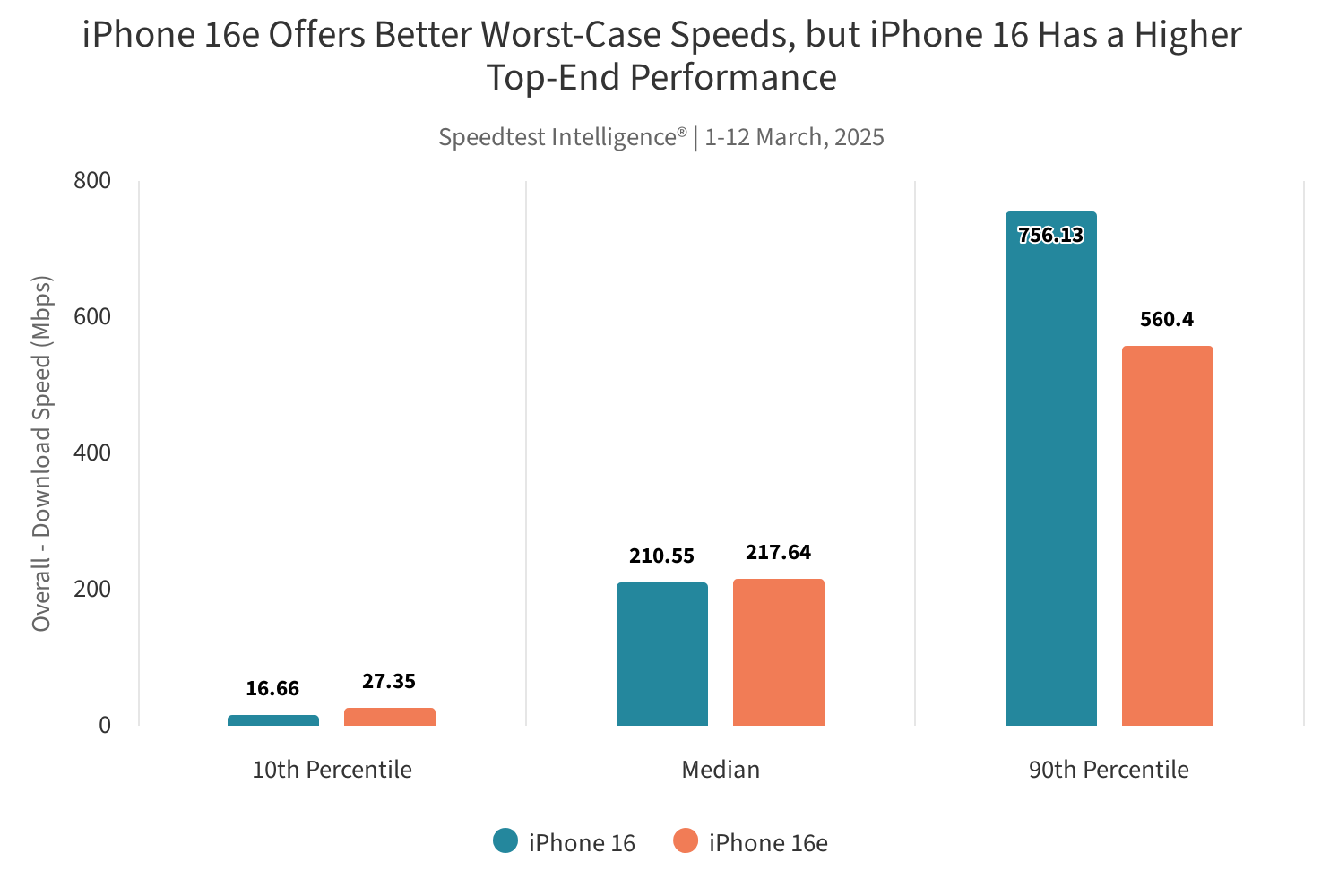
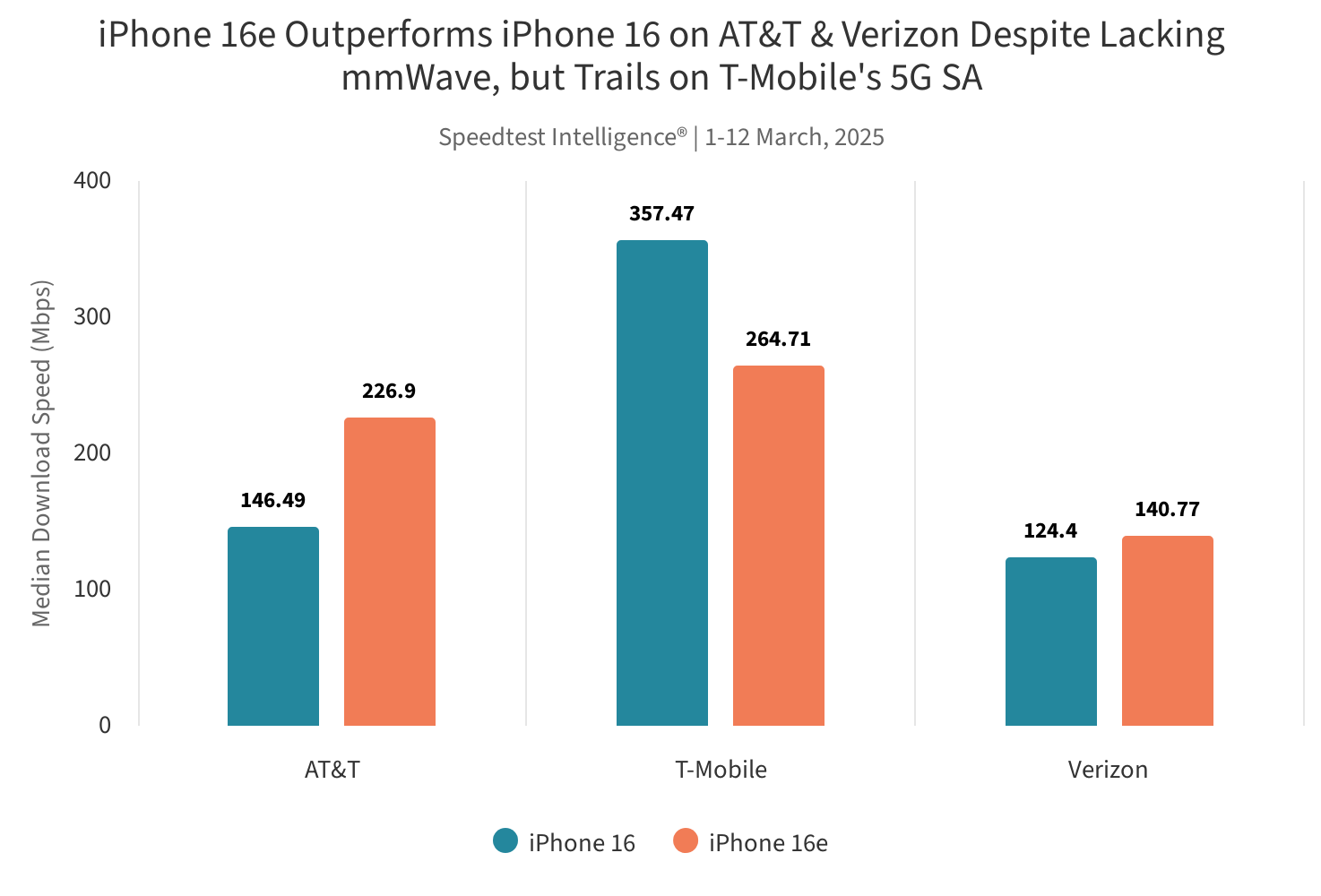
A notable finding from the study indicates that in areas of poor network performance, the iPhone 16e registers average speeds of 27.35Mbps, outperforming the iPhone 16 by a margin of 0.69Mbps (16.66Mbps). The C1 modem also maintains a slight edge in median speed tests. Conversely, in high-speed conditions (90th percentile), the Qualcomm modem demonstrates its superiority.
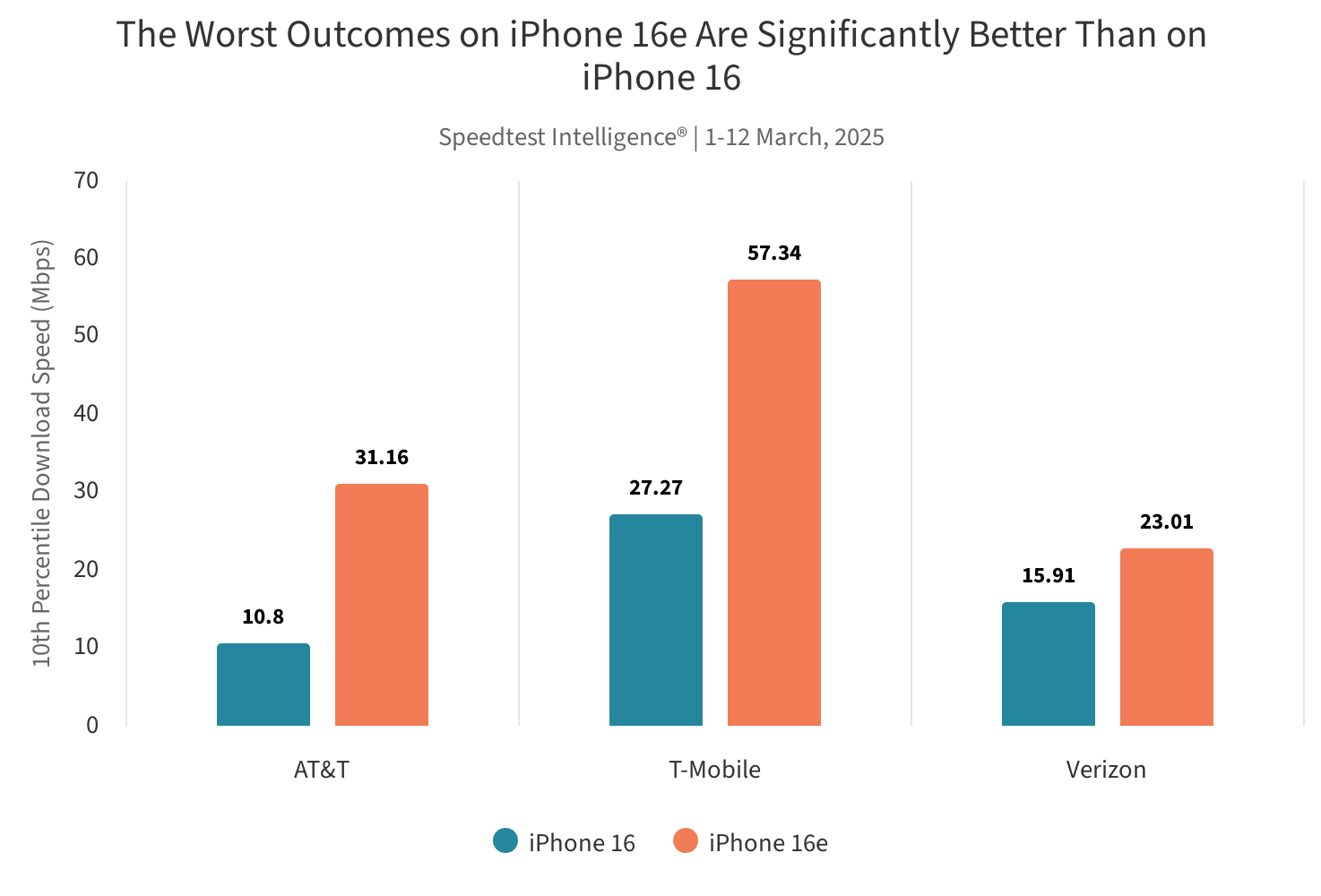
The carrier-specific breakdown further solidifies the C1's advantages in weak signal scenarios, as it outperforms the Snapdragon X71 across all tested carriers. However, the tables turn when users access strong network speeds, returning to Qualcomm’s advantage.
While Apple is reportedly developing a mmWave variant of the C1 modem, the absence of this higher-speed option doesn’t seem to adversely impact the iPhone 16e significantly. It’s worth noting that mmWave coverage varies widely across regions, often presenting challenges even within the U.S.
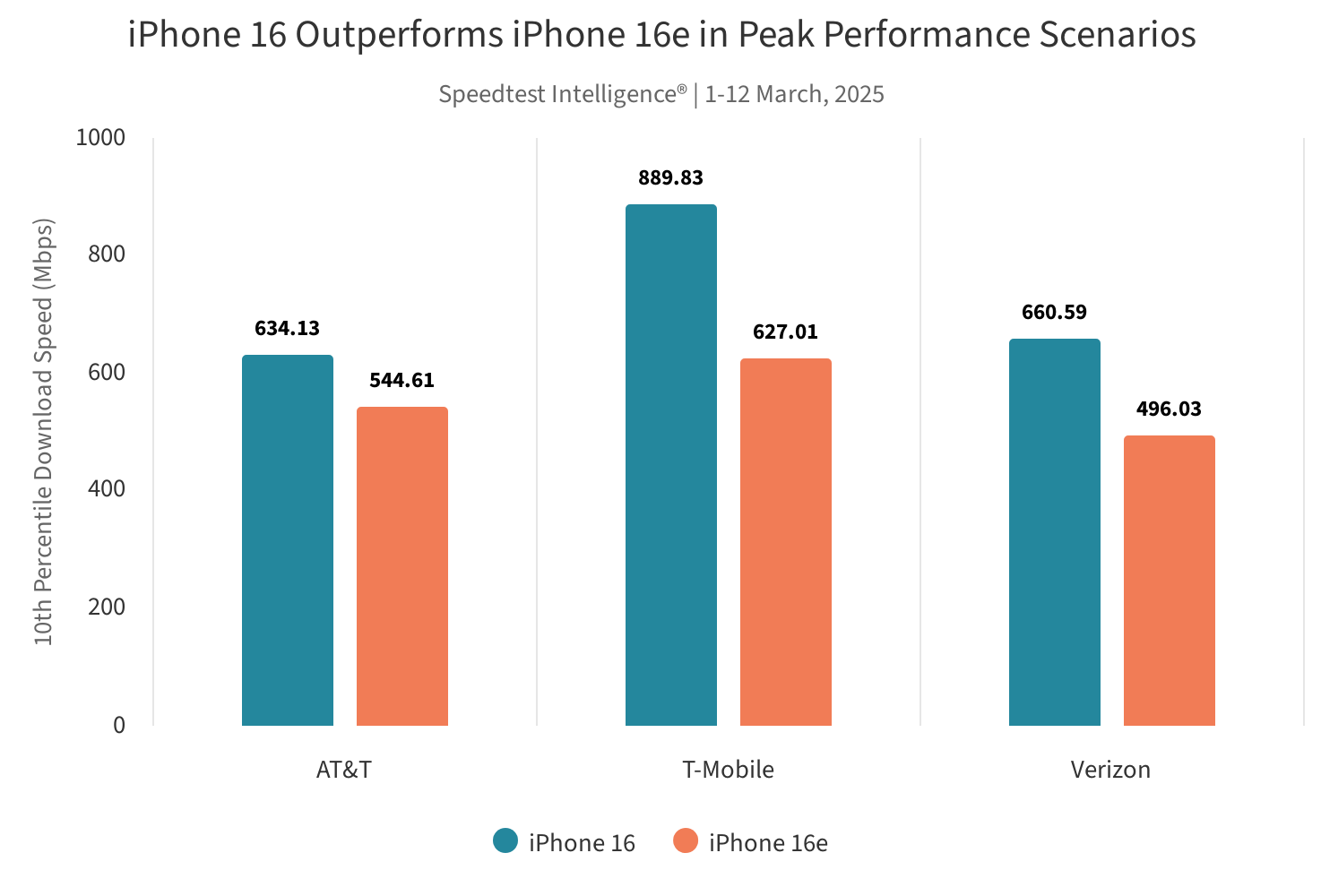
Dive deeper into the data, and it becomes evident that T-Mobile users benefit from superior downlink speeds with either device. However, the iPhone 16e underperformed relative to the iPhone 16 on T-Mobile, attributed to enhanced deployments of 5G Standalone (SA) and carrier aggregation (CA) by T-Mobile.
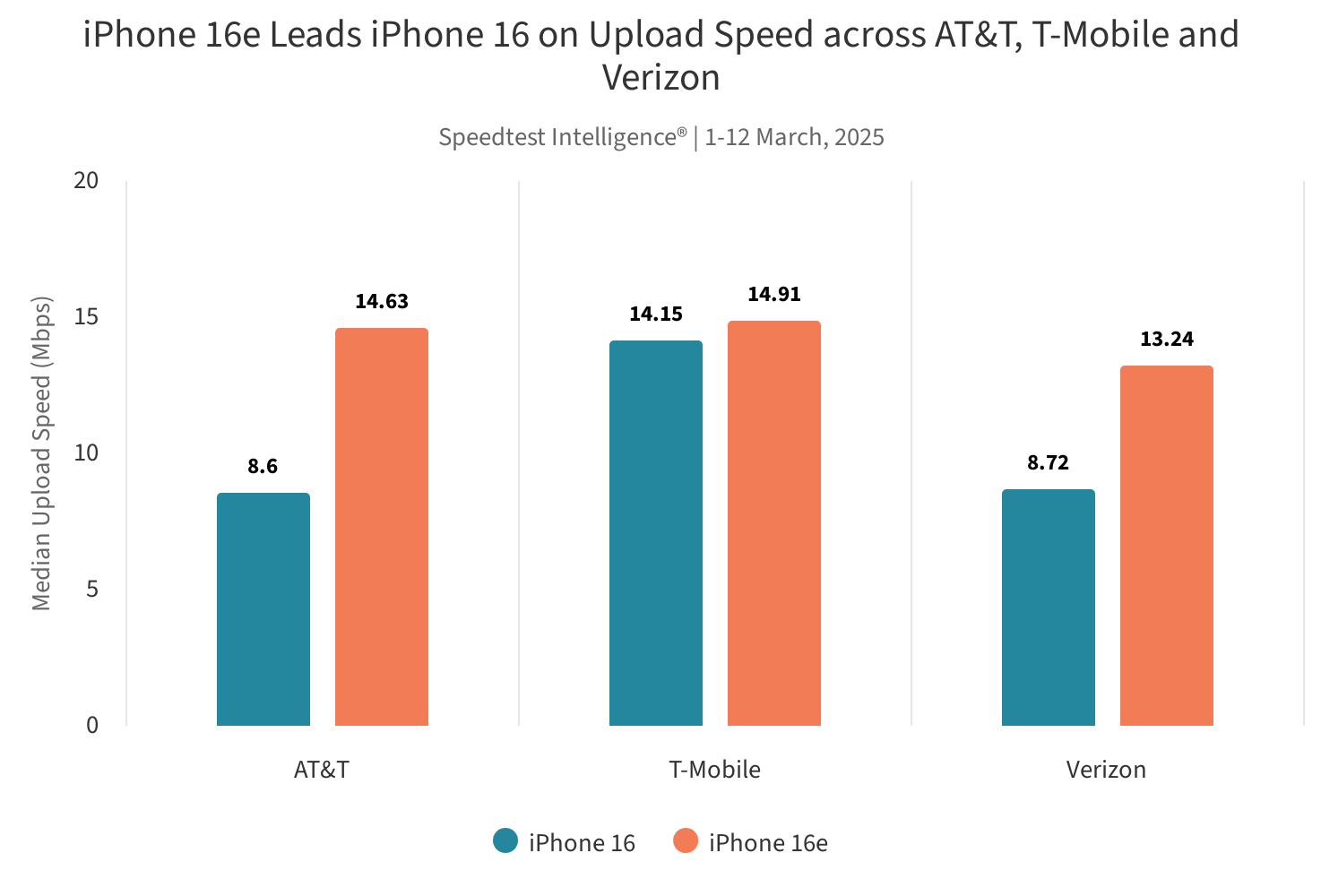
Interestingly, the upload speed metrics reveal an impressive performance from the iPhone 16e, surpassing the more expensive iPhone 16, despite the latter's technical advantages in carrier aggregation capabilities.
This marks a promising start for Apple's modem technology, with future iterations expected to enhance 5G and carrier aggregation support further. Although mmWave compatibility would be a welcome addition, its overall significance may be limited based on geography.
Apple claims that the C1 is the most efficient modem to date, contributing to commendable battery life ratings for the iPhone 16e and 16—21 hours and 18 hours of video playback, respectively. Notably, this efficiency comes alongside a larger battery capacity in the iPhone 16e.
As this performance saga continues to unfold, Ookla is preparing a more extensive report set to cover the entire iPhone 16 series. Initial findings suggest that the iPhone 16 Pro Max may outshine the 16e in several performance metrics, despite both utilizing Qualcomm’s X71 modem, hinting that factors beyond just the modem influence overall performance.
Apple iPhone 16
| 128GB 8GB RAM |
$659.14
|
$829.99
|
| 256GB 8GB RAM |
$817.15
|
$929.99
|
| Show all prices |
Apple iPhone 16e
| 128GB 8GB RAM |
$599.99
|
$659.55
|
| 256GB 8GB RAM |
$699.99
|
€818.00
|
| Show all prices |