Apple has recently faced challenges in advancing its AI initiatives, particularly with the Siri digital assistant. Following disappointing feedback from users and setbacks in launching key features, the tech giant is taking significant steps to reform its approach. The restructuring comes as Apple aims to better compete with leading tech firms in the rapidly evolving AI landscape.
Delays in Promised Siri Enhancements Fuel Restructuring
According to Bloomberg's Mark Gurman, Apple's ambition to enhance Siri with the upcoming iOS 18.4 update has hit substantial delays, prompting executive-level changes in Cupertino. Apple Intelligence, the company's broader AI initiative, has not resonated well with users, as evidenced by a recent survey indicating that 73% of iPhone users found little to no value in the feature, despite Apple's marketing efforts.
iOS 18.4 was expected to bring considerable capabilities to Siri, including context awareness based on users’ screen content. The update would have enabled Siri to access and respond to information from users' emails and text messages to assist with practical inquiries such as, "What time should I pick up my mom from the airport?" and "Where's our dinner reservation this Friday?"
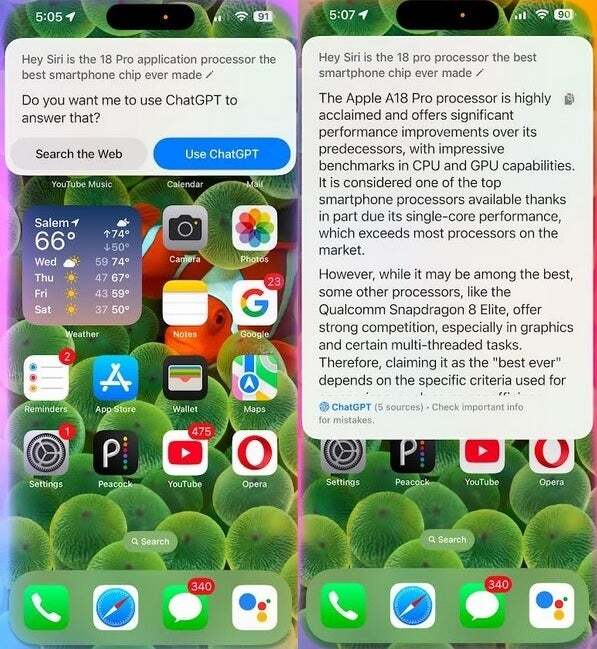
With Apple Intelligence, iPhone users can ask Siri to consult ChatGPT for answers when perplexed.
Apple had previously showcased a new version of Siri known as "Personal" Siri in a September advertisement, highlighted for its ability to remember the name of someone the user met weeks ago. However, with the intended updates now delayed "indefinitely," the company has pulled the advertisement from circulation.
Beyond these immediate updates, deeper integration of Siri with Apple’s native applications is anticipated. Users may eventually be able to schedule appointments via Siri, which would be linked to their calendar, and create notes effectively utilizing enhanced API support for third-party applications.
Reports indicate that Apple CEO Tim Cook has lost confidence in AI chief John Giannandrea's leadership. As a result, Mike Rockwell, the architect of the Vision Pro spatial computer, is stepping in to oversee Siri's development, according to insider sources who chose to remain anonymous.
This decision raises questions as to why someone associated with the less commercially successful Vision Pro would lead the Siri team. However, it is suggested that achievements in mixed reality technology merit Rockwell's appointment, independent of the headset's sales performance.
Upcoming Siri Features Anticipated Within the Year
Moving forward, Rockwell will report directly to Craig Federighi, Apple’s head of software, effectively shifting Siri's direction away from Giannandrea's influence. This transition also creates an opportunity for Paul Meade to take over at the Vision Products Group after managing hardware engineering for the Vision Pro.
Robbie Walker, previously in charge of Siri, publicly addressed the team regarding the "ugly" delays in launching "Personal Siri." While an exact timeline remains unclear, Apple asserts that the new capabilities for Siri will be introduced "in the coming year."
For many longtime users who recall the excitement surrounding Siri's debut with the iPhone 4s in 2011, these developments represent both a pressure and potential for Apple to finally deliver on its promises for the digital assistant.