AT&T is on a mission to solidify its position as the premier connectivity provider in the United States. In order to accomplish this ambitious goal, the company has laid out a comprehensive long-term strategy. During the recent Morgan Stanley Technology, Media & Telecom Conference, AT&T’s chairman and CEO, John Stakey, shared the details of the carrier’s multi-year strategic growth plan aimed at enhancing customer experiences. Stakey emphasized that the core of this growth strategy is prioritizing customer needs. Over the past four years, AT&T has been dedicated to striking a balance between building a sustainable business model and delivering products that resonate with customers.
“We needed to get focused on our customers and ensure that we were delivering products that they embraced, loved, and wanted to have. That was absolutely essential. We also had to re-engineer our cost structure, transitioning away from outdated technology products that have served us well for decades. This process was key to arriving at a place where we have a sustainable and effective business.”
– John Stakey, AT&T chairman and CEO, March 2025
AT&T anticipates that the newly announced multi-year strategic plan will generate over $50 billion in financial capacity within the next three years, primarily through organic growth.
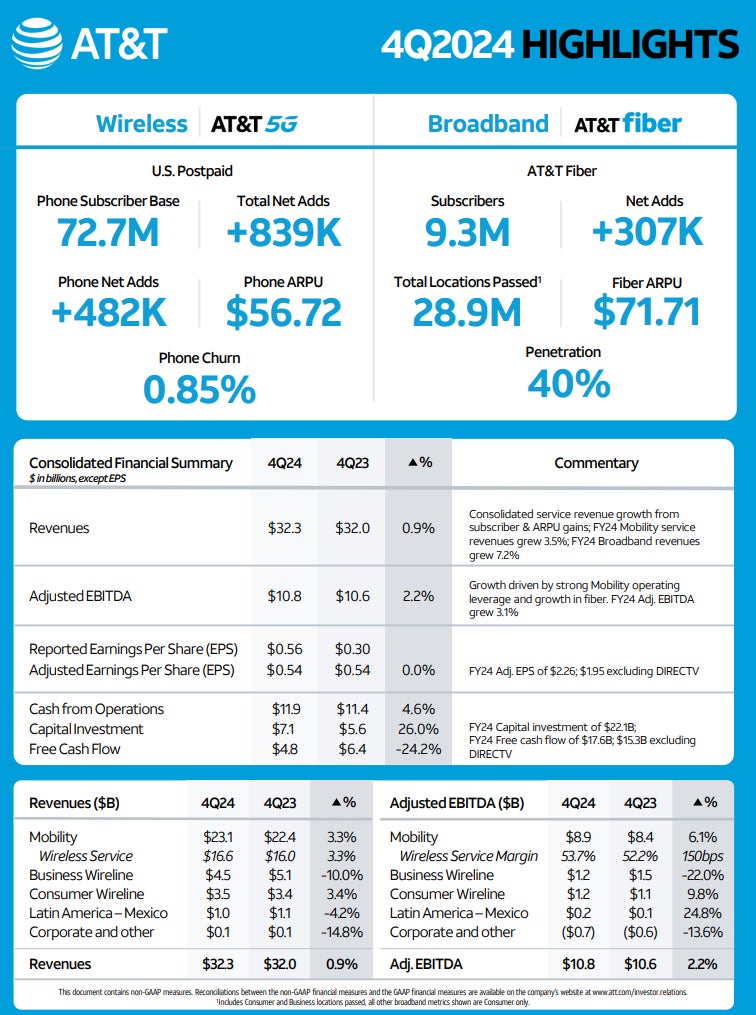
AT&T predicts a full-year wireless service growth in the range of 2% to 3%. The company reported that customer interaction returned to a "normalized level" as promotions ended in Q4 2024.
AT&T's Q4 2024 summary | Screenshot by PhoneArena
AT&T expressed satisfaction with the customer response to the launch of AT&T Guarantee and the various offerings released in recent weeks. The carrier expects this positive momentum to carry on through the rest of the quarter. Furthermore, AT&T plans to enhance its customer base management and anticipates improvements in revenue from existing customers through increases in ARPU and encouraging upgrades to higher-value plans. The multi-year growth strategy will include continued investments in network infrastructure as it becomes evident that customers are becoming increasingly valuable for the carrier, particularly in a highly competitive market.