iPhone 16e has officially launched today, February 28, and is generating buzz as Apple's first true mid-range device. Packed with an A18 Pro chip, 8GB of RAM, and enhanced Apple Intelligence, it aims to combine performance and affordability. However, recent tests have unveiled some gaming performance limitations that may concern mobile gamers.
Renowned tech reviewer GeekerWan has closely examined the iPhone 16e and uncovered some surprising insights regarding its gaming capabilities. While the phone boasts the same A18 chip as the higher-end iPhone 16, it has compromised performance in certain areas. While there is negligible difference in CPU speeds between the two models, the GPU (Graphics Processing Unit) performance presents a stark contrast, which could be a downside for serious gamers.
The iPhone 16e's GPU features just 4 cores, compared to the 5 cores found in the iPhone 16. This seemingly minor decrease can lead to significant reductions in graphics performance during demanding game play. For example, in the popular game *Honkai Impact 3*, the iPhone 16e averages only 42 frames per second, barely edging out the lowest settings, whereas the iPhone 16 achieves a more robust average of 49 frames.
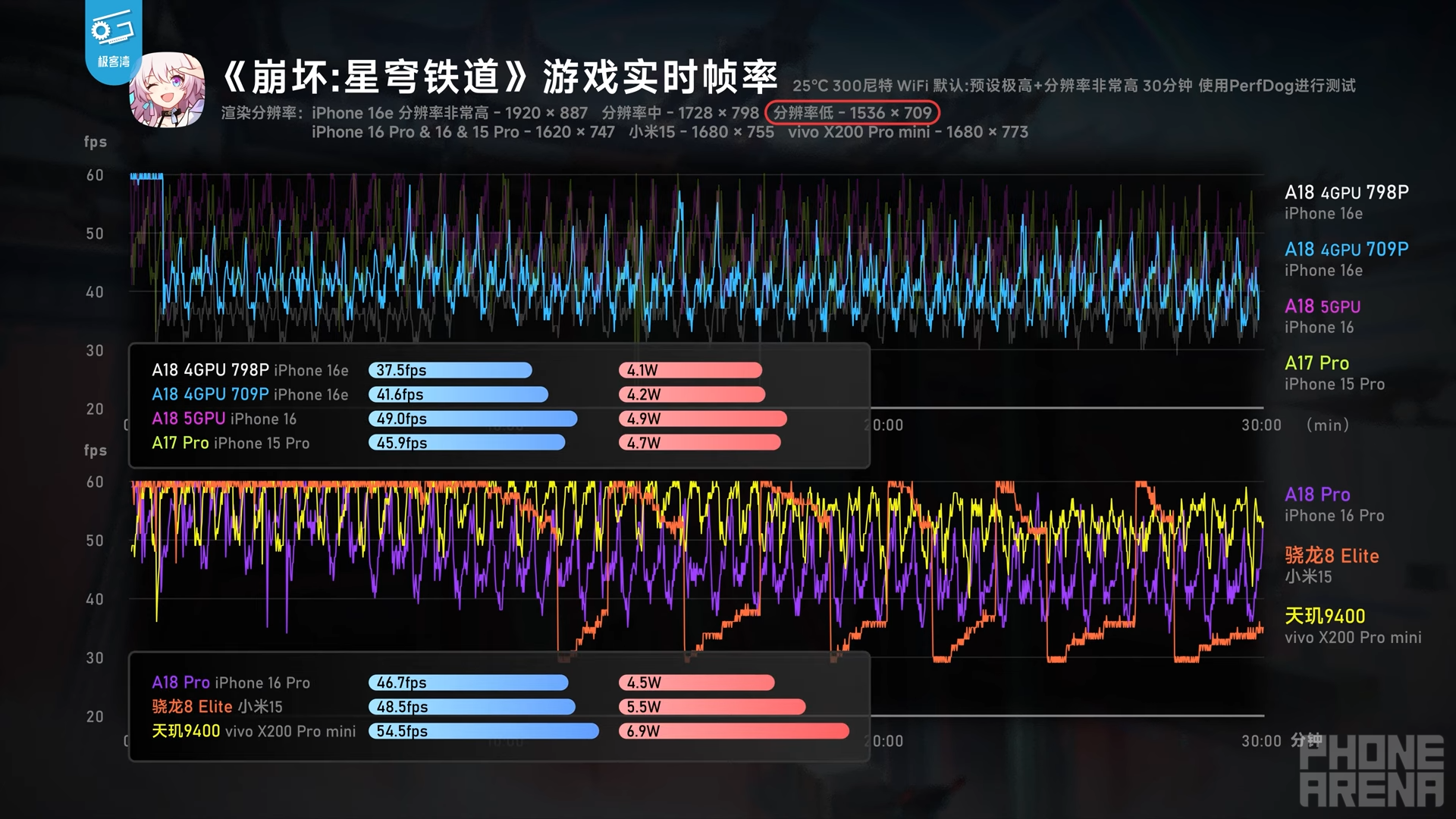
Interestingly, the iPhone 16e operates at only 4W of power compared to the iPhone 16, which offers better power management at 5W. Competing models, such as the Snapdragon 8 Elite found in the *Xiaomi 15*, clock in at 5.5W, with the MediaTek Dimensity 9400 in the *Vivo X200 Pro Mini* reaching 6.9W. Additionally, the heat dissipation on the iPhone 16e could use improvement, as it primarily concentrates around the processor, raising concerns about potential thermal throttling during extended gameplay sessions.
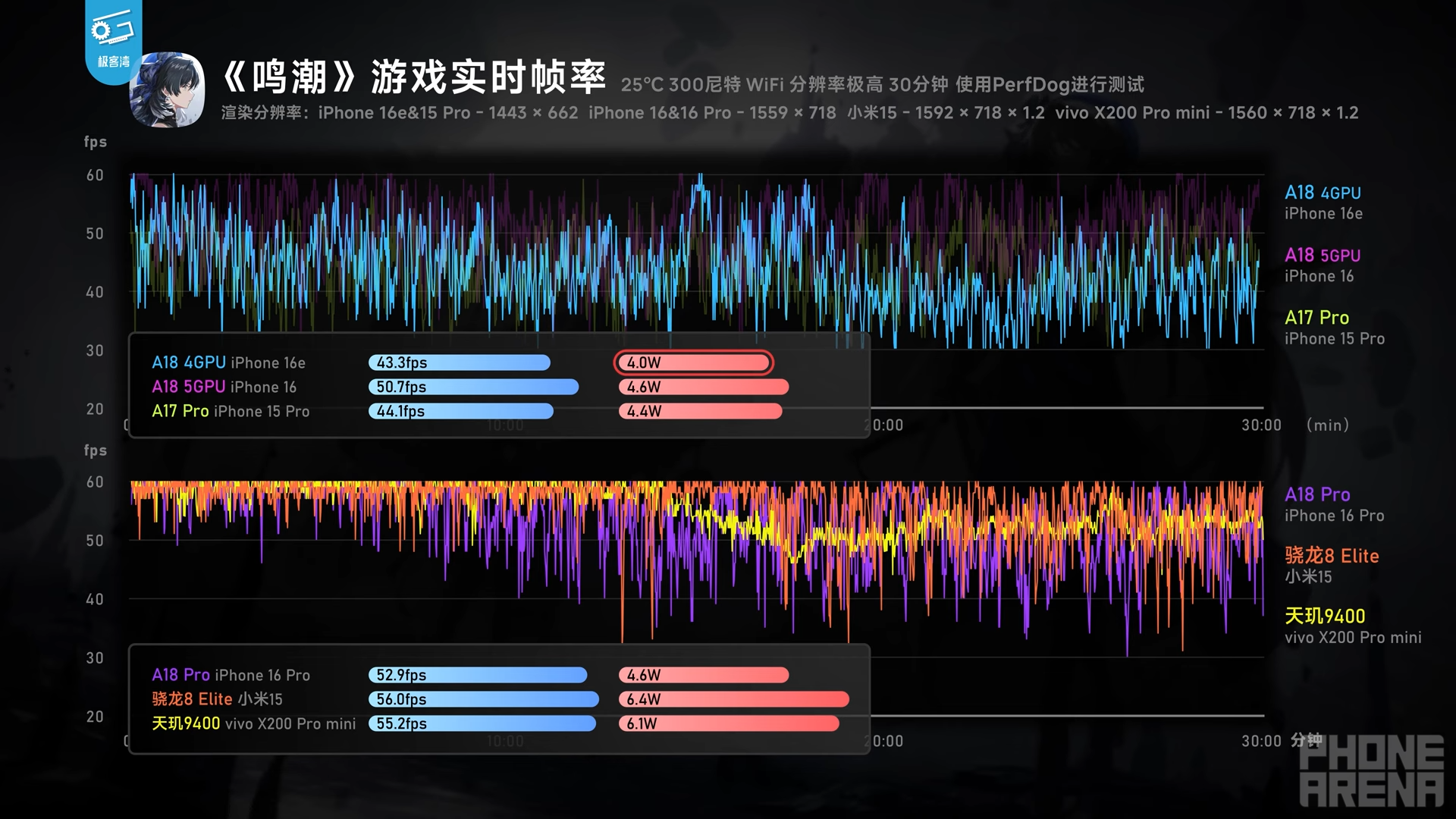
In gaming performance tests, including *Wuthering Waves*, the frame rates on the iPhone 16e fell short again, notably increasing the device's temperature.
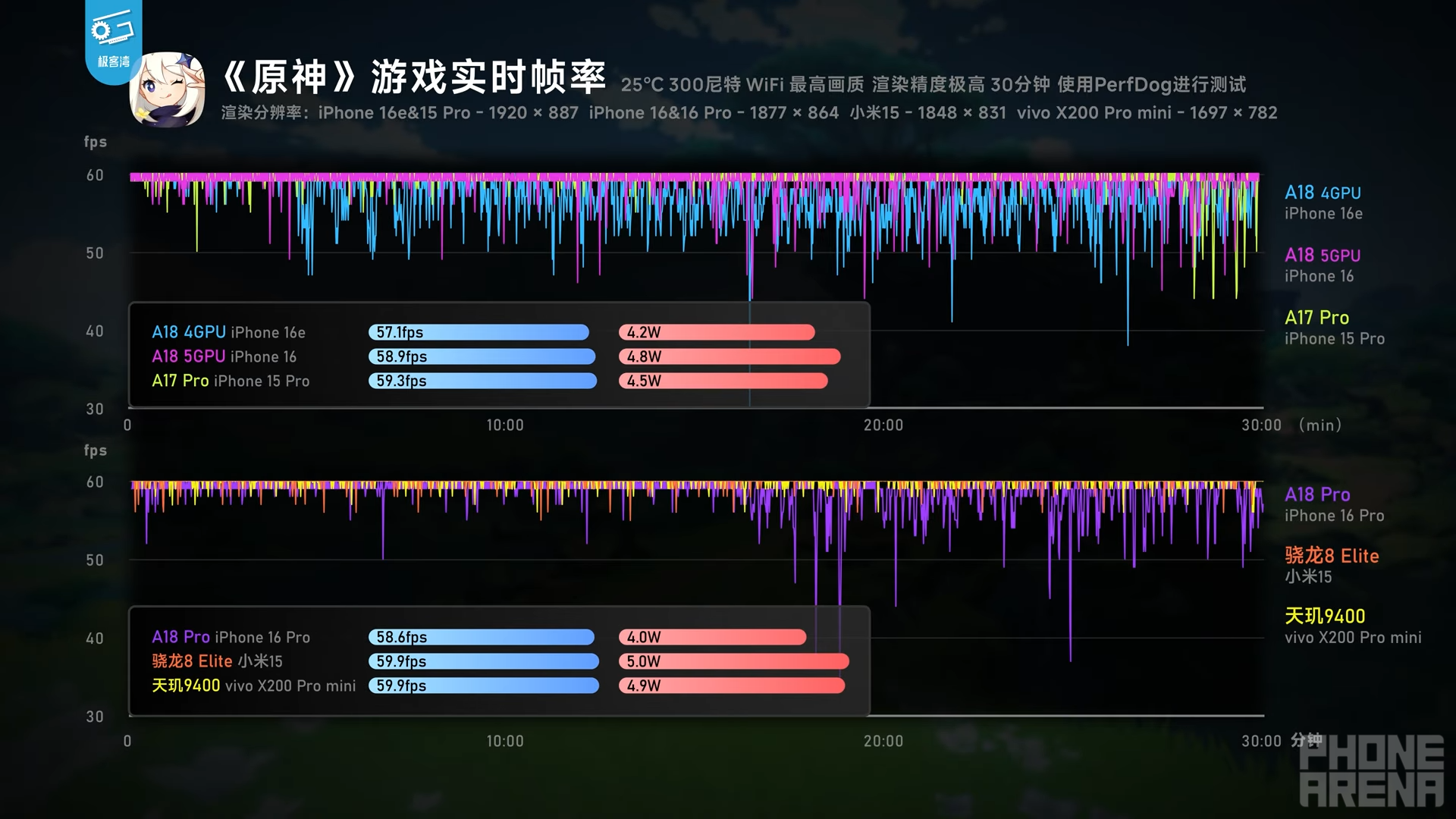
Notably, in *Genshin Impact* with 5G connectivity, the iPhone 16e manages to close the gap against its pricier counterparts, though it still trails behind both the iPhone 16 and the iPhone 16 Pro.
Interestingly, previous iterations of the iPhone SE matched the performance of higher-end models featuring the same chip. However, this time, it appears Apple has made changes to the A18 chip to delineate the iPhone 16e from the more expensive iPhone 16 models.
It is crucial to note that the iPhone 16e is marketed as a mid-range smartphone, intended to compete with devices like the upcoming Pixel 9a and Galaxy A56, rather than flagship phones. While it’s not specifically tailored for gaming, it does deliver competent features for everyday use.
In summary, while the iPhone 16e shows promise as a mid-range device, its GPU limitations and thermal performance could result in disappointment for gaming enthusiasts, even though it outperforms older models like the iPhone 15 Pro in certain areas.
Exclusive Offer: Get the iPhone 16e at Apple with Discounts!
$599
The Apple Store offers the new budget-friendly iPhone 16e with savings of up to $630 for eligible device trade-ins, available from February 28, with carrier promotions also included.
This offer might not be available in your area.
Performance comparison of *Honkai Impact 3*. Phones tested include the iPhone 16e, iPhone 16, iPhone 15 Pro, iPhone 16 Pro, Xiaomi 15, and Vivo X200 Pro Mini. | Image Credit - GeekerWan
*Wuthering Waves* performance analysis. | Image Credit - GeekerWan
*Genshin Impact* performance results. | Image Credit - GeekerWan