In a surprising geographic twist, Google Maps has officially rebranded the Gulf of Mexico as the Gulf of America in its U.S. version. This alteration comes in the wake of the Geographic Names Information System (GNIS) updating its records, prompting Google to follow suit. In contrast, Apple Maps has chosen to retain the traditional name, creating a notable distinction between the two mapping platforms. This divergence marks a rare instance where both services label the same significant geographical feature differently since Apple Maps' inception in 2012, a period marked by its share of inaccuracies and controversies.
Google Maps now displays both names in certain regions, listing the Gulf of Mexico as the primary name, followed by the Gulf of America in parentheses. Meanwhile, Apple Maps continues to identify it solely as the Gulf of Mexico. This naming disagreement has led to speculation regarding the possible influence of political factors, particularly given the existing tensions between major tech companies and government officials.
While some observers may interpret Apple's decision to stick with the original name as a form of resistance, it is essential to note the broader context of how tech firms navigate the complex political landscape. Past criticisms directed at Google, particularly by former President Trump, heavily focused on alleged biases in the company's search results and the platform's overall narrative portrayal. These dynamics continue to shape the relationship between technology companies and political figures in a world increasingly driven by digital representation and information access.
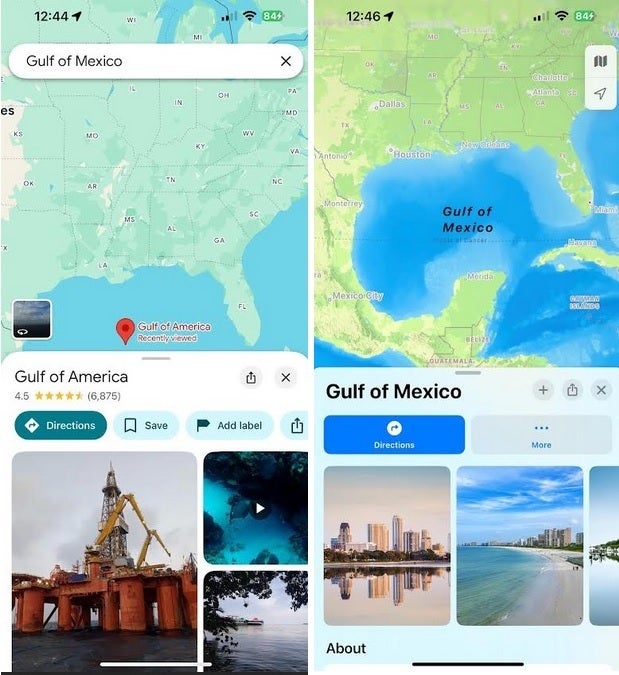
Google Maps (L) displays the Gulf of America, while Apple Maps retains the Gulf of Mexico. | Image credit-PhoneArena
This unexpected change follows a pattern where tech giants may align with political sentiments to maintain favorable operating conditions. Google, alongside other major tech companies like Amazon and Meta, has often found itself adapting to governmental pressures, recognizing the impact of public perception on their business models. The shift in naming not only raises questions about accountability in digital mapping but also highlights the intricate relationships between technology, politics, and public trust.
As conversations around branding and naming conventions unfold, attention is also drawn to other potential changes, such as the renaming of Denali mountain back to its historical title, "Mount McKinley," as ordered by the current administration. The ongoing evolution of geographic names reflects broader societal changes and national sentiments, making it a critical aspect of both heritage and contemporary discourse.