In the ever-evolving landscape of the U.S. mobile network industry, the competition has intensified dramatically. T-Mobile, often dubbed the "Un-carrier" for its customer-centric offerings, has long enjoyed a reputation for superior speeds and expansive service availability. However, recent advancements by Verizon and AT&T in satellite technology have raised questions about T-Mobile's ability to maintain its leading position. As both competitors make headlines with their new satellite initiatives, one might wonder if this spells trouble for T-Mobile. But based on the current state of play, it appears that the "Un-carrier" is far from finishing last in this race.
While T-Mobile has made significant strides in coverage and technology, Verizon and AT&T's recent announcements regarding their satellite capabilities—driven in part by AST SpaceMobile's satellite service tests—seem to have put some pressure on T-Mobile. But let's not forget that the rules of the game are still being written, and T-Mobile is navigating the field with dexterity, leveraging partnerships, and maintaining an innovative edge that the competition is yet to catch up to.
Is T-Mobile Still Leading in the Satellite Race?
T-Mobile continues to hold the upper hand in the satellite arena. Surprised? You shouldn’t be. While Verizon and AT&T's recent satellite breakthroughs may seem significant, they are still behind in execution and real-world application.
With T-Mobile's ambitious plans, the company is positioning itself to enhance coverage significantly. | Image Credit - T-Mobile
Historically, major announcements from Verizon and AT&T often come with caveats—specifically, a lack of clear timelines for public deployment. Recent promotional material from Verizon about their satellite service tests doesn’t offer a definitive rollout plan, leaving many wondering when, or even if, customers will see these innovations come to fruition.
With no set dates for implementation, and AST SpaceMobile's unveiling that their satellite constellation will need more time—potentially pushing any significant coverage until 2026—it becomes clear that both Verizon and AT&T have their work cut out for them. Until those improvements are rolled out on a nationwide scale, T-Mobile is set to shine through.
What Does the Future Hold for T-Mobile?
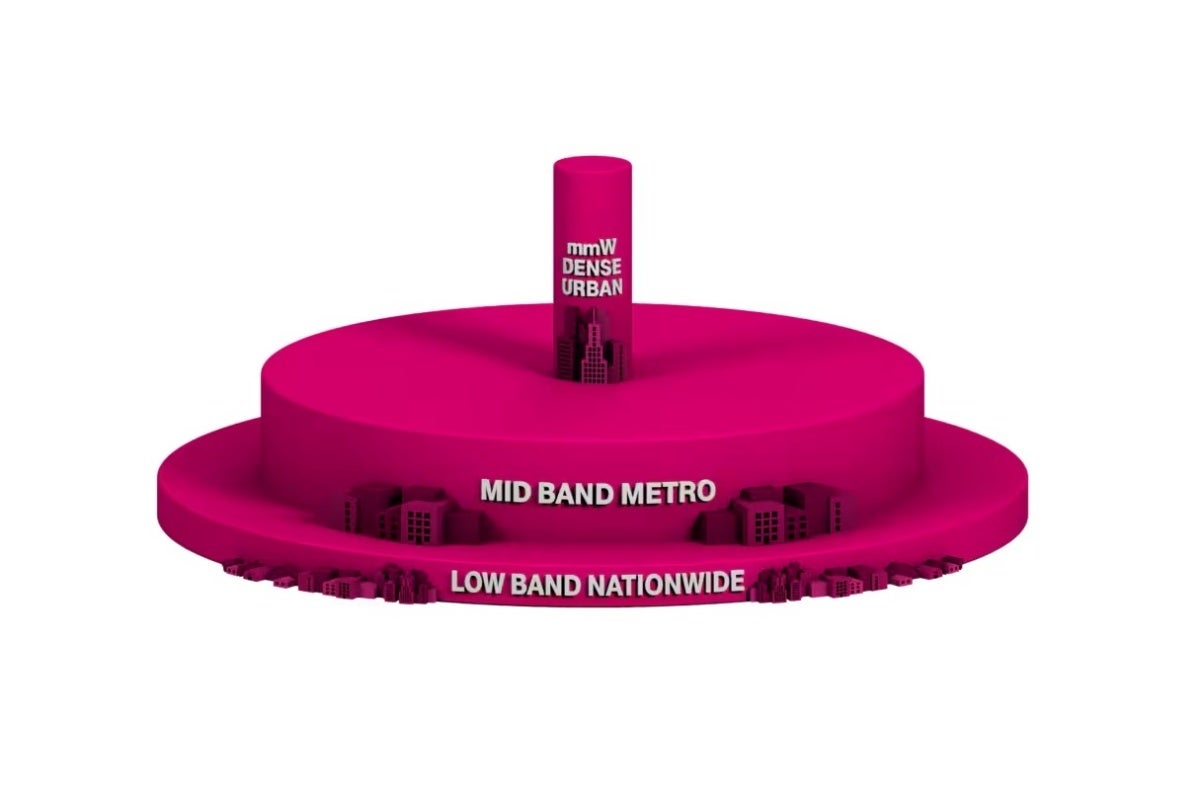
It’s not just about satellite capabilities; T-Mobile has strategically positioned itself ahead in the 5G race by investing in mid-band spectrum—something its competitors are still grappling with. T-Mobile’s innovative approach puts it in a strong position, allowing the company to respond quickly to emerging technologies and maintain its lead.
T-Mobile's 5G innovations put them at a distinct advantage, further cements their industry position. | Image Credit - T-Mobile
While Verizon and AT&T may eventually step up their game, T-Mobile has gotten a jumpstart by integrating its services with SpaceX’s Starlink constellation, a move that grants the "Un-carrier" a significant competitive advantage in the satellite arena. This collaboration will soon allow T-Mobile to offer robust connectivity where competitors lag, reinforcing its reputation as an industry innovator rather than follower.
As the race for mobile network supremacy heats up, T-Mobile's forward-thinking strategies and partnerships signal that it has plenty of room to continue leading. Even with competitors snapping at its heels, the "Un-carrier" seems poised to maintain its dominance in the evolving landscape of mobile connectivity.