In a move that has sent ripples through the tech industry, President Trump has implemented a 10% tariff on all products imported from China, officially taking effect on Tuesday. This decision could pose significant challenges for major tech companies, particularly Apple, which relies heavily on Chinese manufacturing for its product lineup.
With the majority of its iPhone, iPad, and Mac production based in China, the immediate impact on the pricing of Apple devices remains uncertain. Analysts are closely watching how Apple will respond to this new tax burden and what it means for consumers.
In recent efforts to diversify its production, Apple has shifted some manufacturing operations to India, now producing iPhone Pros there and gearing up for the upcoming iPhone 17 series. This transition follows India's removal of import tariffs on critical smartphone components, which has aided Apple’s strategy to lessen its dependency on China.
Despite these efforts, Apple still plans to have 25% of its production based in India by year's end, leaving the bulk of its products subject to the recently imposed tariffs. Apple may opt to absorb the tariff costs, thereby maintaining current prices, or they could decide to pass these costs onto consumers by raising retail prices.
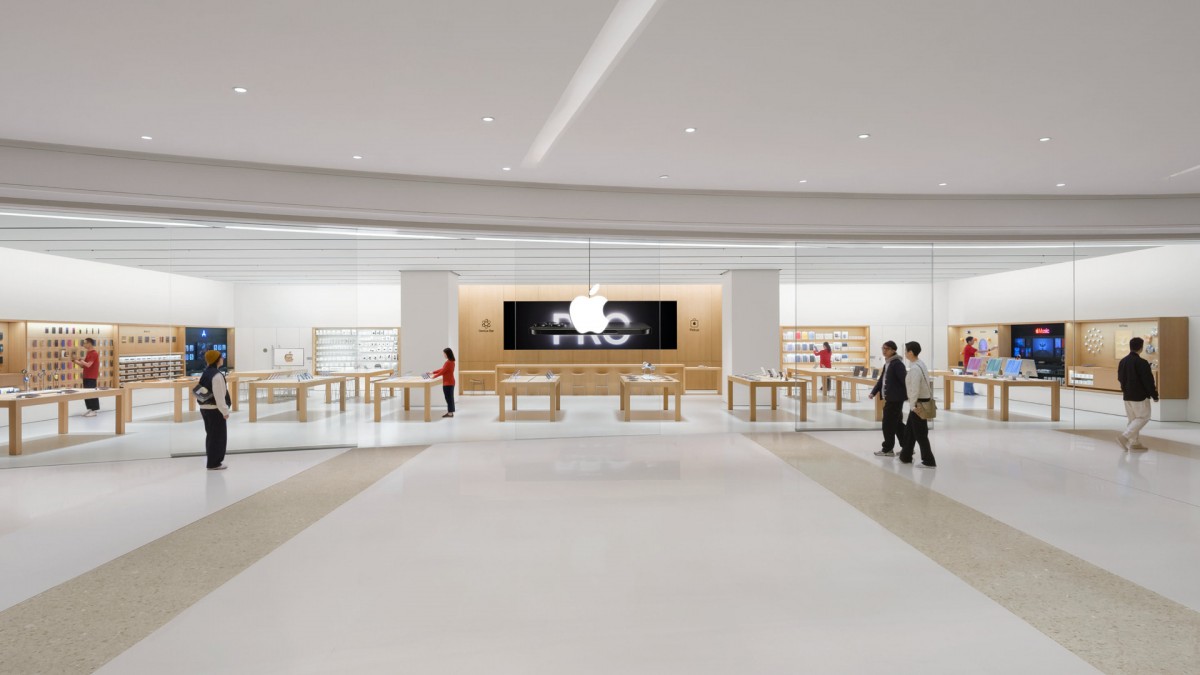 Apple MixC Hefei, the company’s first store in China’s Anhui province
Consumers can expect that any alterations in pricing may not occur immediately, as Apple likely has sufficient stock of its products in the U.S. already, and the tariff applies only to products imported after Tuesday.
On the bright side, the timing of the tariff coincides with a typically slow quarter for Apple. Following the Q4 launch of new products, sales usually taper off, allowing for more data to emerge as the iPhone 17 series release approaches. The evolving landscape of tariffs and international trade could take various turns, and Apple’s fate may depend on negotiations between the U.S. and China.
Additionally, analysts note that Apple may face further complications as Chinese authorities are expected to respond to the U.S. tariffs, adding another layer of uncertainty to Apple's global operations.