The first-generation iPhone was unveiled during Macworld 2007, showcasing Apple CEO Steve Jobs not just as a brilliant salesman but as a master showman. His presentation captivated audiences and highlighted the potential of the new device, setting a benchmark for future product launches. Readers of PhoneArena are encouraged to revisit Jobs’ OG iPhone reveal on YouTube to witness his expert demonstration of launching a groundbreaking product.
Jobs recognized the transformative power of the iPhone, which undoubtedly reshaped the landscape of mobile technology. Prior to its release, several smartphones existed, but they lacked the slick user interface, touch functionality, multimedia capabilities, and virtual QWERTY keyboard that the iPhone brought to the table. As such, the iPhone’s impact was unparalleled.
Microsoft's CEO Sees the iPhone's Limitations
Post-launch, demand for touchscreen smartphones surged, causing major players like Nokia and BlackBerry to falter in the market. Microsoft CEO Steve Ballmer famously dismissed the iPhone during its launch, humorously predicting that consumers would never embrace typing on glass screens. At that time, Microsoft’s Windows Mobile was a leading smartphone operating system, and Ballmer's confidence proved miscalculated.
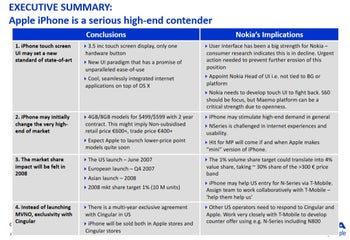
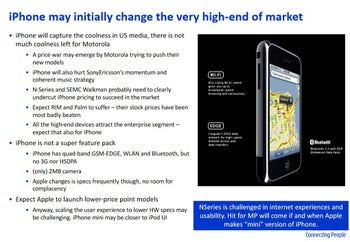
A recently leaked 2007 presentation from Nokia sheds light on how the leading smartphone manufacturer at the time viewed the rising threat of the iPhone. While Nokia acknowledged the iPhone's innovative touchscreen interface and user friendliness, it remained confident in its own hardware, market influence, and pricing strategies as key advantages in the global smartphone race.
Nokia was cautious about the iPhone's high cost and its reliance on a virtual keyboard, speculating these factors would limit its market appeal. However, Nokia also recognized its weaknesses, particularly regarding software design and ecosystem integration. The presentation notably compared the Nokia N800 internet device to the iPhone and recognized that the iPhone's user interface “might elevate the standards of user experience across the market.”
Nokia's Call to Action Post-iPhone Reveal
Ultimately, Nokia concluded that it needed to develop its own touchscreen device to compete with the iPhone. The company decided to focus on enhancing its S60 operating system, which was based on Symbian. Observing the preference of U.S. carriers for an iPhone rival, Nokia aimed to strengthen its partnership with T-Mobile.
It is fascinating to consider how quickly Nokia, as the leading smartphone maker in 2007, felt the urgency to react to the iPhone. The N800, which lacked cellular function and operated solely on Wi-Fi, was deemed unfit for the competition. One strategy explored by Nokia involved pairing the N800 with compatible 3G handsets, allowing consumers seamless internet browsing alongside traditional calling capabilities.
Many view Nokia's response to the iPhone as embodied in the 5800 XpressMusic, launched in October 2008. By early 2009, over one million units had been sold. Despite introducing its own touchscreen model, Nokia struggled heavily, ultimately restructuring to align with Windows Phone—a decision that proved disastrous for its market position. Microsoft's acquisition of Nokia's mobile phone division in 2013, valued at $7.2 billion, marked a significant decline for the brand. Nonetheless, the Nokia name has seen a revival thanks to a licensing agreement with HMD.
Nokia acknowledged in its internal memos that the iPhone's triumph could "stimulate high-end demand in general, helping everybody to grow volumes in the high price segment" of the market.