TikTok has been temporarily removed from the U.S. app stores of Apple and Google, leaving millions of users unable to access the platform. Late Saturday, users attempting to open the app encountered a message stating that TikTok would be "temporarily unavailable." The platform assured users that efforts to restore service were underway and encouraged them to “please stay tuned.”
A follow-up message read, "Sorry, TikTok isn't available right now," citing a newly enacted law that prohibits the app's operation in the U.S. The notification expressed appreciation for President Trump’s indication that he would work towards finding a solution to reinstate TikTok once he assumes office. Trump’s upcoming inauguration on Monday has raised hopes for TikTok’s return.
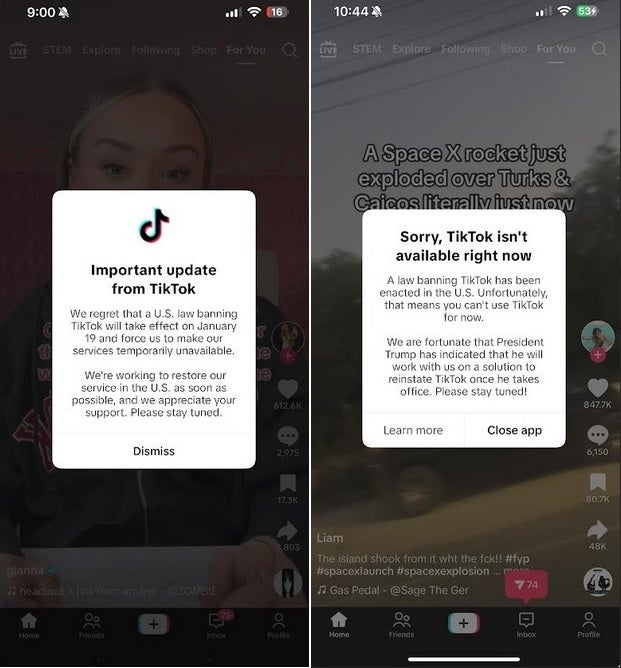
TikTok goes dark on Saturday night. | Image credit-PhoneArena
Earlier in the day, President-elect Trump expressed that he “most likely” would grant TikTok a 90-day extension to seek a U.S.-based buyer. This suggests a potential reprieve from a law signed by President Biden in April, which mandated that TikTok find an American buyer by January 19th. Concerns have been raised over the Chinese company ByteDance's handling of user data, especially regarding minors, and the potential for ideological influence through content available on the platform.
With over 170 million monthly users in the U.S., TikTok's future hangs in the balance. During his first term, Trump attempted to compel ByteDance to sell the popular app to American companies. In 2020, entities such as Walmart, Microsoft, and Oracle showed interest in acquiring TikTok, but negotiations ultimately fell through. Presently, in 2025, Elon Musk, a billionaire and a close confidant of Trump, is perceived as a frontrunner to purchase the app after having acquired Twitter in October 2022.
Despite Trump’s apparent pivot from critic to supporter of TikTok, the underlying objective remains consistent: the app must be divested from its Chinese ownership and transitioned to American control, echoing the sentiment from his previous administration.