In recent years, Apple has been at the forefront of innovation, with rumors swirling about the tech giant's ambitions to integrate Face ID components beneath the iPhone's display. This shift aims to eliminate the notch and the cutout that accommodates the Dynamic Island, providing users with an uninterrupted, pristine viewing experience. However, industry insider Russ Young, the founder and CEO of Display Supply Chain Consultants (DSCC) and a reputable source for leaks, mentioned last year that he no longer anticipated the debut of under-display Face ID in the iPhone 17 Pro or iPhone 17 Pro Max.
Amidst these discussions, a groundbreaking patent recently awarded to Apple could address the technical challenges faced in developing this feature. The company had struggled to allow infrared light, essential for scanning faces, to pass through the iPhone's display pixels. The patent, granted by the United States Patent and Trademark Office (USPTO), is titled "Methods and Configurations for Improving the Performance of Sensors Under a Display."
To make this work, Apple's strategy involves removing sections of each pixel's subpixel, which typically emits red, green, or blue light. By doing so, infrared light would have a pathway through the display, while the overall image quality would remain unchanged, as the remaining subpixels align with their colorful neighbors.
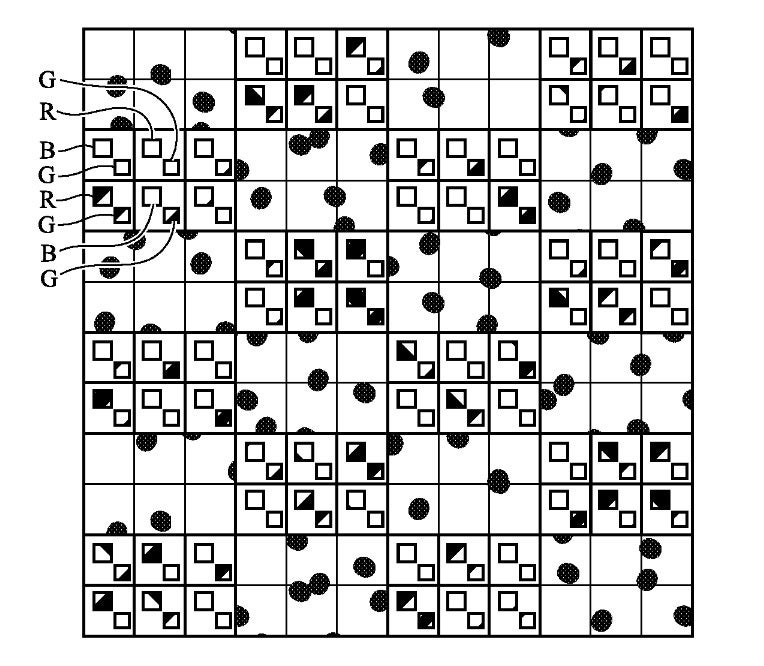
Illustration from Apple's new patent. | Image credit-Apple
The patent further suggests that modifying some of the touch-sensitive mesh could enhance infrared light transmission. The adjustments would be minuscule, ensuring that the touch screen's responsiveness remains uncompromised.
As for the anticipated under-display Face ID, it may not make its appearance until the iPhone 18 Pro and iPhone 18 Pro Max, or alternatively, the complex technology outlined in the patent may not be utilized at all if Apple finds a different solution to house Face ID components beneath the display. The patent, registered under US 12,201,004, was issued on January 14, 2025, and lists seven Apple employees as inventors.