What is the best smartphone to buy in 2023? After a few years of incremental advances – a brighter screen here, a better selfie camera there – we are starting to see real differences again as AI transforms what mobile phones can do. We're currently testing the brand new iPhone 15 and Google Pixel 8 and will update this guide as soon as we've finished our thorough tests. Will they retain their positions above Samsung's flagship S23? We'll see.
This year, the choice is further complicated with the proliferation of folding phones, which are very impressive but shockingly expensive. When is upgrading the right choice for you?
Despite the amazing things that some 2023 phones can do, if you find a good deal on an even older model it will still be worth considering. If it's less than about five years old, you'll find a pretty good camera, lots of storage for photos and videos, a fully stocked app store and a good screen.
Below are Rob Waugh and Jack Rear's reviews of the best smartphones in 2023, followed by an FAQ section and a guide to some of the jargon you'll come across when phone shopping. But if you're in a hurry, here's a quick look at their current top five:
Which are the best smartphones in 2023? At a glance
Best overall: iPhone 14 Plus
Best value: Google Pixel 7
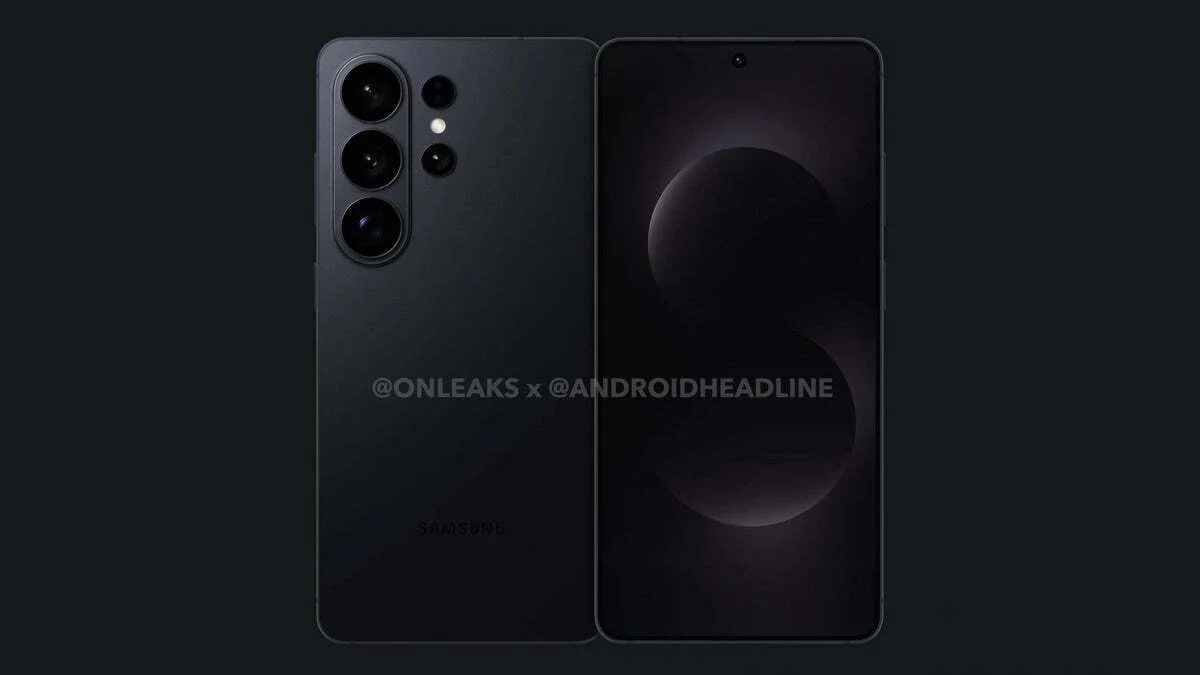
Best camera phone: Samsung Galaxy S23
Best budget phone: iPhone SE
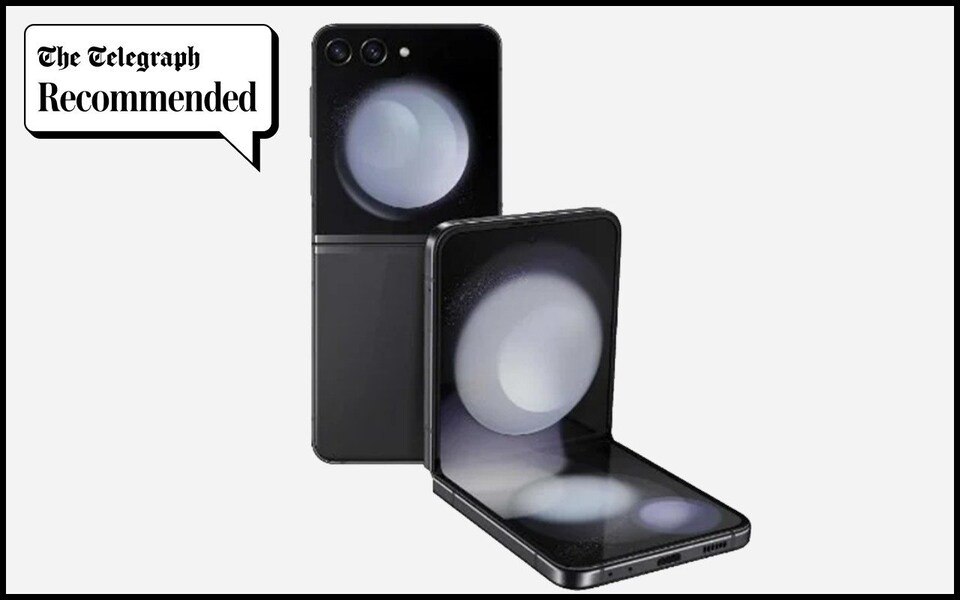
Best folding phone: Samsung Z Flip 5
How to find the best smartphone deal
Smartphone buying is not getting cheaper: the Google Pixel Fold reviewed below is nearly £1,800. Although most come cheaper than that, they're all a significant investment, so getting the right model is more important than ever.
There are some good mobile phone deals allowing you to buy your phone through a network on a two- or three-year payment plan, but in our opinion you're best buying a phone outright and taking on a sim-only deal. The prices we give below are based on this. Buying the phone outright gives you more choice when it comes to data plans and the ability to jump between providers when they offer cut-price deals.
Best smartphones
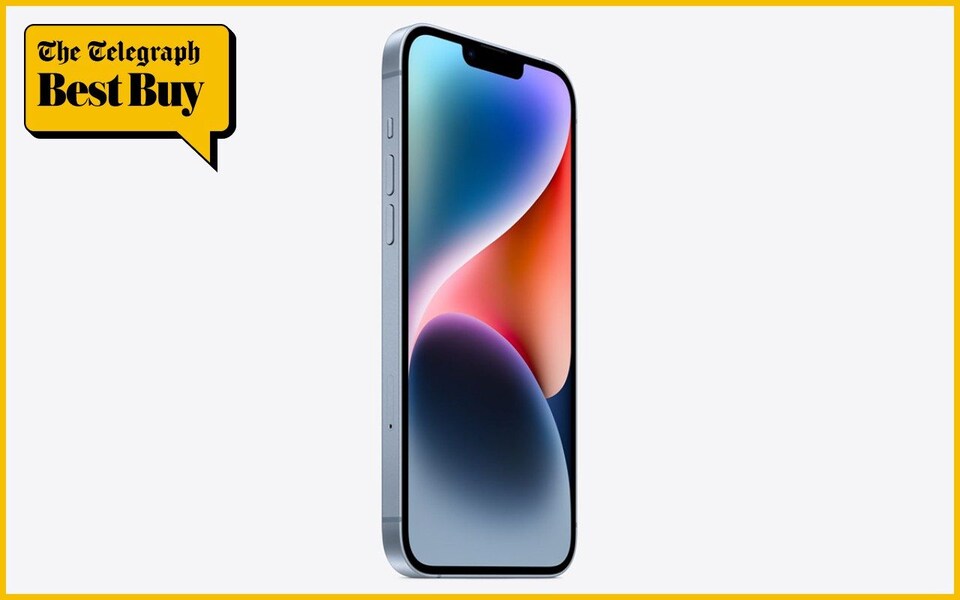
1. Apple iPhone 14 Plus
£864 for 128GB model, John Lewis also available at Apple and Very
Best overall, 9/10
We like: Incredible battery life makes this phone a long-life superstar
Worth upgrading from iPhone 13? Sure, if you're OK spending £200 for a better battery (most other features are the same)
256GB (£1,059) and 512GB (£1,279) models also available
Operating system: iOS 16
Screen: 6.7in Super Retina XDR OLED, 75hz refresh rate
Cameras: two 12MP rear cameras with optical image stabilisation, 12MP selfie camera
Battery life 26 hours of video playback
Processor: Apple A15 Bionic
Reviewed by Rob Waugh
The iPhone 15 is now available and we have one on test, but last year's 14 is by no means obsolete. There is even a case for buying the iPhone 13, now down to £599. It had the same front and rear cameras as this 2022 iPhone, the same processor and a similar screen.
But there's a lot to love about the iPhone 14 Plus, in particular its sterling battery life. It will last for up to three days even with heavy use, and if left connected but with lighter use, will still be going after almost a week. It's noticeably better than other phones on test and if you're the sort of phone user who's always finding themselves short of battery, it's a reason to buy this handset on its own. (Do check out our guide to the best power banks first, though.)
That said, it's still pricey. You can get Androids with sharper, brighter screens for less money - although you'll miss out on the battery life. The Pixel 7 below takes better pictures. But for Apple fans looking for a long-lasting companion, this is hard to fault. We will see how the iPhone 15 compares. Watch this space.
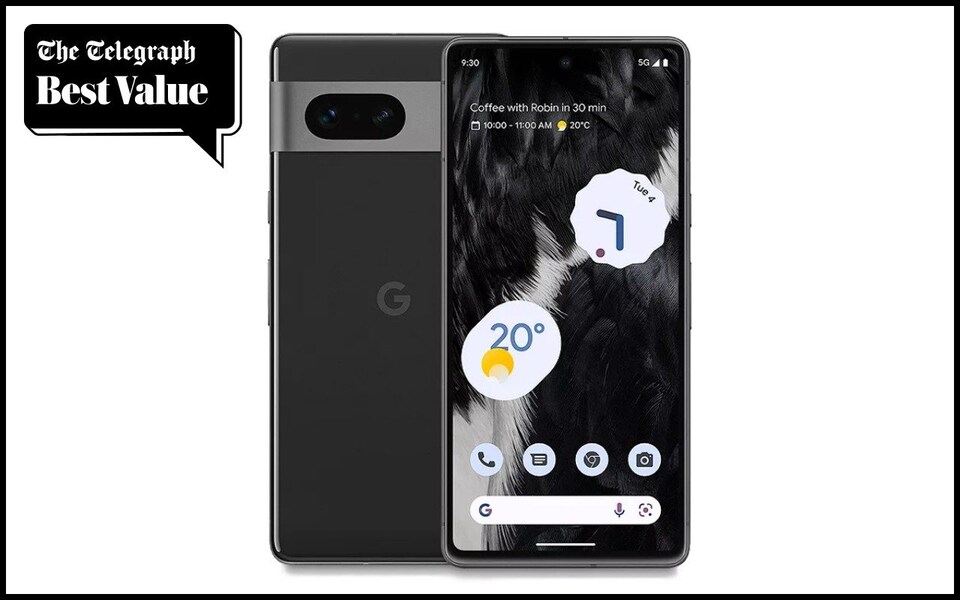
2. Google Pixel 7
£499 for 128GB model, John Lewis, also available at Google and Very
Best value, 9/10
We like: incredible camera tech rounds out a great package at a decent price
Worth upgrading from Pixel 6? Only just – but the low price makes it an easy indulgence
256GB model also available for £599
Operating system: Android 13
Screen: 6.3-inch OLED, 90Hz refresh rate
Cameras: 50MP main, 12MP ultrawide, 48MP 5x telephoto and 11MP selfie
Battery life up to 24 hours
Processor: Google Tensor G2
Reviewed by Rob Waugh
The newer Pixel 8 went on sale at the start of October and is quite a leap forward – particularly the AI-powered Pro version – but until we've had a chance to properly test that, we're happy to recommend this Pixel 7 from last year.
For any defector switching from iPhone to Android, Google's Pixel handsets have always offered the same simplicity as Apple's handsets - often with a few technical extras. Last year's model doesn't break the mould and, crucially, is still under £600: far less than the equivalent iPhones.
The camera is always the strong suit in Google Pixel phones, and the 7 delivers crisp images and a subtle AI boost which turns out superb results even if you're a pretty ham-fisted photographer, courtesy of subtle lighting and focus adjustments. The new ‘face unblur' tool, for instance, is a highly useful feature when capturing fast-moving objects such as your children.
Face unblur didn't feature on the previous-gen Pixel 6, which lacked the latest Tensor G2 processor. The same goes for the new Macro Focus setting for ultra close-ups. Other than that, there is not a gigantic visible difference between this and the Pixel 6, which you can now pick up for £299. But a better processor makes all a phone's functions faster and smoother and will better keep pace with software updates. The screen is bright and gorgeous - unlocked via a finger sensor in the screen which is highly effective, even in the rain.
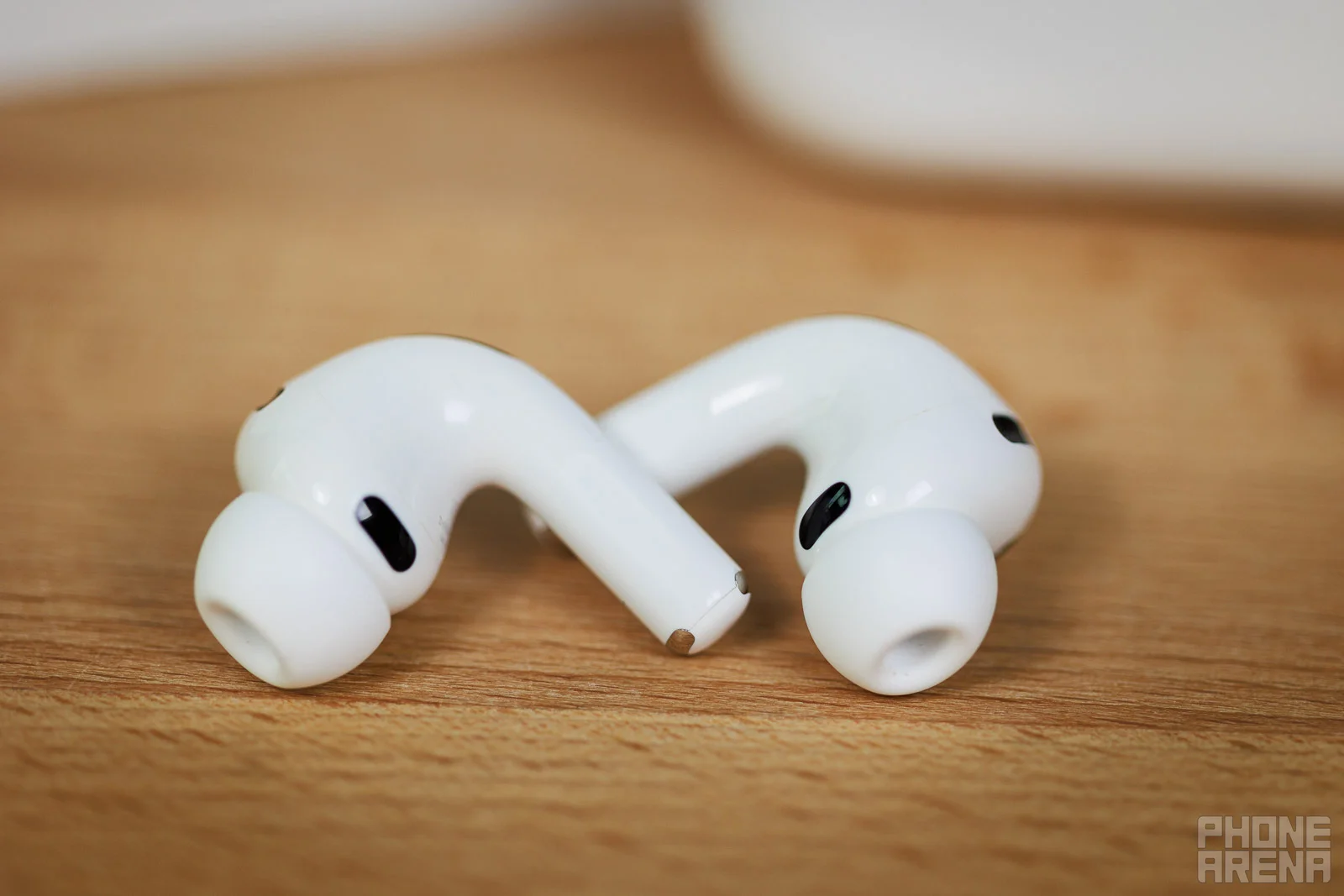
One other reason to choose Google phones is that they support the AptX and LDAC audio codecs, which sounds nerdy but means that you can have far superior sound quality in your wireless earbuds or noise-cancelling headphones. Samsung phones support these codecs too. Apple phones don't.
There is one drawback to the Pixel 7: Google claims the battery will last 24 hours but in practice it's easy to find yourself running very low on battery towards the end of a day of heavy use. It's not terrible, but it's disappointing in something that's in every other way a technical powerhouse. The superb camera and the trademark Pixel ease-of-use mean this is still the phone to beat. Will we still say that after testing the Pixel 8? We'll see.
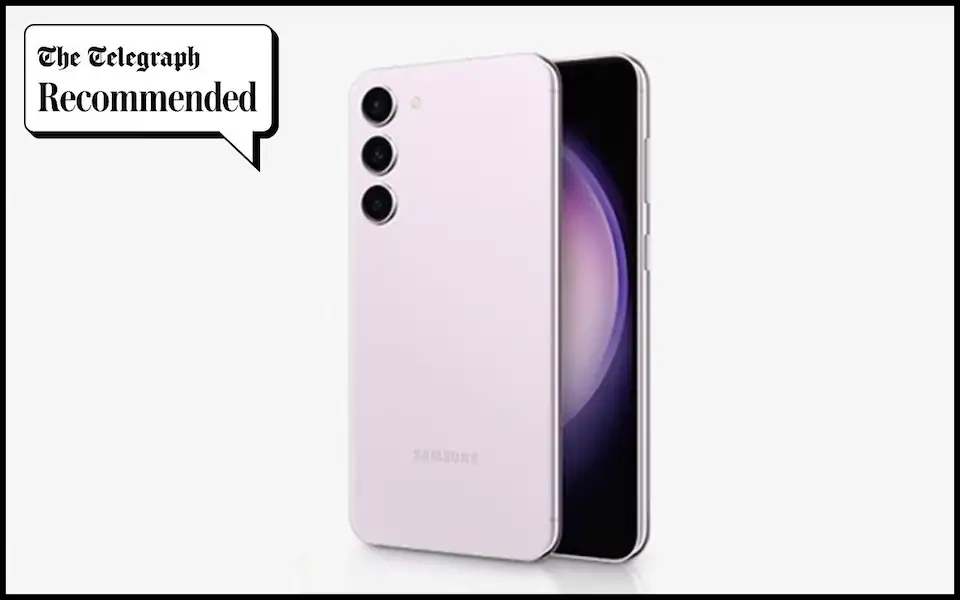
3. Samsung Galaxy S23 Ultra
£1,249 for 256GB model, Samsung, also available at Carphone Warehouse and Mobile Phones Direct
Best camera phone, 9/10
We like: the ultimate Android camera phone
Worth upgrading from S22? For keen photographers, definitely (especially while the prices are, bizarrely, the same)
Also available in 512GB (£1,399) and 1TB (£1,599) models
Operating system: Android 13
Screen: 6.9 inch AMOLED 2X, 120Hz refresh rate
Cameras: 12MP selfie camera, 12MP ultra Wide (F2.2), 200MP Wide (F1.7), 10MP Telephoto (F4.9)
Battery life: 13 hours
Processor: Qualcomm Snapdragon 8 Gen 2
Reviewed by Rob Waugh
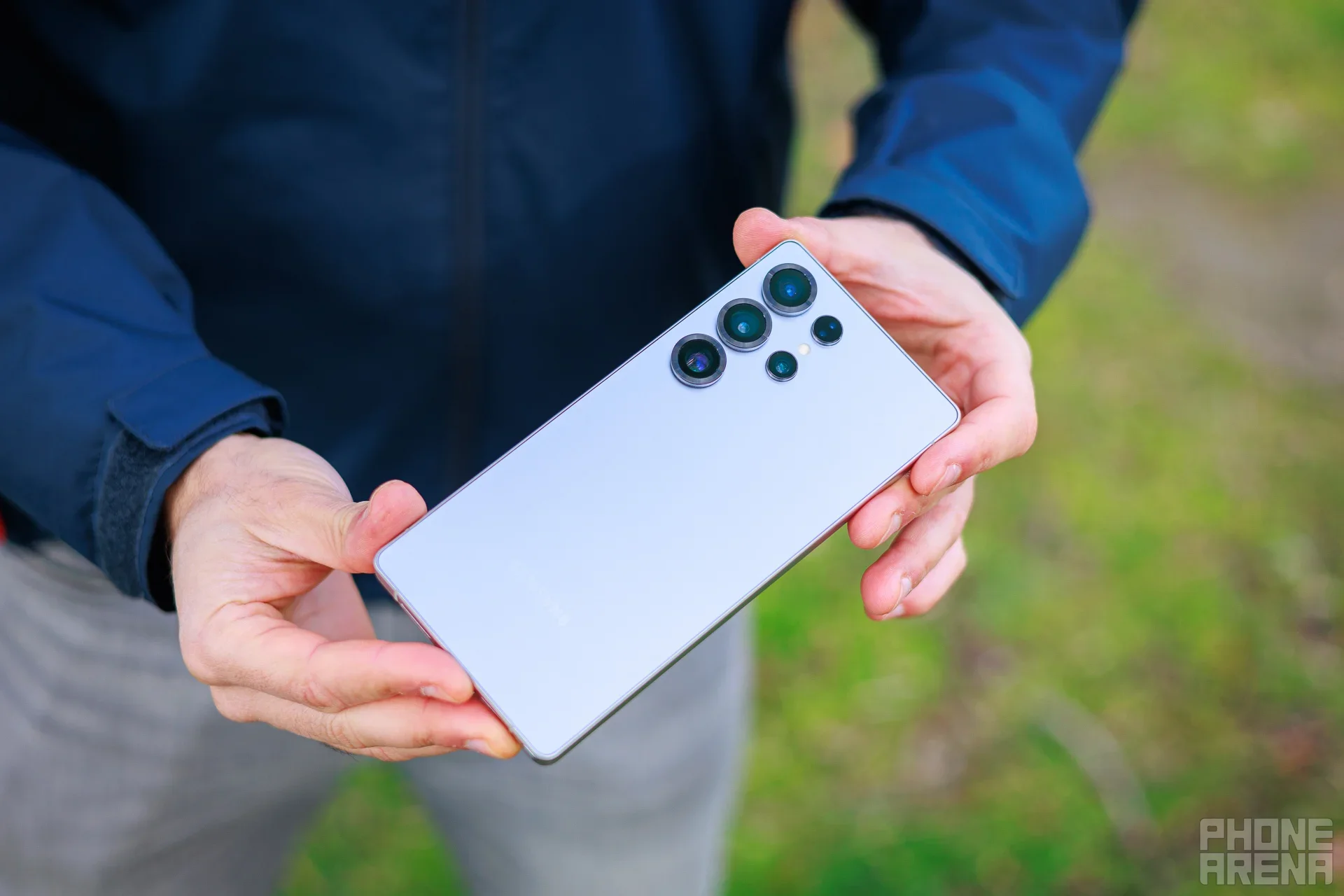
Samsung has really thrown the kitchen sink at its flagship S23 Ultra, with a phone that comes armed with not only the best Android processor on the market but also a frankly bonkers array of cameras including a 200-megapixel sensor on the back, which puts this phone basically in a class of its own.
Looks-wise, it's not massively different from the previous year's S22 Ultra (in other words, it's gorgeous if you don't mind a fairly hefty device with five cameras staring out of the back). But the camera and processor upgrades alone are enough to make this definitely worth the purchase - especially if you're a keen photographer. There's also the option for more storage in the handset if you're looking for a place to store all those 200-megapixel snaps.
Like Samsung's old, discontinued Note handsets, this comes with a stylus which you slide out of the body of the phone to doodle on screen and browse (you can also use it wirelessly to remotely trigger selfies by clicking on the side, which is a very cool feature).
The 120Hz screen is bright and colourful, beating any Android on the market hands-down and equalling even the top-end iPhones. But the reason you'd go for a pricey handset like this (it's £1,249 for the 256GB model, or an eye-watering £1,599 for the top-end 1TB model) is the photography. The S23 Ultra delivers on this score unlike anything else on the market right now.
If you're looking for camera ease of use, go for Google's Pixel 7 for its AI-boosted point-and-shoot, but if you're looking to get serious, this is your best choice, with a bewildering array of options in the Expert RAW app that allow you to set your inner photography geek free.
The 200 megapixel camera combines 16 pixels into one 12.5 megapixel shot in standard mode, delivering incredibly bright and colourful images. If you want to zoom and crop, shoot in full 200-megapixel mode. Night photography, boosted by AI, is incredible, and the two telephoto cameras deliver incredible zoomed-in shots. That includes a 100x zoom shot of the surface of the moon which elicited a, ‘Wow' from Elon Musk (although the this feature has been accused of using existing shots of the moon to fill in the fine details).
Controversies aside, this is a gorgeous phone with a fast processor that makes mincemeat of games and video (it can also shoot in 8K, four times sharper than the display of even the latest tellies). But the reason you'll stay is for the camera. For anyone serious about smartphone photography, this is the ultimate choice.
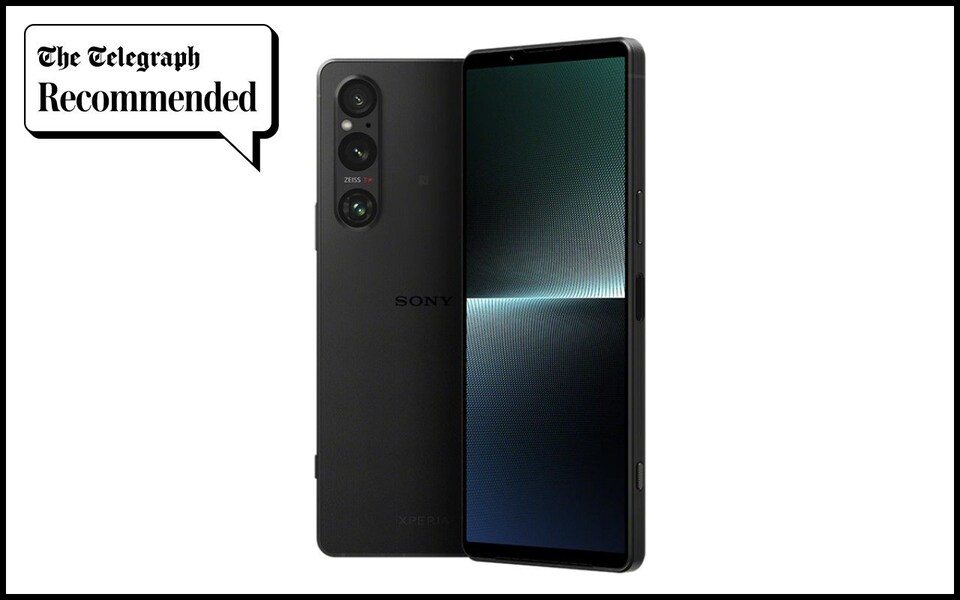
4. Sony Xperia 1 V
£1,199 for 256GB model, Mobile Phones Direct, also available at Sony and Very
Best smartphone for watching videos, 9/10
We like: the cinema-style 4K screen is the best you'll find
Worth upgrading from Xperia 1 IV? Yes, the camera's much better and it doesn't get as hot
Only 256GB model available
Operating system: Android 13
Screen: 6.5-inch 4K OLED
Battery life: 20 hours of video playback
Camera: 12-megapixel selfie camera, 52MP main rear camera, 12MP telephoto, 12MP ultrawide
Processor: Qualcomm Snapdragon 8 Gen 2
Reviewed by Rob Waugh
Sony's smartphones plough their own furrow, with a distinctive ‘long' look and a 21:9 aspect ratio – plus other now-exotic luxuries such as a headphone socket. The latest Xperia 1 V is a drop-dead gorgeous handset, with the slim form making it pleasing in the hand (without losing screen acreage), and a ridged finish which adds to the classy, distinctive look. In a world where every smartphone looks broadly the same, this doesn't.
It all feels very ‘Sony' with square edges and not a whisper of curved glass anywhere. I tested the black model but there's also khaki and metallic ones on offer. It's rated IP65/IP68 (ie, very good) for dust and water resistance and has Gorilla Glass Victus 2, so it won't give up the ghost too easily if dropped.
The on button also doubles as a fast and effective fingerprint sensor. Compared to the Xperia 1 IV – which you will now be able to pick up for about £300 less – the body is the same (bar a new ribbed ‘grip' surface on the sides) and there's an upgraded camera array on the back, with a new 52-megapixel EXMOR T sensor, plus an upgrade to the chip which means the new phone runs much cooler.
Sony has its fingers in many pies, from televisions to cameras, and there's a lot of tech know-how and innovation brought to bear here, with an incredibly sharp 4K screen with deep blacks and the same resolution as their home TVs, while that 21:9 aspect ratio lets you watch films as they're meant to be enjoyed. There's no other phone on Earth that can match the screen resolution here – although it's not quite as bright as other rivals.
There's a lot of old-school cool, with a headphone jack prompting me to dig out an old pair of headphones and remember how much better they sound than Bluetooth ones. The SIM tray allows you to add microSD expandable storage as you please (something that used to be fairly common in phones, until manufacturers realised they prefer charging an arm and a leg for built-in storage).
The camera is excellent, with a new, expanded sensor and a 24mm wide-angle and an 85-125mm periscope telephoto. The best part is that there's a real, physical camera button. Sony have – again – opted for the road less travelled, and rather than relying on AI to boost image quality, there's a huge amount of manual tinkering options in the device's default Photo Pro and Video Pro apps.
The Videography Pro app is based on tech from Sony's professional-grade video cameras. For a certain sort of consumer, this will be fantastic, but for the less camera-obsessed, it's a little bewildering. Video Pro is superb, recording in 4K up to 120 frames per second, but there are so many numbers and options on screen it feels like you've been given a job as a cameraman without any training.
The screen is the big sell here, and it's utterly gorgeous (as well as the slim, unconventional look of the handset itself and the option to use ‘proper' wired headphones) but even with the smorgasbord of high-quality components on offer here, it's still hard to justify the price. At £1,299 it's higher than almost any Android, and up there with the top-end iPhones. Whether the unique square look and a few extra pixels are worth the price is down to individual preference.
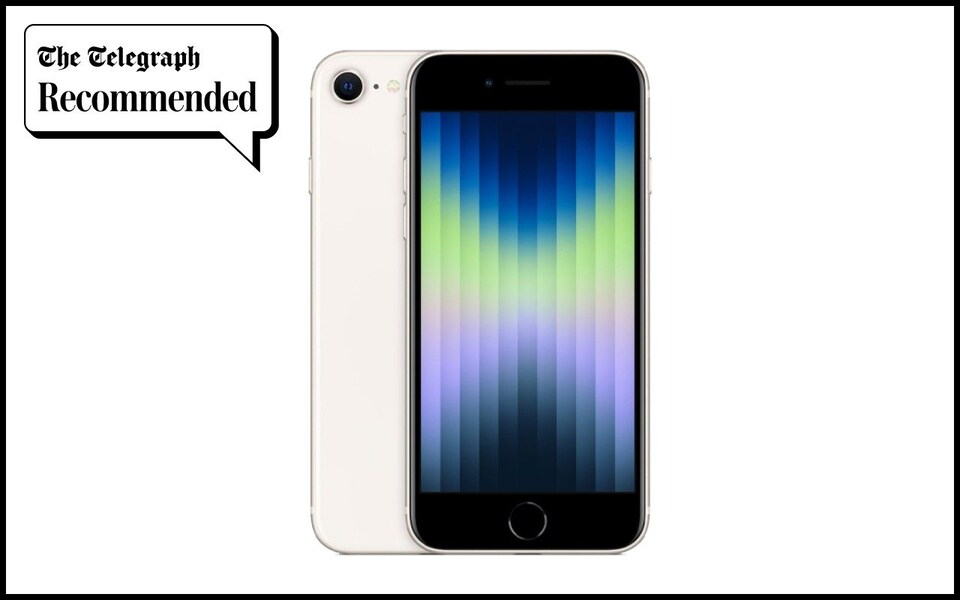
Also available in 128GB (£499) and 256GB (£609) models
Operating system: iOS 16
Screen: 4.7-inch Retina HD
Battery life: up to 15 hours video playback
Camera: 7MP selfie camera, 12MP main rear camera
Processor: A15 Bionic chip
Reviewed by Jack Rear
A few years Apple made the courageous decision to admit to itself that some of its would-be customers aren't CEOs with bulging wallets and created the iPhone SE line for those with a slightly tighter budget. Starting from £449, the iPhone SE is not exactly bargain-basement, but does come with Apple's luxury cachet. It's also smaller and lighter than most modern phones, which is an underrated virtue.
Unlike the iPhone 14, the SE comes with a fingerprint scanner rather than a face scanner, which personally I prefer. The 12MP main camera is outgunned by the similarly-priced Google Pixel and there is only one, so Apple's prodigious image optimisation software has less to work with than on two-camera and three-camera phones.
One huge difference between this and the iPhone 14 is the feeble battery. A day's charge is the absolute maximum you're going to get. Even with moderate usage, I was down to the low 20% range by 6pm. The blame lies with Apple's powerful A15 bionic chip, the same one as used in the iPhone 14 above. It makes the phone's software running very quick and smooth, but unfortunately the smaller battery is simply unable to cope.
For those who don't use their phone very often or work in an office with access to chargers nearby, the iPhone SE will do the job. Otherwise, I'd be tempted to spend a bit more and plump for a mainline iPhone.
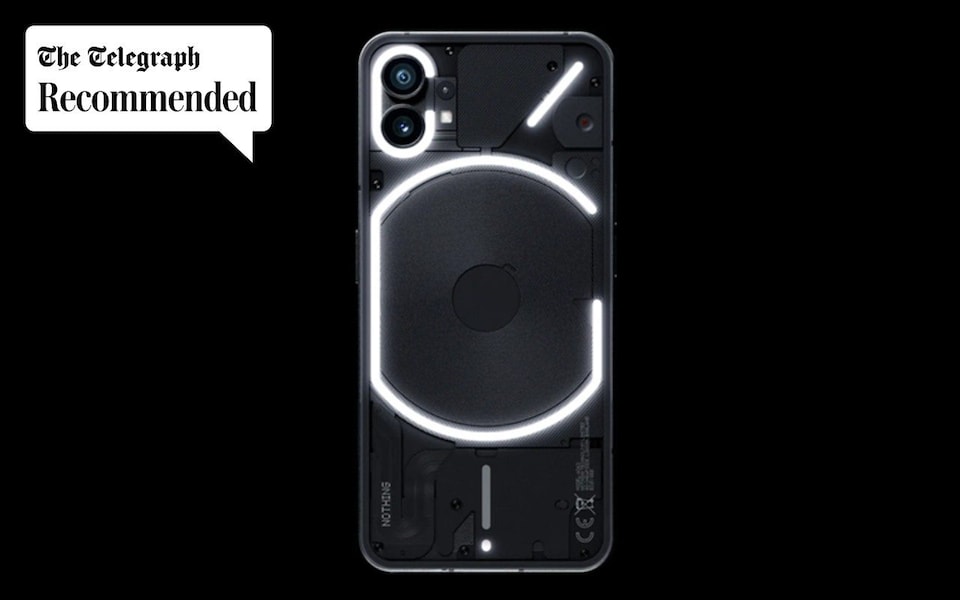
6. Nothing Phone 1
£349 for 256GB model, John Lewis, also available at Amazon and Very
Best looking smartphone, 7/10
We like: very cool ‘glyph' lights on the back
We don't like: the camera tech isn't quite first rate
Only 256GB model available
Operating system: Android 12
Screen: 6.55 inch OLED, 120Hz refresh rate
Cameras: 50MP main, 50MP ultrawide, 16MP selfie
Battery life: 16-42 hrs depending on use
Processor: Qualcomm Snapdragon 778G+
Reviewed by Jack Rear
The Nothing Phone is, quite simply, one of the strangest devices I've tested in years. It's a British-made Android phone that launched last year, the chief selling-point of which is the see-through back.
The brand's founder is ex-Apple, and the designer is ex-Dyson and it feels like the sensibilities of both have coalesced into a very handsome form here; the luxury of Apple's products with the practical sleekness of Dyson's. That extends to the hassle-free operating system which, unlike Samsung, is perfectly content to let you use Google's excellent app suite rather than making its own.
My favourite feature though, is the light-up ‘glyphs' on the back of the phone. Plug in the phone and it'll light up briefly to let you know it's charging. Get a text, lights. Get a call, lights. Get an email, lights. And you can set it so that different apps light up the glyphs in different ways. You could set it so that a call from your partner lights up everything, whereas one from your boss only lights up one glyph.
For photographers, the glyphs can also act as a built in ring-light for lovely photos in the dark - handy because the night-photography mode, a staple on most modern phones, is nothing to write home about.
The 50MP main camera here is very good but, compared to the Pixel 6 Pro above, the image optimisation is not as strong. Auto-focus didn't feel quite as tight. Still, the 6.5inch screen is sharp and bright and refreshes at 120Hz. The battery life is roughly the same as on the Pixel 6 Pro.
One other thing that bears mentioning is the Nothing Phone's eco-credentials. The aluminium is 100 percent recycled and so are 50 percent of the plastic components. Buying new phones is never going to be great for the environment, but it's nice to see a brand at least trying.
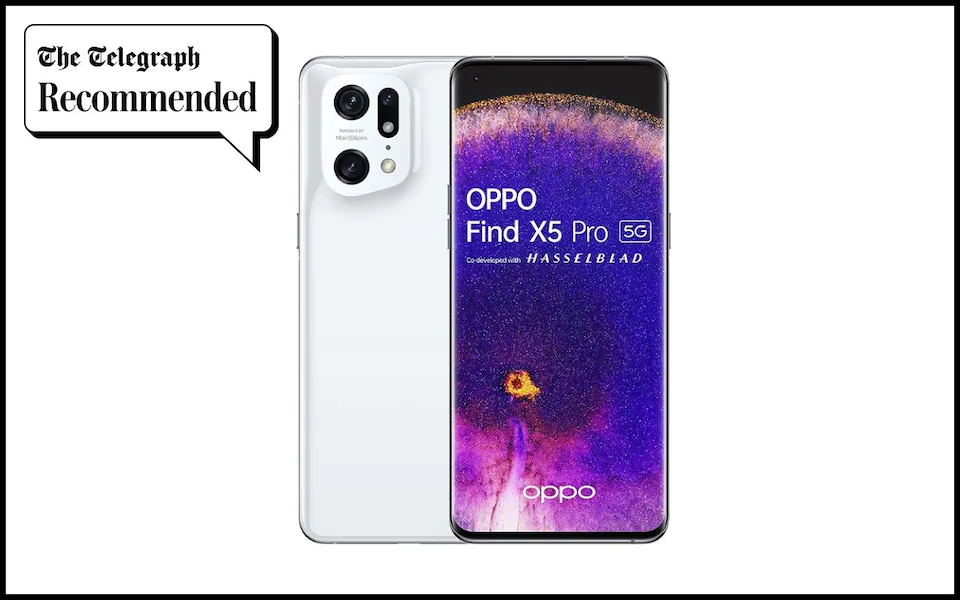
7. Oppo Find X5 Pro
£758 for 256GB model, Amazon
Best smartphone camera, 7/10
We like: exceptional camera lenses by Hasselblad
We don't like: not everyone wants their pictures to look this pure and natural
Operating system: Android 12
Screen: 6.7 inch AMOLEd, 120Hz refresh rate
Cameras: 50MP main, 50MP wide, 32MP selfie
Battery life: 24-48 hours, depending on use
Processor: Qualcomm Snapdragon 8
Reviewed by Jack Rear
There are dozens of things to recommend about Chinese manufacturer Oppo's Find X5, including the blazingly fast charging: 0-100 percent in 47 minutes. iPhones can take two hours to charge. If you're the type of person who uses their phone and battery-draining apps a lot, this should be a huge-selling point.
The cameras are the biggest draw, however: two swanky 50MP main and ultra-wide-angle cameras on the back and a 32MP front camera. Oppo and its sister-company OnePlus have been working with Swedish camera manufacturer Hasselblad. The partnership has been a huge success, elevating their camera technology from just okay to genuinely great. In pure hardware terms, I'd say that Oppo and OnePlus phones have the best cameras on the market. Their wide-angle lens is jaw-dropping.
However, I still say Google's Pixel phones are the go-to for snappers. It all comes back to that image optimisation. Oppo's cameras are based on Hasselblad's ‘Natural Colour Calibration' to use more natural and accurate colours. I'm sure it's more professional, but compared to the ones I took on my Pixel 6 Pro, they just felt ever so slightly washed out and dull. I can't help favouring the Pixel.
Oppo also make a standard model Find X5 which currently goes for £400 and a budget Find X5 Lite at £300. The Lite doesn't have the swanky camera but, for my money, it's still better than pretty much anything else in the same price bracket. For the average customer it's a strong choice.
There is a more recent Oppo Find X6, by the way, but it's only available in China.
Best foldable phones
8. Samsung Z Flip 5
£1,049 for 256MB model, Samsung, also available at John Lewis
Best folding phone, 9/10
We like: huge improvement over previous model
We don't like: the camera is decent but not world-changing
Also available with 512GB storage for £1,149
Operating system Android 13
Folding screen 6.7-inch AMOLED with 120Hz refresh rate, cover screen 3.4-inch AMOLED
Cameras: 10MP front-facing, dual 12MP rear
Battery life: up to 11 hours use, 35 hours standby
Processor: Qualcomm Snapdragon 8 Gen 2
Reviewed by Rob Waugh
What a difference a year makes. Samsung's Z Flip 5 has finally ironed out the issues of its predecessors and is a grown-up, gorgeous handset which makes you feel that flip phones are definitely here to stay. It's about the most eye-catching foldable there is. A redesigned hinge means it feels pleasingly sturdy as you fold and unfold and it folds completely flat. The gap in previous handsets (and in most rivals) always made foldables feel breakable and slightly toytown: now it's gone.
The other glaring problem of early folding phones has been literally ironed out here: the screen barely has a wrinkle when the phone is folded out, and you wouldn't guess you were using a folding phone just from looking at it (although it is still softer to the touch). The metal-bordered design also looks seriously cute when folded up, like a phone from the long-gone days when devices actually fitted in pockets.
The main 6.7-inch screen here is a sterling performer, but what sets this apart from the folding pack is that it's got a state-of-the-art Qualcomm Snapdragon 8 Gen 2 chip, so it's pretty much as fast as any phone on the market today. Pair that with an 120Hz screen, and it feels as good as a lot of flagships - just with an extra screen on the back.
And what a screen that is. The 3.5-inch screen here has been massively upgraded so it's actually useful, with the option to reply to texts and WhatsApps without opening the phone, as well as a variety of useful and semi-useful widgets such as calculators. It definitely cuts down the amount of times you open your phone per day, preventing you from losing time down a social media rabbit hole when all you wanted to do was see what that ping meant.
It's a breathtaking improvement over last year's Z Flip 4, which only had a relatively tiny 1.9-inch screen with far less functionality. In every way, the Z Flip 5 trounces its predecessor, from the processor right through the feel of the phone. The only thing that's largely unchanged is the camera, which is perfectly respectable but not world-beating.
It's fully waterproof and will go around 35 hours between charges. Previously generations of Samsung flip-phones (and their various rivals) have tended towards, ‘It's great, but…' Here, the ‘but' is largely gone: this is a well-engineered, finished product which suggests that folding devices will make up a big part of the future of smartphones. All that needs to change is the price - this one is still £1,049, £50 more than last year's - meaning it's still in flagship territory.
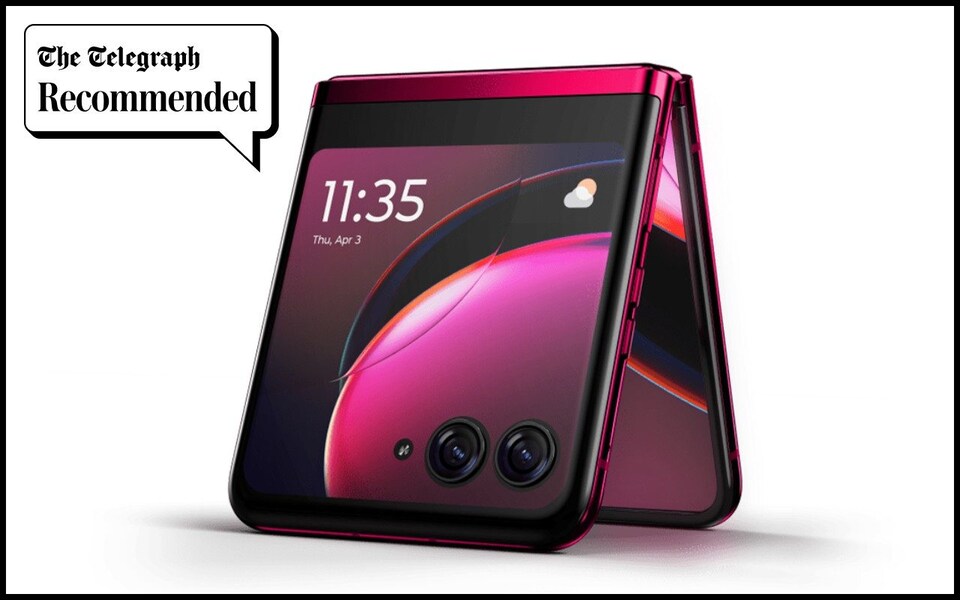
9. Motorola RAZR 40 Ultra
£949.99 for 256GB model, John Lewis, also available at Carphone Warehouse and Very
Best flip phone, 9/10
We like: perfectly balanced folding phone
We don't like: high price compared to non-folding varieties
Only 256GB model available so far
Operating system Android 13
Screen: 3.6-inch external AMOLED, internal 6.9-inch AMOLED
Battery: up to 33 hours talk time
Cameras: 32MP selfie camera, 12MP main rear camera and 13MP ultrawide
Processor Qualcomm Snapdragon 8+ Gen 1
Reviewed by Rob Waugh
Motorola's RAZR phones ruled the world back in the early 2000s, with the phone perfecting the flip phone aesthetic with its ultra-slim form, becoming an iconic device which sold 130 million units. Paris Hilton was rarely to be seen without her pink RAZR back in its heyday.
Now the RAZR brand has returned as a 2023-style flip phone (opening into a vertical touchscreen, as opposed to folding phones like Google's Pixel Fold, whose interior screens are horizontal). It's a serious performer too, thanks to a 3.6 inch, 1,44Hz second screen which lets you interact with apps, see notifications and check basic information such as weather and time. It's the biggest on a ‘flip' phone and it makes the device far more usable and a far more attractive choice.
The interior 6.9-inch screen is gorgeous, and the phone has a fast Snapdragon 8 Plus Gen 1 processor. The camera, as with many folding phones, is fairly mediocre given the price, but there's some nice extras. For instance, you can use the exterior display as a ‘mirror' for your subjects to see themselves in.
Aesthetically, it's a winner. It's gloriously thin (what else would you expect from a RAZR handset?) and folds into a neat, thin square when not in use.
As with many folding phones, the issue here is the price tag: you'll pay £1,049 for this, which is more than (for example) Google's flagship Pixel 7 Pro.
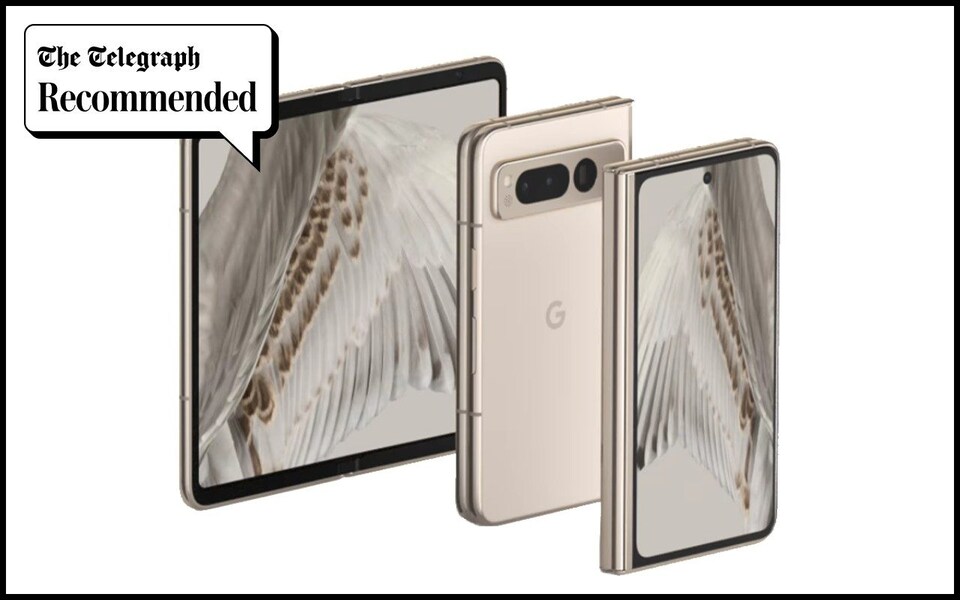
9. Google Pixel Fold
£1,749 for 256GB model, Google, also available at Mobiles.co.uk
Best foldable phone, 10/10
We like: Gorgeous premium finish and great camera
We don't like: very expensive indeed
Also available with 512GB storage for £1,869
Operating system: Android 13
Screens: 5.8-inch outside, 7.6-inch inside
Battery life 24 hours
Cameras: 9.5 MP selfie camera, rear 48MP main camera with wide lens, 10.8MP ultrawide lens and 10.8MP telephoto lens
Processor Google Tensor G2
Reviewed by Rob Waugh
Google's Pixel Fold is a different take on the folding phone idea. It folds out into a huge square, pretty much a full-fledged tablet, with a 7.6-inch screen which is great for watching videos or doing work. What's more, it's got a full-blown screen on the front, which you can interact with just like you would a normal phone. This means you can (for example) fire off a reply to an email without having to unfurl the full width of the screen.
The fly in the ointment here is that the Fold comes in at an eye-watering £1,749 compared with just £699 for Google's own non-folding Pixel 8. Is it more than twice as good?
Well, it is an incredibly fun device to use. It feels great in the hand: it's extremely thin, closing without a gap, and to be fair to the phone, it feels more premium than others in this category with a pleasingly posh aluminium, glass and stainless steel finish.
As always with Google Pixel devices, the camera is sterling (something that's not guaranteed in the folding market), and the 7.6-inch screen here is crisp and gorgeous.
As with anything that's relatively ground-breaking (there are similar Samsung devices, but nothing with this square-ish shape of screen) there are occasional apps which refuse to play ball, but it feels fresh, innovative, and delightful to use. As always with Pixel devices, it's not loaded with weird bloatware apps that no one wants, so it's simple enough even for iPhone fans to switch to. Expensive, but gorgeous.
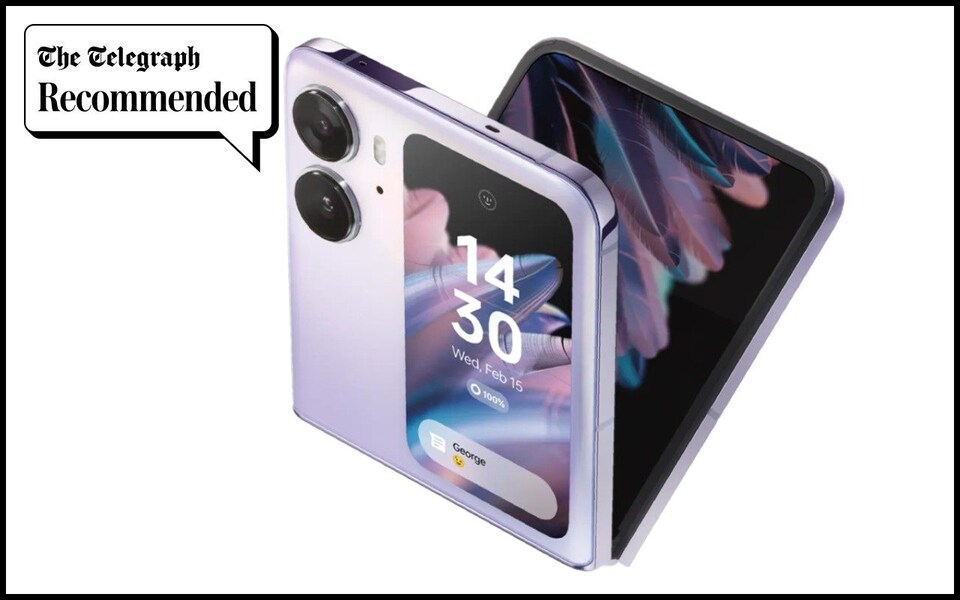
10. Oppo Find N2 Flip
£849 for 256GB model, Oppo, also available at Amazon
Best value folding phone, 8/10
We like: tempting price for a folding phone
We don't like: the camera is fine, but not cutting-edge
Only available in 256GB
Operating system Android 13
Screens: 3.26-inch AMOLED outside, 6.8-inch AMOLED inside
Battery life: 4.5 hours screen time, 36 hours standby
Cameras: 32MP selfie camera, 50MP main rear camera
Processor Mediatek Dimensity 9000+
Reviewed by Rob Waugh
Early adopters of new technology become resigned to the fact you'll always pay for the privilege of turning heads - and the emerging folding phone market is proof of this. You won't find many budget phones in this category, and the closest you'll get to a mid-priced handset is this, priced at £849.
Still, it's a great little performer for the money, with a crisp 5.25-inch AMOLED screen and a cute little three-inch screen on the outside which lets you keep up with notifications and interact with a few widgets (not full apps, though).
For the money, it's a great performer, although, the ColorOS operating system feels slightly alien compared to the comfortable ‘clean' Android of Google's Pixel phone: Oppo is a Chinese company which has only started making phones for the Western market relatively recently, and this comes with the usual weird ‘extra' app store and Oppo apps which don't really add a great deal to the user experience.
The 50-megapixel camera and 32-megapixel selfie camera here are OK, but only OK, lagging behind other phones you'd pay this much money for. It's pleasingly slim, though, and has the ‘wow' factor you expect from a folding device, so it's a good entry-level choice.