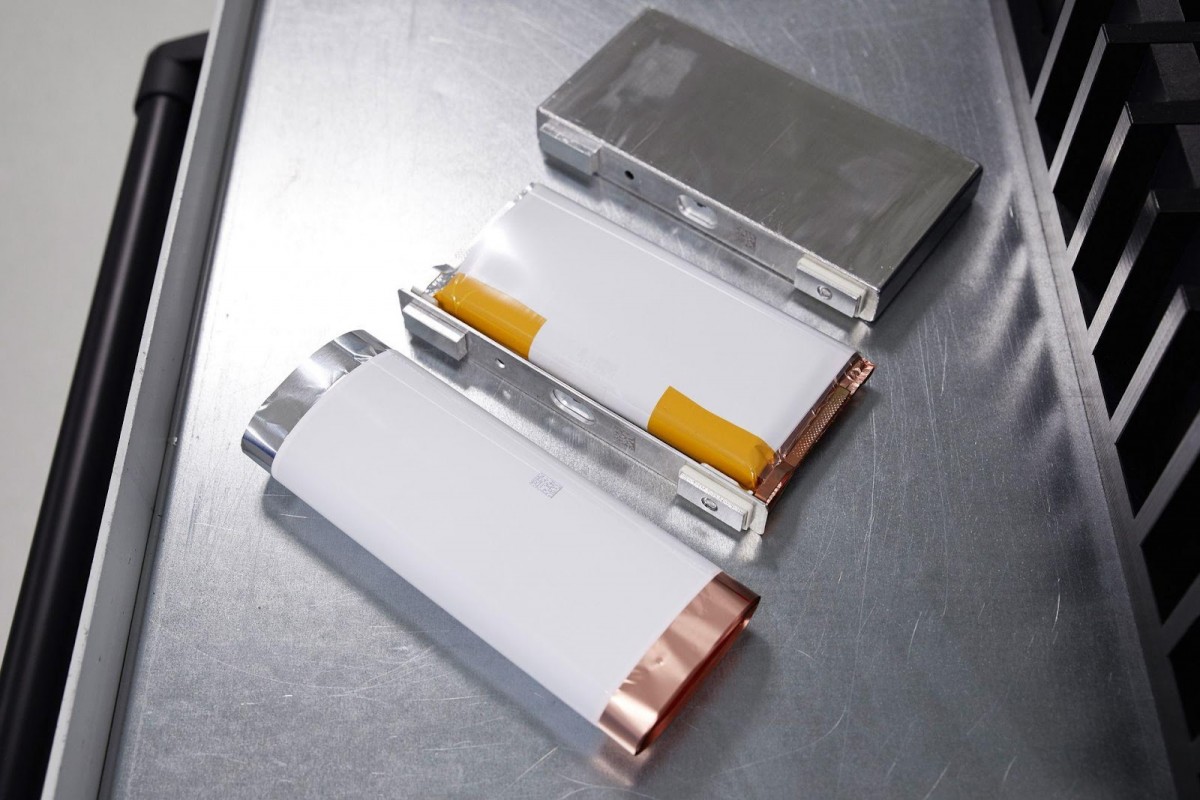
Geely Holding is advancing its solid-state battery technology with the ambitious goal of achieving an energy density of 500 Wh/kg for electric vehicle applications. This next-generation battery is set to significantly outperform current lithium-ion solutions, potentially doubling the energy density compared to today’s leading battery packs.
Currently, the widely used NMC lithium-ion batteries deliver an energy density of 250 to 300 Wh/kg at the cell level, which decreases further when assembled into complete packs. In contrast, Geely’s new solid-state battery aims to reach 500 Wh/kg, enabling much smaller battery packs with the same capacity or larger capacities within the same volume.

To put this into perspective, Geely’s existing Golden Brick LFP battery, known for its rapid charging capability, offers a pack-level energy density of just 128 Wh/kg. By doubling the energy density, manufacturers will gain greater flexibility in vehicle design, allowing for more compact batteries or EVs with significantly extended driving ranges.
If vehicle weight is maintained, these advancements could yield EVs capable of surpassing 1,000 kilometers (over 620 miles) on a single charge, rivalling the range and convenience of diesel-powered cars. Additionally, Geely claims the battery will support an impressive lifespan of up to one million kilometers.
A key challenge for solid-state batteries involves operating temperature ranges, as stability typically requires narrow conditions. However, Geely’s collaborator Dow Chemical has developed an adhesive that helps maintain cell stability in extreme temperatures from -40 °C to 120 °C, enhancing viability for automotive use.
Geely plans to initiate a pilot program in 2027, meaning some vehicles equipped with these advanced solid-state batteries could hit the road next year. Yet, full-scale mass production will depend on the outcomes of testing and further development stages.
Source: Geely Holding and Dow Chemical partnership announcements