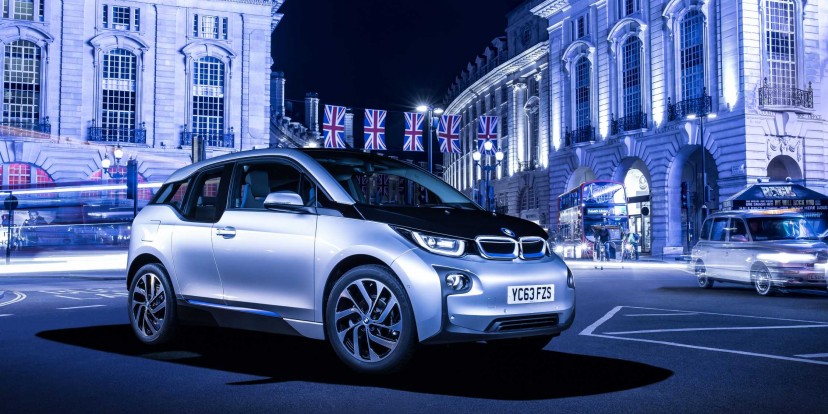
The BMW i3 was launched in late 2013 as a compact, fully electric vehicle available in two versions: all-electric and with a range extender. Despite being nearly a decade old, its innovative technology remains unmatched by many mainstream electric cars. Let's delve into why the i3 was a pioneer in the electric vehicle sector and assess its viability as a pre-owned purchase today.
 2013 BMW i3
Body and Chassis
Colin Chapman, the founder of Lotus, famously posited that "adding lightness" is essential, a principle that BMW embraced with the i3. The vehicle was constructed using carbon fiber reinforced plastic (CFRP), aluminum, and magnesium—materials that are typically not found in mass-produced vehicles due to their high cost and the complexities of manufacturing. The i3 consisted of two modules: the life module, which is the passenger compartment made of CFRP, and the drive module made from aluminum, housing the chassis and drive components. This design offered unmatched stiffness and safety for occupants, eliminating the need for a B-pillar.
The lightweight design paid off; the original i3 with an 18.8 kWh battery weighed just 1,270 kg. It was an unparalleled achievement in car manufacturing utilizing these advanced materials.
 The carbon and aluminum construction of the BMW i3
Powertrain and High Voltage System
The i3 was built on a dedicated electric vehicle platform, taking full advantage of its rear-mounted engine, which powered the rear axle. This configuration optimizes acceleration, as electric motors provide maximum torque at zero rpm. The vehicle featured a 3-phase permanent magnet synchronous motor, regarded as the most efficient motor type in electric vehicles, with a theoretical efficiency of up to 94%.
It was available in two power outputs: 170 hp and 184 hp for the sporty “S” model introduced later in its production run. Peak torque figures were 250 Nm and 270 Nm, respectively, with a single-speed gearbox delivering a total reduction ratio of 9.67:1. This resulted in impressive acceleration, with 0-100 km/h times of 7.2 seconds for the standard version and 6.9 seconds for the “S” model, which had a top speed of 150 km/h and 160 km/h, respectively.
During its lifecycle, BMW produced three liquid-cooled battery variations: 60Ah, 94Ah, and 120Ah lithium-ion packs. The net energy contents were 18.8 kWh, 27.2 kWh, and 37.9 kWh respectively, providing ranges between 160 km and 285 km. A range extender version equipped with a 647 cc two-cylinder motorcycle engine was also available, increasing the maximum range to 300 km for the 60Ah model.
 The 120 Ah/37.9 kWh high voltage battery of the BMW i3
Running Gear
The BMW i3 featured fully independent suspension, with a classic McPherson strut design in the front and a sophisticated five-link setup in the rear. This combination optimized both handling and comfort. The i3's tires—155/70/R19—were narrower than typical for electric vehicles, aimed at reducing aerodynamic drag and rolling resistance. The sporty “S” version used a different setup with 175/55/R20 tires in the front and 195/50/R20 in the rear.
The braking system utilized ventilated discs on all wheels, with the electric motor handling most regenerative braking, capable of up to 50 kW of recuperation. With a projected area of 0.69 m² and a drag coefficient (Cd) of 0.29, the i3 performed well aerodynamically.
 The advanced 5 link rear suspension of the BMW i3
Interior Philosophy
The innovative design ethos extended to the interior of the BMW i3. The absence of a B-pillar, along with rear-hinged doors and a flat floor, created a spacious cabin not typical in the supermini segment. Its interior display layout, featuring a compact instrument cluster and a larger free-standing infotainment screen, has influenced contemporary car designs.
Sustainability was a key consideration in the materials used, incorporating recycled plastics, eucalyptus wood, and natural tanning agents from olive tree leaf extract. These elements enhanced the environmentally conscious appeal of the vehicle.
 BMW i3 interior
Is the BMW i3 Still Relevant Today?
Absolutely. The technology and materials used in the BMW i3 remain impressive. The most evident drawback is its battery capacity, with the largest option at 37.9 kWh appearing low compared to today’s standards. While this battery size suits urban commuting, it may limit long-distance travel. Nonetheless, the i3 continues to be a viable option for city driving, with the potential for occasional short trips outside urban areas.
 BMW i3S
The used BMW i3 market is intriguing. A recent glance at CarGurus shows the average price for a BMW i3 at about $26,178.12, an increase of 33.9% since last year. There are currently 446 i3s for sale, with prices ranging from $13,990 to $47,500. Similarly, listings on mobile.de show 837 i3s for sale, with prices starting at €14,400 for a 2016 model with 68,000 km and reaching up to €47,900 for a 2021 i3S with only 1,300 km driven. In the UK, Auto Trader lists 177 cars priced between £21,795 and £40,900.


