In an impressive turn of events, Apple has surged to become the second-largest smartphone vendor in China, surpassing substantial competitors during a quarter when the overall smartphone market faced declining sales. Despite challenges in the industry, both Apple and Huawei have managed to report significant growth, marking a pivotal moment in the competitive landscape of mobile devices. This article delves into the details of Apple's remarkable quarter, the performance of its competitors, and what the future may hold for the smartphone market in China.
Two Dominant Players Emerge
In a market that saw a 1 percent decline in sales during Q1 2026, Apple and Huawei emerged as exemplary performers, recording impressive growth rates of 24 and 25 percent, respectively. While Huawei maintained its steady position, Apple's remarkable ascent from the fifth to the second spot in market share is particularly noteworthy considering it was previously ranked behind several competitors.
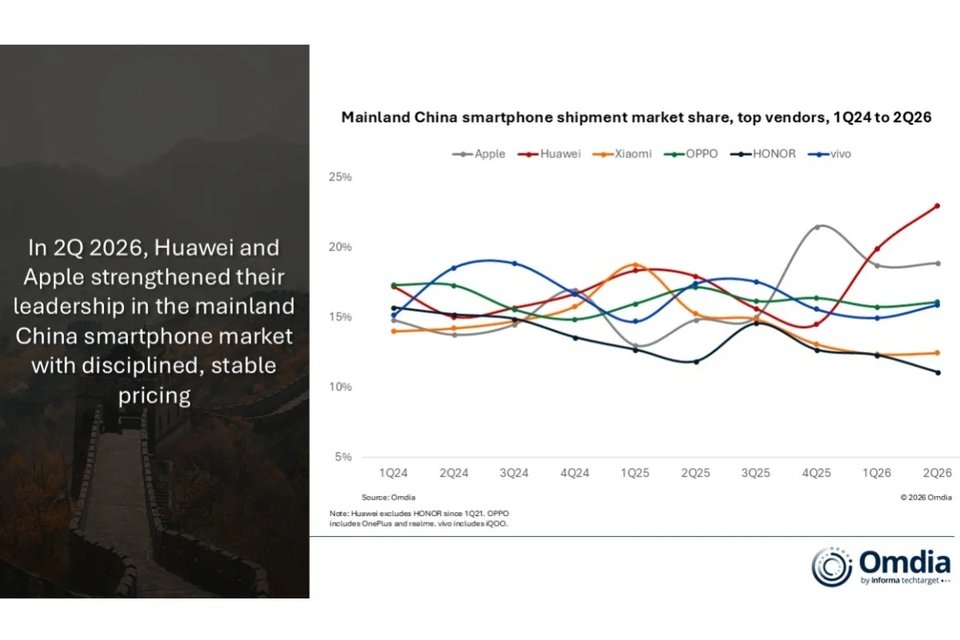
Despite total smartphone sales in China dropping by 2 percent from the previous year, Apple's achievements were highlighted by a record-setting quarter that saw its unit sales grow significantly.
What About the Competition?
Given that other vendors faced the brunt of this market decrease, it’s not surprising to see significant declines among major players like Oppo, Vivo, and Xiaomi. The "others" category faced the steepest drop, contributing to the overall contraction in the market.
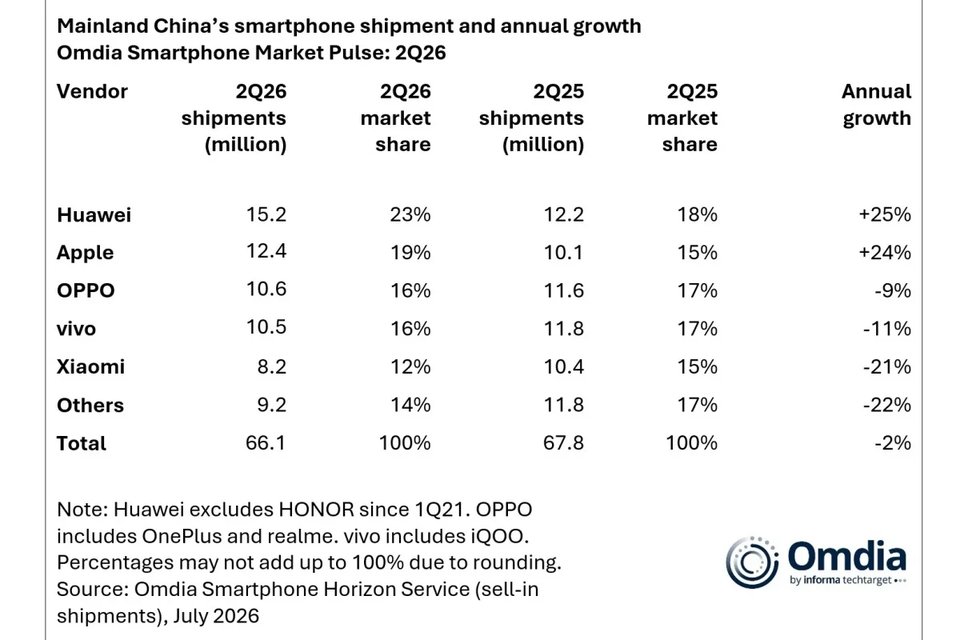
With declines of 22 and 21 percent, both Oppo and Vivo struggled, while Xiaomi faced the biggest challenges in maintaining its market position. Interestingly, Oppo's more modest drop of 9 percent allowed it to retain the third position in the market hierarchy.
Factors Affecting Market Trends
Rising production costs due to increased prices for key components have been a significant factor driving the declines among many smartphone manufacturers. While Apple and Huawei have also been impacted, their established market presence and strong relationships with suppliers have enabled them to keep prices more stable, giving them a competitive edge.
Looking Ahead
The overall projections for China’s smartphone market suggest a further decline of 6 percent by the end of the year, a trend indicating that Apple and Huawei may face more hurdles as cost pressures continue. However, both brands are likely to remain at the forefront of the market, with Apple potentially capturing the top position by year-end if current trends persist, supported by innovative product launches.
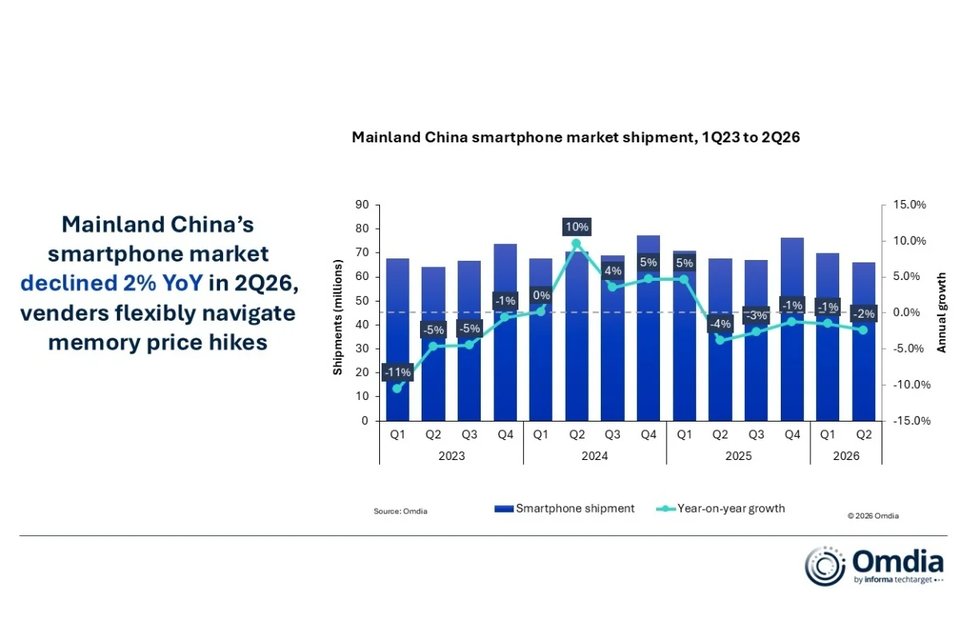
Overall, while external factors may impact sales in the second half of 2026, Apple and Huawei's strong market strategies position them well for sustained success in China's challenging smartphone arena.


