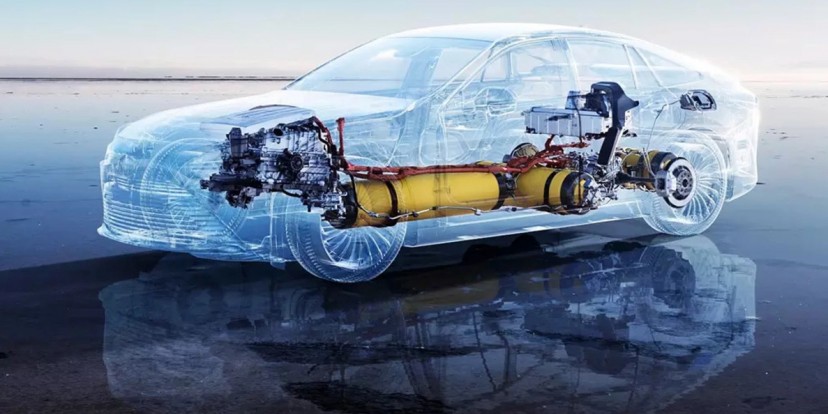
The automotive industry increasingly agrees that electric propulsion is the future of land transportation. However, a debate persists regarding the best method to power electric motors. The most popular option today involves battery packs, but hydrogen fuel cells present an alternative.
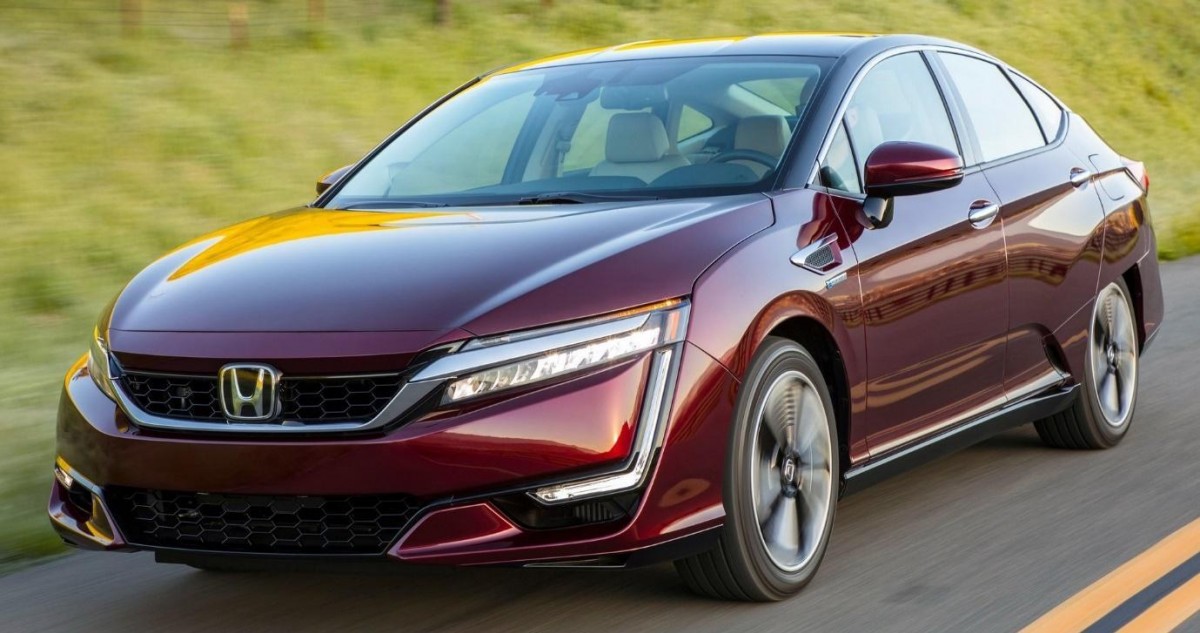 Honda Clarity Fuel Cell Vehicle
What is a Fuel Cell?
Recognizing the limitations of current battery technology, innovators suggest an approach that generates electricity directly onboard the vehicle, bypassing the need for bulky batteries. This technology, initially developed by NASA in the 1960s for the Gemini and Apollo missions, is primarily represented by proton exchange membrane fuel cells (PEMFC) in the automotive sector.
So how do fuel cells generate electricity? The process involves three main components: the anode, the cathode, and the separator. Hydrogen (H2) enters the anode from a tank; H2 consists of two protons and two electrons. Positively charged protons pass through the separator, while negatively charged electrons flow through an external circuit, generating electric current.
At the cathode, oxygen from the atmosphere interacts with protons that have passed through the separator and the electrons from the external circuit, creating water, which is expelled from the vehicle's tailpipe—through which one could technically drink!
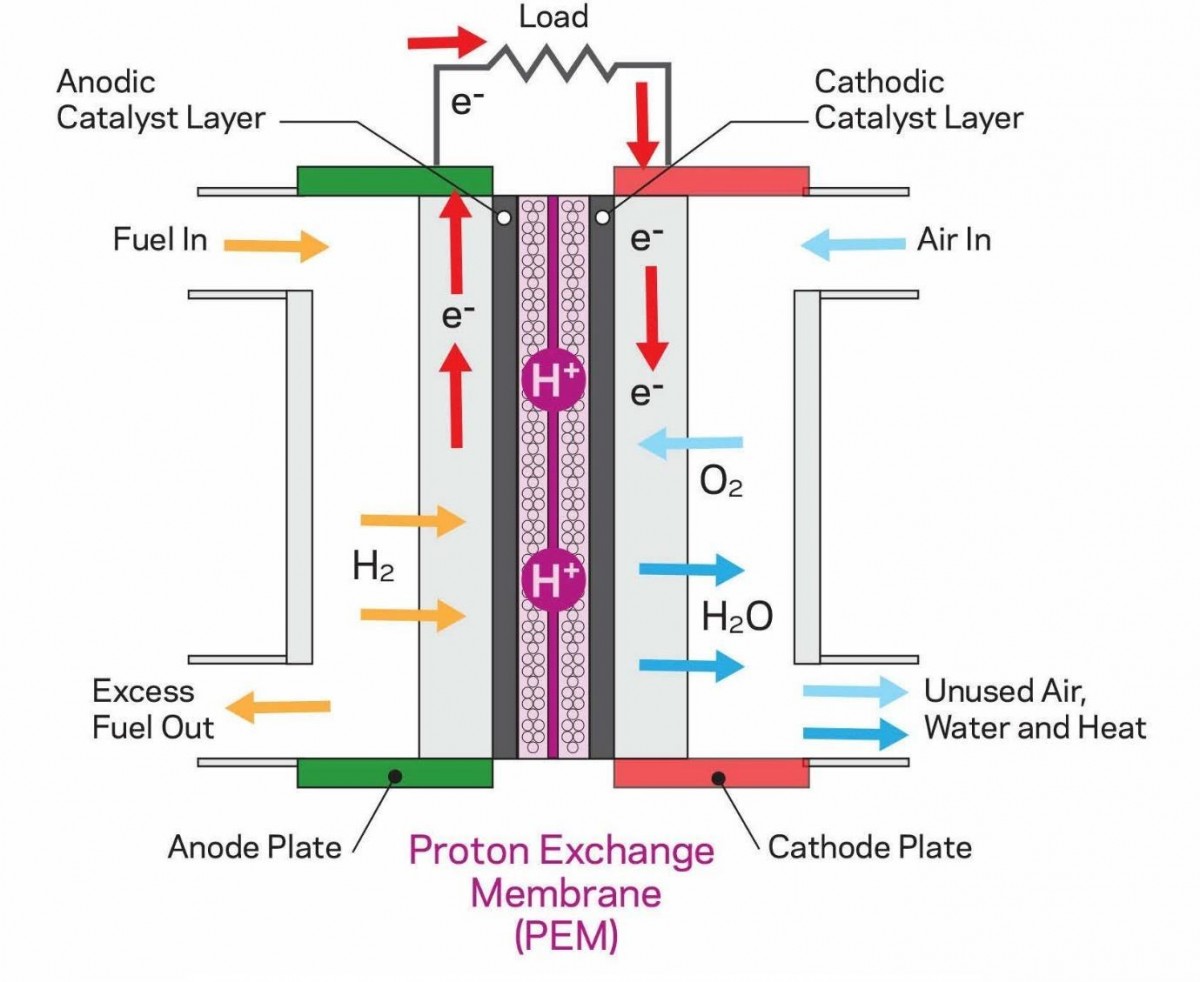 Nafion Proton Exchange Membrane Fuel Cell
Hydrogen Production
Hydrogen is the most abundant element in the universe; however, it does not exist in free form on Earth, necessitating various methods for its production. Currently, there are three primary approaches, plus one additional method.
Gray hydrogen is produced through steam reforming of natural gas, a process that generates hydrogen and carbon dioxide (CO2) when heated and subjected to high-pressure water vapor. This method is the least environmentally friendly.
Blue hydrogen is similar to gray hydrogen but includes carbon capture and storage technologies to prevent CO2 from entering the atmosphere.
The third method, electrolysis, produces green hydrogen by using electric current to split water into hydrogen and oxygen, effectively reversing the fuel cell process.
The +1 method refers to turquoise hydrogen, which involves passing natural gas through molten metal to create hydrogen and carbon. While promising, this technology is not yet suitable for widespread use.
Among the available production methods, green hydrogen holds the most potential for sustainable and environmentally friendly production, provided that the necessary electricity comes from renewable sources such as wind or solar.
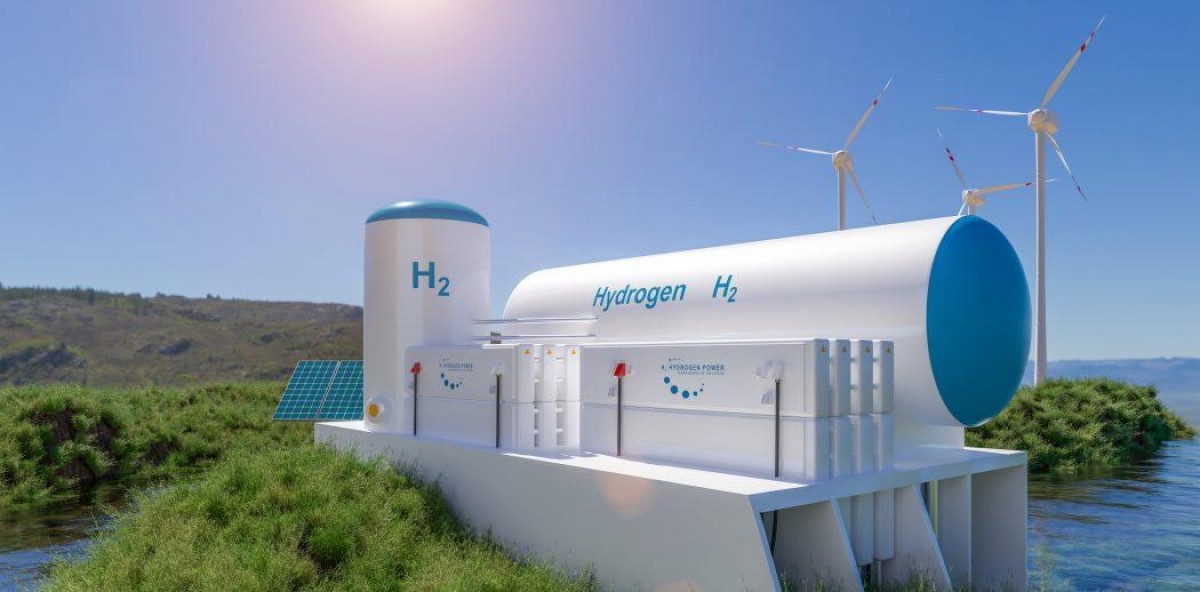 Hydrogen Production Through Sustainable Electrolysis
Forms of Hydrogen
Hydrogen can exist in two states for use: gas and liquid, each with distinct advantages and drawbacks.
As the least dense element, hydrogen must be highly compressed for automotive applications, typically to 700 bars. This requires specialized and expensive tanks.
Alternatively, hydrogen can exist in liquid form, necessitating cooling to minus 253°C, just 20°C above absolute zero. Both compression and liquefaction processes demand significant energy input.
Nevertheless, the energy density of hydrogen is impressive; one kilogram carries 33.3 kWh of energy, representing 167 times more energy per kilogram than the most advanced current battery packs!
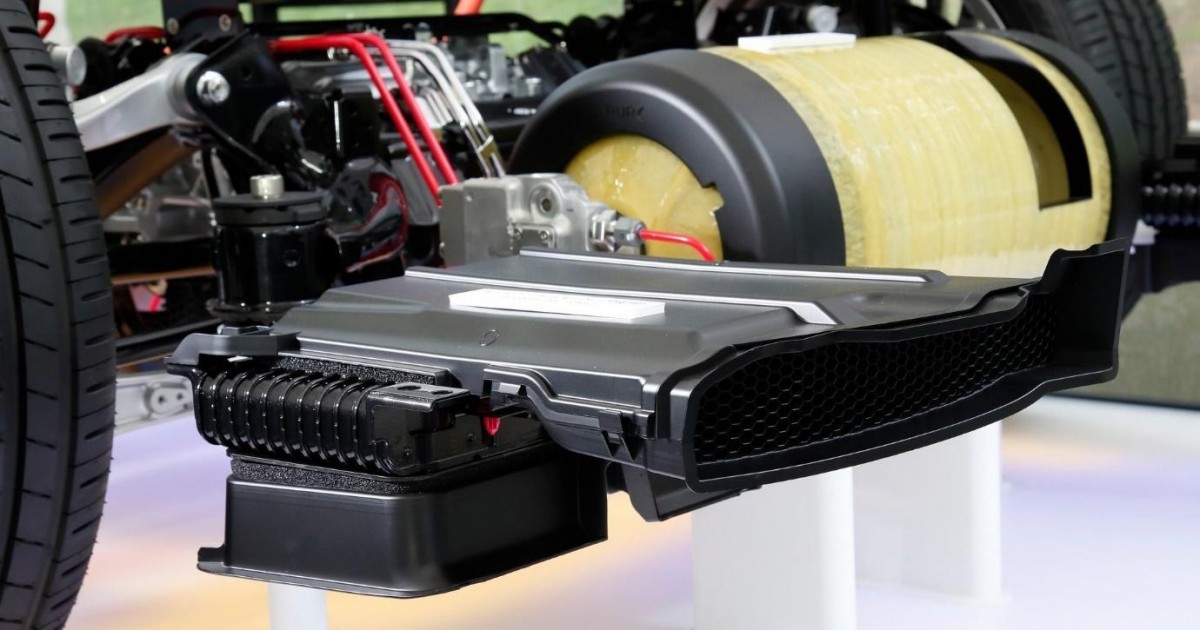 Toyota Mirai’s Gaseous H2 Tanks, Made from Polyamide and Carbon Fiber
Batteries vs. Hydrogen
The key question remains: Should energy be stored in batteries, or should it be generated on board the vehicle? Currently, the automotive industry favors battery packs for several reasons.
First, the efficiency of PEMFC is approximately 60%. In comparison, steam reforming of natural gas achieves around 70%, while electrolysis reaches up to 75% efficiency. Hydrogen compression is around 89% efficient, and liquefying hydrogen is about 66% efficient. The table below summarizes the efficiency losses when comparing battery packs and hydrogen, utilizing the most efficient scenarios for hydrogen.
| Efficiency Comparison | Hydrogen | Battery Pack |
|---|---|---|
| Electrolysis (%) | 75 | - |
| Hydrogen Compression (%) | 89 | - |
| Fuel/Grid Transport (%) | 80 | 93 |
| Fuel Cell (%) | 60 | 94 |
| Permanent Magnet Motor (%) | 94 | 94 |
| DC/AC Conversion (%) | 93 | 93 |
| Charging (%) | - | 94 |
| Transmission (%) | 95 | 95 |
| Total Efficiency (%) | 27 | 73 |
The data indicates that the fuel cell solution offers efficiency comparable to an internal combustion engine (ICE) vehicle. Presently, fuel cells are not a practical solution for passenger vehicles, leading most manufacturers to prefer battery packs despite their limitations.
It's also important to note that hydrogen refueling typically costs 7-8 times more than recharging an electric vehicle at home. While hydrogen may find its niche in heavy trucks due to its high energy density, sustainable production methods must be developed.


