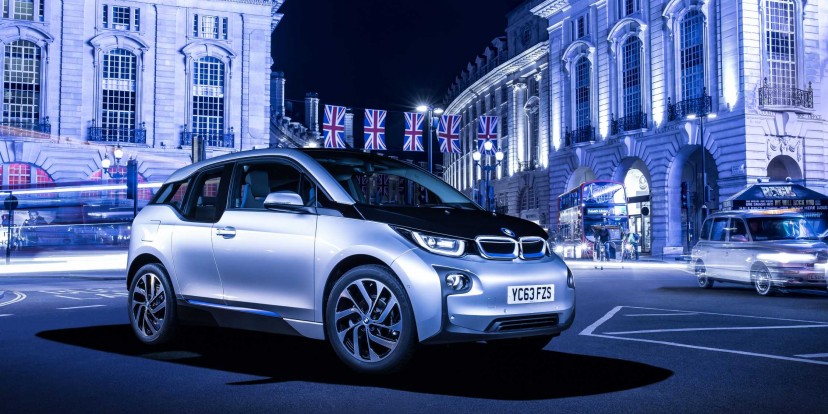
Launched at the end of 2013, the BMW i3 was a revolutionary compact electric vehicle available in two versions: all-electric and range extender. Despite being nine years old, the i3's advanced technology remains unmatched by many current mainstream electric cars. This article explores the i3's innovative features and its relevance as a used vehicle today.
 2013 BMW i3
Body and Chassis
Colin Chapman, founder of Lotus, famously stated that “adding lightness” is essential, a principle BMW embraced with the i3. The vehicle's structure is composed of carbon fiber reinforced plastic (CFRP), aluminum, and magnesium—materials typically too expensive and difficult to mass-produce for conventional cars.
The i3's architecture features two primary modules: the life module that houses the passenger compartment, made of CFRP, providing exceptional stiffness and occupant safety—so much so that no B-Pillar was necessary. The drive module, constructed of aluminum, supports the chassis and drive components, with magnesium integrated into the supporting structure for the instrument panel. The result? The initial BMW i3 featuring an 18.8 kWh battery weighed a mere 1,270 kg, a remarkable feat for a mass-produced vehicle.
 The carbon and aluminum construction of the BMW i3
Powertrain and High Voltage System
Built on a dedicated electric vehicle platform, the i3 maximized its design advantages with a rear-mounted engine powering the rear axle, enhancing handling, especially in terms of longitudinal acceleration given the electric motor's immediate torque delivery. It utilized a 3-phase permanent magnet synchronous motor, the most efficient electric motor type, with theoretical efficiency reaching 94%.
The i3 was offered in two power outputs: 170 hp and 184 hp in the later “S” version. Maximum torque figures were 250 Nm and 270 Nm, respectively. The single-speed transmission had a total reduction ratio of 9.67:1, translating to wheel torque values of 2418 Nm and 2611 Nm for the base and “S” variants, respectively. This high torque and relatively light weight resulted in impressive acceleration, propelling the base model from 0-100 km/h in 7.2 seconds and the “S” version in 6.9 seconds, with top speeds electronically limited to 150 km/h and 160 km/h.
Throughout its production, the i3 was equipped with three liquid-cooled battery versions: 60Ah, 94Ah, and 120Ah lithium-ion packs. While the capacity metrics provided by BMW do not directly translate to kWh, the energy content reached 18.8 kWh, 27.2 kWh, and 37.9 kWh respectively, offering ranges between 160 km and 285 km. The initial i3’s limited range prompted the introduction of a range extender variant, featuring a 647 cc two-cylinder motorcycle engine from BMW Motorrad, designed purely as a generator to extend its maximum range to 300 km for the 60Ah version.
 The 120 Ah/37.9 kWh high voltage battery of the BMW i3
Running Gear
The BMW i3 was equipped with a fully independent suspension system on all wheels. The front employed a classic McPherson strut design, while the rear featured a sophisticated five-link architecture—one of the best designs available, maximizing both handling and comfort.
However, the choice of wheels and tires was somewhat unusual; the i3 used a narrow 155/70/R19 tire size. While larger wheels are common in electric cars for better torque handling, the narrower tires minimized aerodynamic drag and rolling resistance. The sportier “S” version utilized an asymmetric tire dimension: 175/55/R20 in the front and 195/50/R20 in the rear. The braking system consisted of ventilated discs on all wheels, with most routine braking powered by the motor, providing a maximum regenerative braking capacity of 50 kW.
Aerodynamics play a critical role in electric vehicle efficiency, and the i3 boasted a projection area of 0.69 m², with a drag coefficient (Cd) of 0.29 and a frontal area of 2.38 m².
 The advanced 5 link rear suspension of the BMW i3
Interior Philosophy
The innovative spirit of the BMW i3 extended to its interior design as well. The absence of a B-pillar, combined with opposing front and rear doors and a flat floor, created an unprecedented sense of spaciousness in the supermini segment. The small instrument cluster, paired with a larger free-standing infotainment screen, set trends in the automotive industry.
Sustainability was key in the choice of materials, featuring recycled plastics, eucalyptus wood, natural tanning agents from olive tree leaf extract, and kenaf plants, underscoring the eco-friendly philosophy of the vehicle.
 BMW i3 interior
Is the BMW i3 Still Relevant Today?
Absolutely. The technology and materials used in the BMW i3 remain impressive today. The most noticeable drawback of the i3 is its battery capacity; the largest available was 37.9 kWh, which now seems modest compared to contemporary standards. While sufficient for city driving, it poses limitations for highway or long-distance travel. Nonetheless, the BMW i3 remains a highly satisfactory choice for those seeking a primarily urban electric vehicle with occasional countryside trips in mind.
 BMW i3S
When it comes to pricing, the second-hand BMW i3 market is quite intriguing. According to CarGurus, the average cost for a used i3 stands at approximately $26,178.12, which reflects a 33.9% increase compared to last year. Currently, there are 446 BMW i3 units available, with prices ranging from $13,990 to $47,500. On mobile.de, 837 listings indicate prices starting at €14,400 for a 2016 model with 68,000 km, and peaking at €47,900 for a 2021 i3S with just 1,300 km. The UK market shows slightly higher starting prices, with Auto Trader listing 177 cars between £21,795 and £40,900.


