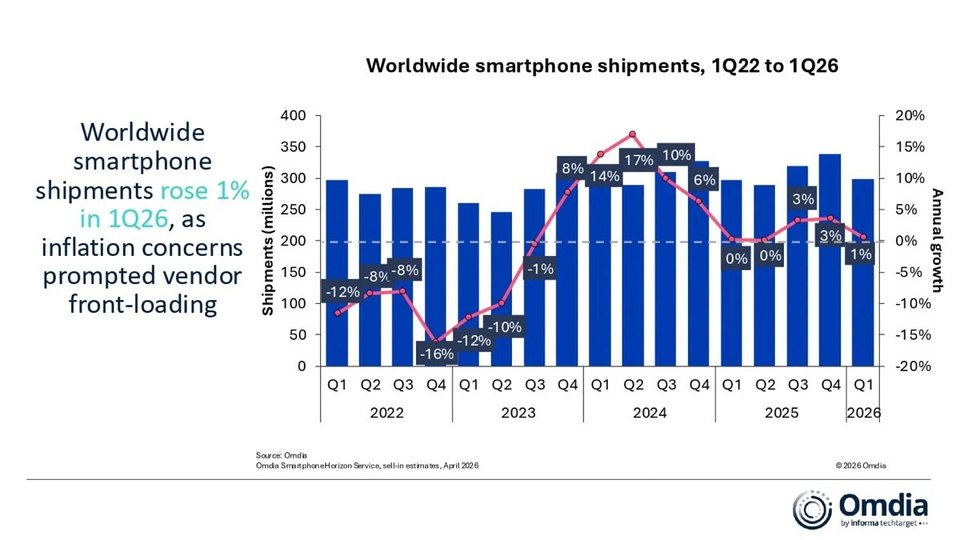
Despite the ongoing memory chip crisis, Omdia has reported a 1% increase in global smartphone shipments for the first quarter of 2026. Total shipments during this period reached 298.5 million units, largely driven by vendors front-loading their inventory in anticipation of rising component costs.
Samsung regained its position as the world's leading smartphone brand, achieving 65.4 million shipments for the quarter, marking an 8% increase compared to the same period last year. Strong demand for the Galaxy S26 series, along with the recent launches of the Galaxy A37 and Galaxy A57, significantly contributed to Samsung's 22% market share.
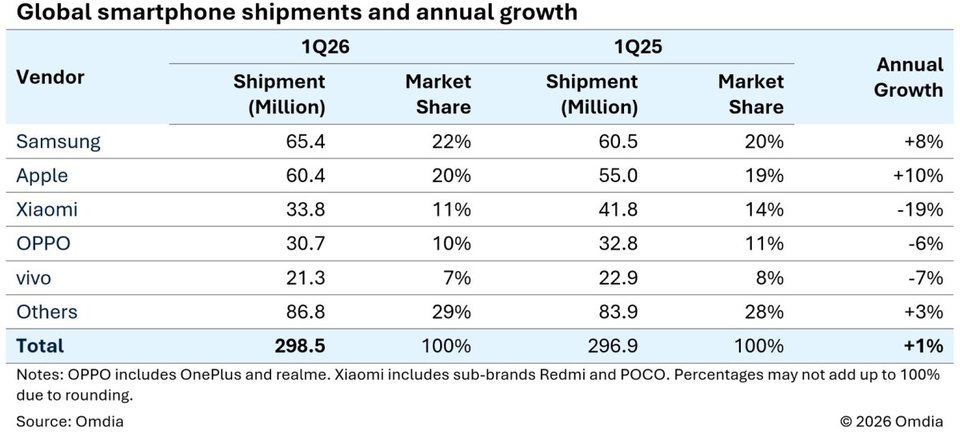
Apple followed closely as the second leading brand, with shipments totaling 60.4 million (up 10% year-on-year), accounting for about 20% of the global market. The demand for the iPhone 17 series has remained robust, and the report also highlights increased consumer interest in the iPhone 17e across Europe and Japan. Additionally, the flagship iPhone 17 Pro and 17 Pro Max saw a remarkable 42% increase in demand in China.
Xiaomi (including Redmi and Poco) ranked third with 33.8 million shipments, holding an 11% market share; however, it experienced the largest annual drop in shipments among the top five brands, at -19%. This decline reflects the pressure of rising component costs on Xiaomi's profit margins.
Oppo (including OnePlus and Realme) secured the fourth position with 30.7 million shipments and a 10% market share, while vivo rounded out the top five with 21.3 million shipments and a 7% market share.
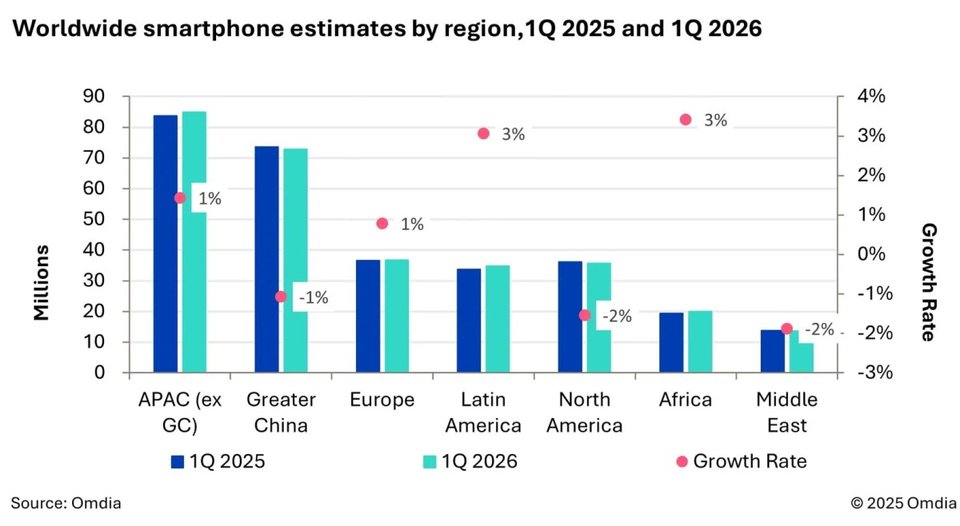
Looking ahead, analysts at Omdia anticipate a turbulent period ahead, characterized by adjustments following the vendor-driven supply-side push. Elevated channel inventory and generally weak consumer demand are expected to significantly influence the global smartphone market as it moves into the second half of 2026.


