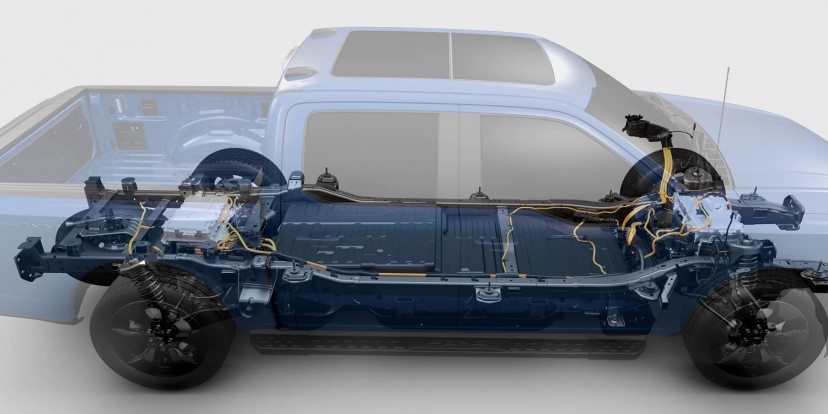
What exactly is a car platform? It serves as the foundational structure of a vehicle, influencing rigidity, suspension design, interior space, and key engineering decisions, including motor and transmission specifications. Traditional automakers, who have primarily produced internal combustion engine (ICE) vehicles, now face a critical choice: should they overhaul existing platforms for electric drivetrains or develop entirely new, dedicated platforms?
There is no industry consensus on the best approach. While some manufacturers opt to modify existing ICE platforms, others build new platforms from the ground up, and some use a hybrid strategy that combines both methods. This article examines the merits of each approach.
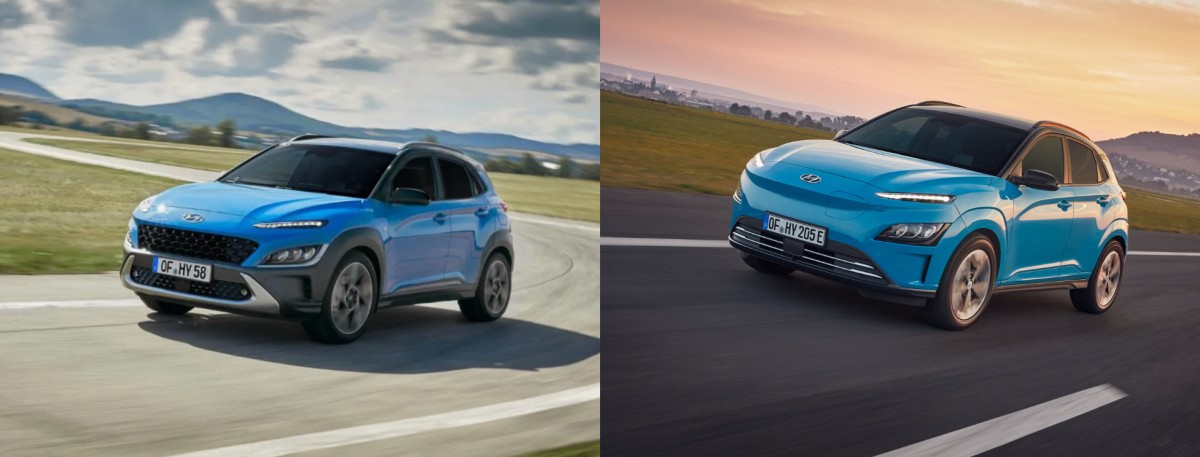 Hyundai Kona ICE (left) and electric (right) share the same platform
Modified ICE Platforms
When creating an ICE platform, manufacturers typically plan for the future. To accommodate electric vehicles, engineers need to factor electric drivetrains into their designs from the outset. Take the Volkswagen Group's MQB platform as an example; it was initially designed to support various propulsion types, including gasoline, diesel, natural gas, plug-in hybrid, and fully electric. The flexibility of this approach enhances production development, but often, these platforms still prioritize ICE vehicles.
Another example includes BMW's CLAR and FAAR platforms, developed primarily for ICE vehicles yet still adaptable for electric versions. Most mainstream ICE cars utilize a front-engine layout, which means that electric vehicles based on these platforms often retain the same front axle power delivery.
ICE platforms are also designed with considerations for exhaust systems and potential all-wheel-drive (AWD) configurations. When batteries replace these components, they must be fitted into complex shapes, such as “H” or “T,” complicating design and limiting the capacities of battery modules across different models.
Moreover, the existing structure often includes a tunnel beneath the rear passenger compartment that can hinder torque management and optimal space usage.
The torque handling disadvantage is less significant for platforms intended for rear-wheel drive, such as BMW's CLAR.
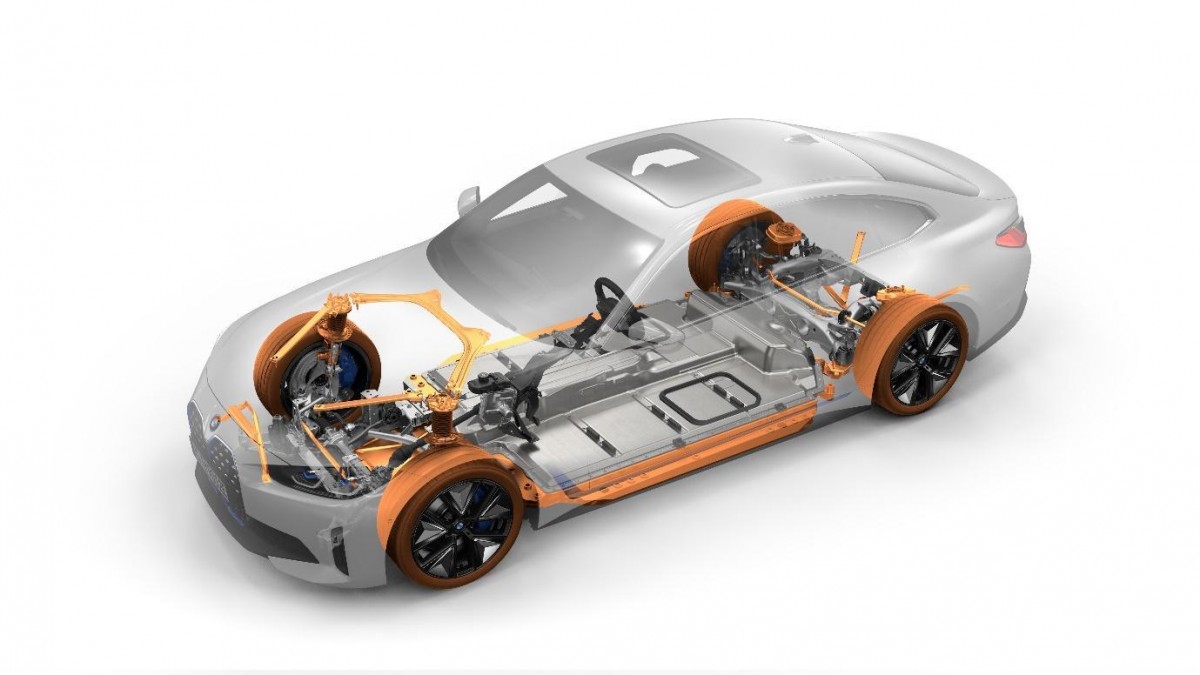 BMW i4 uses the multi-platform CLAR
While dedicated platforms require substantial research and development funding and result in longer timeframes for market arrival—often translating into higher vehicle costs—they offer significant long-term advantages.
Let’s consider the impact of physics. If you've experienced a fast car, you've likely felt the rear of the vehicle press down as it accelerates. This weight transfer allows for optimal torque distribution from electric motors, which provide torque almost instantaneously. Typically, when a vehicle uses a single electric motor, it powers the rear axle, eliminating the need for front driveshafts and enhancing turning capability.
However, models like the Renault Megane E-Tech and Nissan Ariya, while based on dedicated platforms (CMF-), are designed for front-wheel drive. This design prioritizes weight and space savings—reducing overall weight by about 100 kg through minimized piping and shortened high-voltage cabling, while also maximizing trunk space.
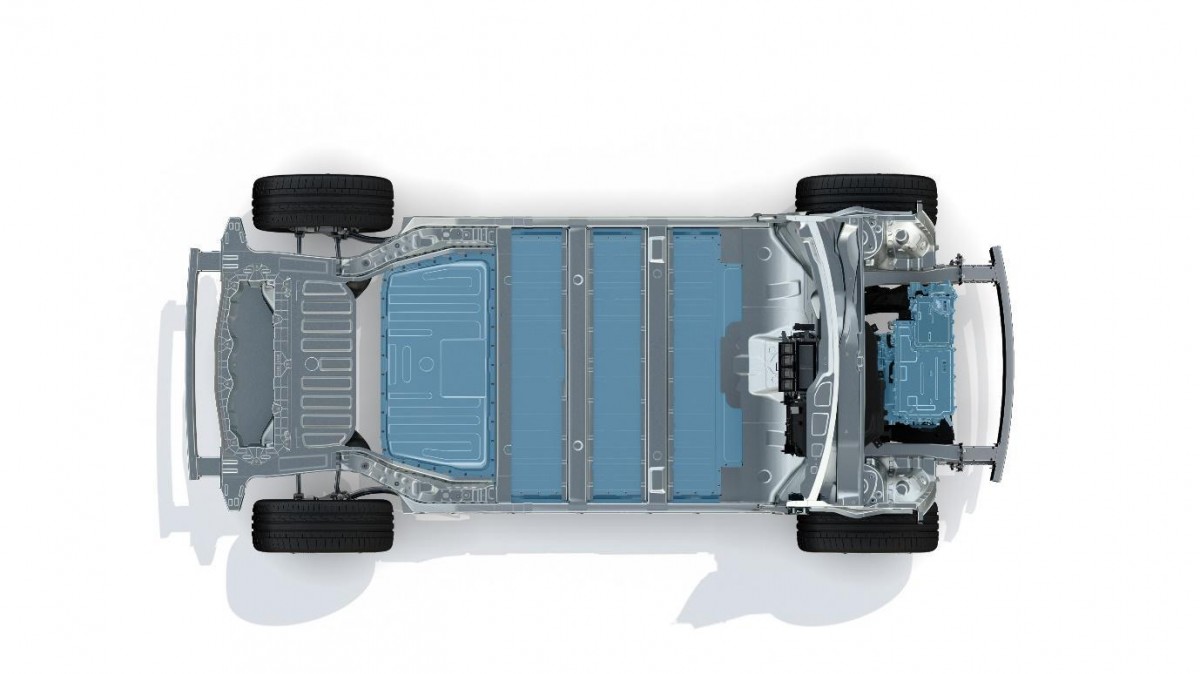
Dedicated platforms also allow for simpler battery shapes—typically rectangular and positioned between the vehicle's axles—making it easier to offer various energy capacities by adding more modules. However, this “skateboard” layout may complicate rear suspension design; in compact vehicles, a multi-link independent suspension design may not be viable, and only transverse links can be used.
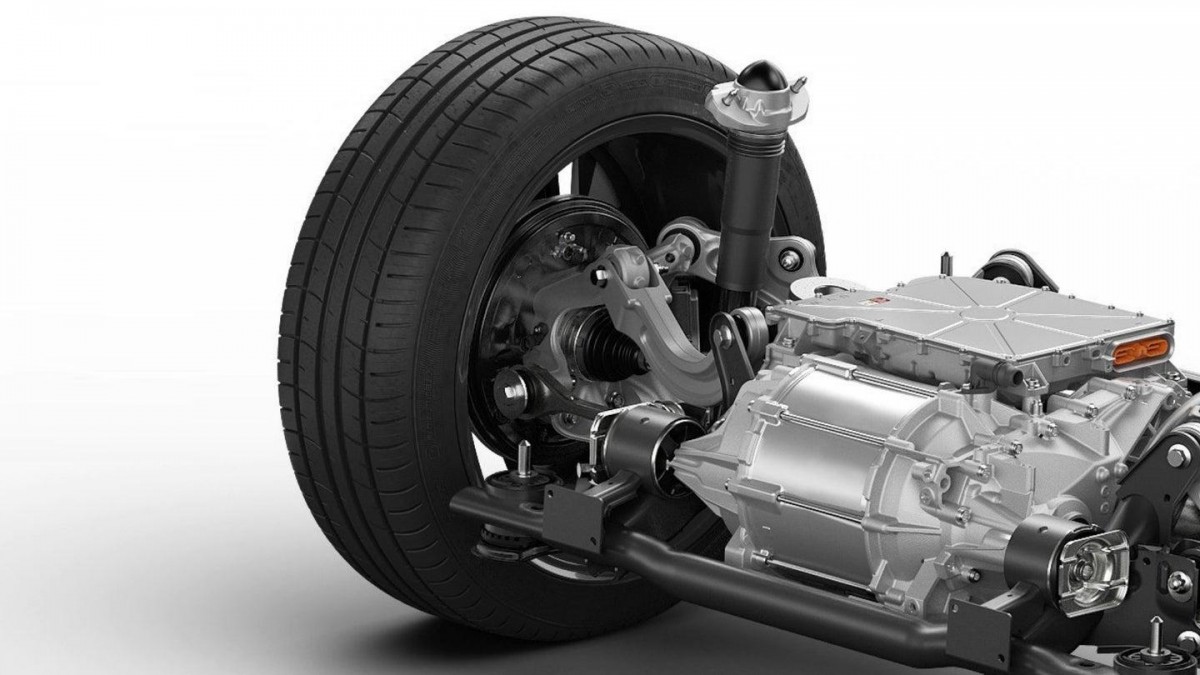 The advanced five link (all transverse) rear suspension of the VW ID family
In terms of space efficiency, dedicated platforms can provide a flat floor inside the vehicle and allow for an extended wheelbase, as less area is required for an “engine compartment.” This feature enhances internal room, enabling smaller electric cars to offer interior space akin to larger models.
Since the main battery is low within the vehicle, automakers often need to increase the vehicle's height, making electric designs more favorable for SUVs and crossovers—though this creates challenges for aerodynamics.
To achieve a lower profile for electric vehicles, manufacturers such as Porsche and Audi utilize the foot garage concept in their Taycan and E-Tron GT models. This feature provides a gap in the battery pack, allowing for greater room for rear passengers’ feet.
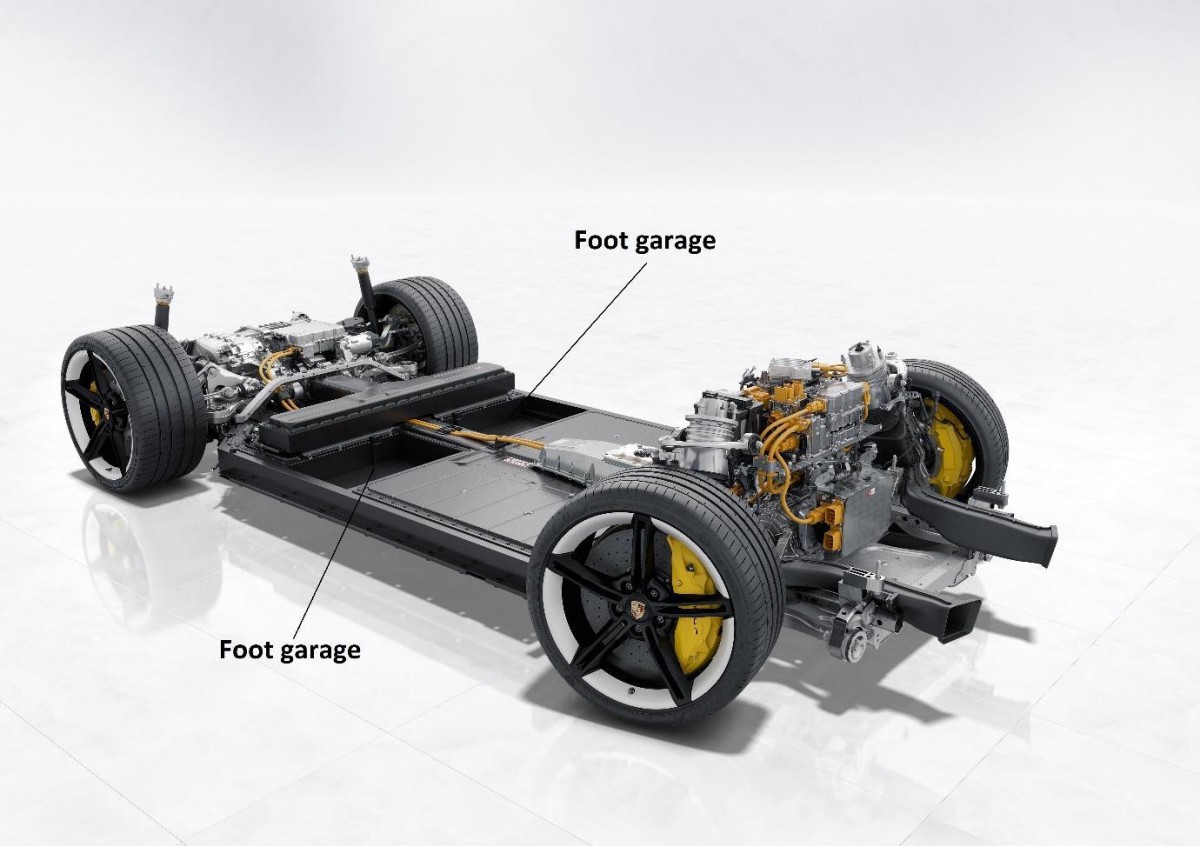 Porsche and Audi use J1 platform with a "foot garage"
Final Thoughts
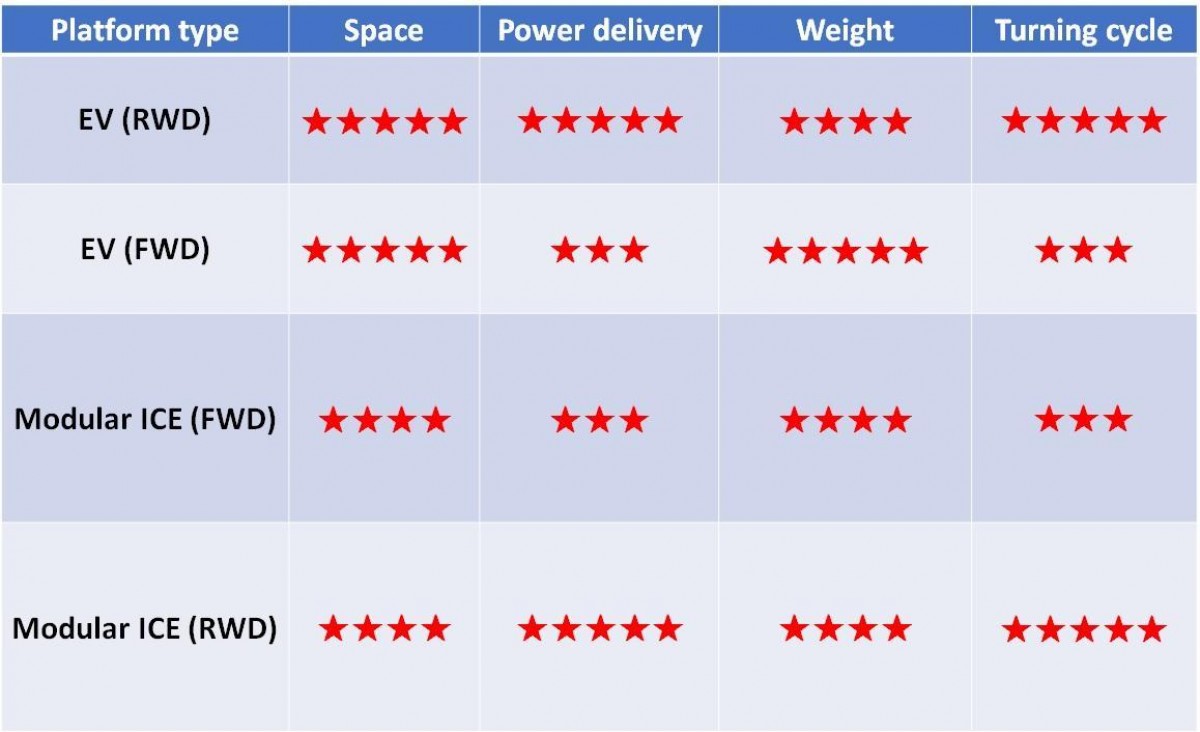
It is evident that dedicated platforms offer distinct advantages compared to traditional modular ICE platforms. Generally, platforms can be classified into three categories: the slow but efficient dedicated platform, the hybrid modular ICE platform with rear-wheel drive, and the compromise approach that adapts front-wheel drive ICE platforms. The following table summarizes their differences.