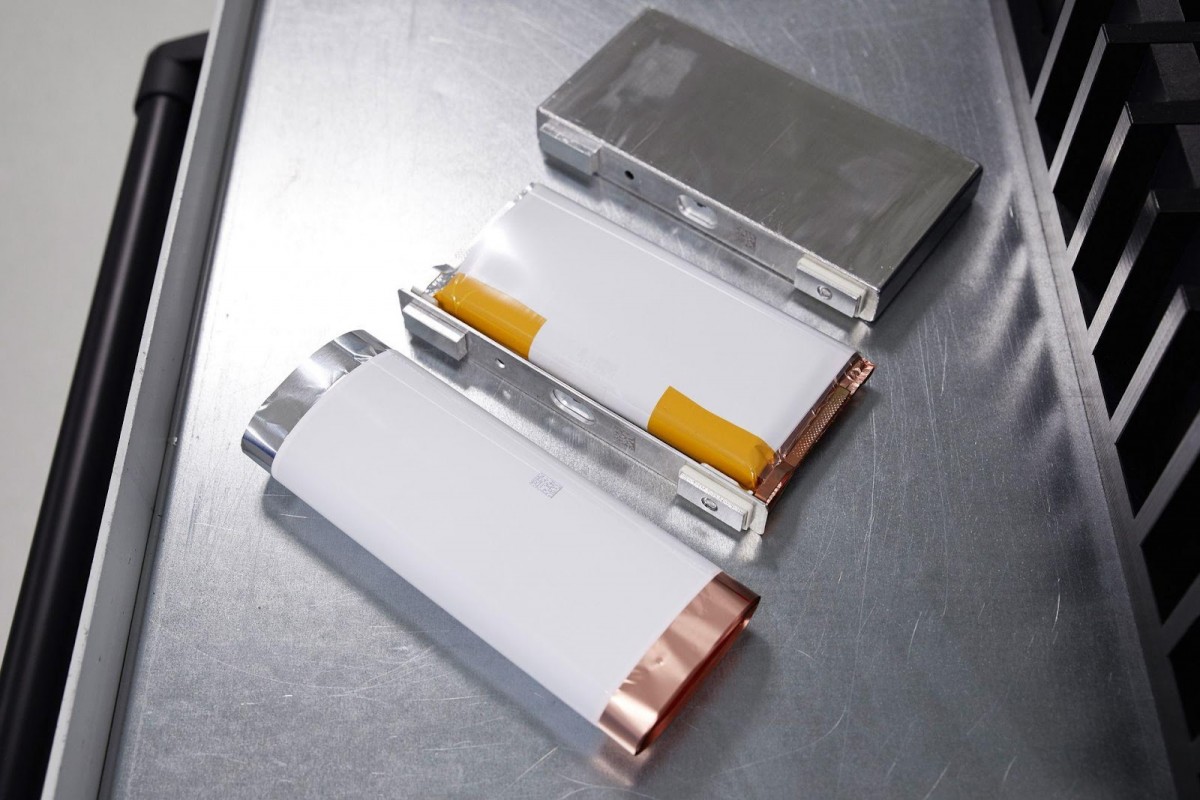
It is only February, but 2026 is already shaping up to be a pivotal year for electric vehicles (EVs). Unlike last year, which felt sluggish in terms of battery advancements, the initial weeks of this year have seen a flurry of exciting news. The latest development comes from China's FAW Group, which recently conducted a successful test of a groundbreaking battery that could revolutionize driving ranges for electric vehicles.
The new technology is a lithium-manganese liquid-solid-state battery, marking its debut in production vehicles. According to FAW, this new battery pack enables cars to travel over 1,000 km. For those accustomed to electric cars that struggle to reach 500 km, this represents a significant breakthrough. The battery pack holds 142 kWh of energy while maintaining the same size, translating to a substantial 67% increase in energy capacity compared to last year’s models.

Scientists from Nankai University collaborated closely with FAW to achieve a cell-level energy density exceeding 500 Wh/kg. By packing more energy into each cell, the vehicle remains lightweight while extending its driving range. This innovative technology employs a hybrid of liquid and solid materials, referred to as a semi-solid-state design. This approach strikes a balance between current battery technologies and the elusive full solid-state batteries that are still years from commercialization.
While most battery manufacturers exploit high-nickel formulations to enhance power, FAW has opted for manganese, which is generally more abundant and cost-effective. The new battery integrates an in-situ-cured composite electrolyte, enhancing internal stability and reducing the risk of fire compared to traditional liquid electrolytes. This design also contributes to improved thermal management, resulting in a longer-lasting battery.
Interestingly, this new battery does not utilize a metallic lithium anode. Instead, FAW has developed a lithium negative electrode that forms directly within the battery, minimizing the risk of short-circuiting. This innovation also permits thousands of charge-discharge cycles without accelerated wear. Moreover, the cathode—the positive side of the battery—can store twice the energy of commonly used LFP batteries found in many budget-friendly electric vehicles.

While competitors like Nio and SAIC are also exploring semi-solid batteries, they largely adhere to traditional nickel-dominant formulations. Meanwhile, companies outside of China, such as Toyota and Volkswagen, remain focused on sulfide-based solid-state technology. FAW stands out as one of the few major players demonstrating that manganese is a viable solution for long-distance travel.
This is merely the beginning, with FAW already developing the next iteration of the battery pack, which aims to exceed 200 kWh capacity. If successful, this advancement could enable electric vehicles to cover over 1,600 km on a single charge. Additionally, the company plans to implement a five-dimensional protection system to safeguard the battery against fire, gas, and electrical surges. A more advanced version is set to be unveiled later this year.
For now, this 142 kWh manganese battery represents a significant triumph for the electric vehicle industry. It demonstrates that we do not need to wait a decade for improved driving ranges. As more of these batteries enter mass production, the dreaded "range anxiety" that deters potential buyers may finally diminish. The prospect of driving 1,000 km without a pause makes a road trip in an electric vehicle increasingly appealing compared to traditional gasoline-powered cars.
Via