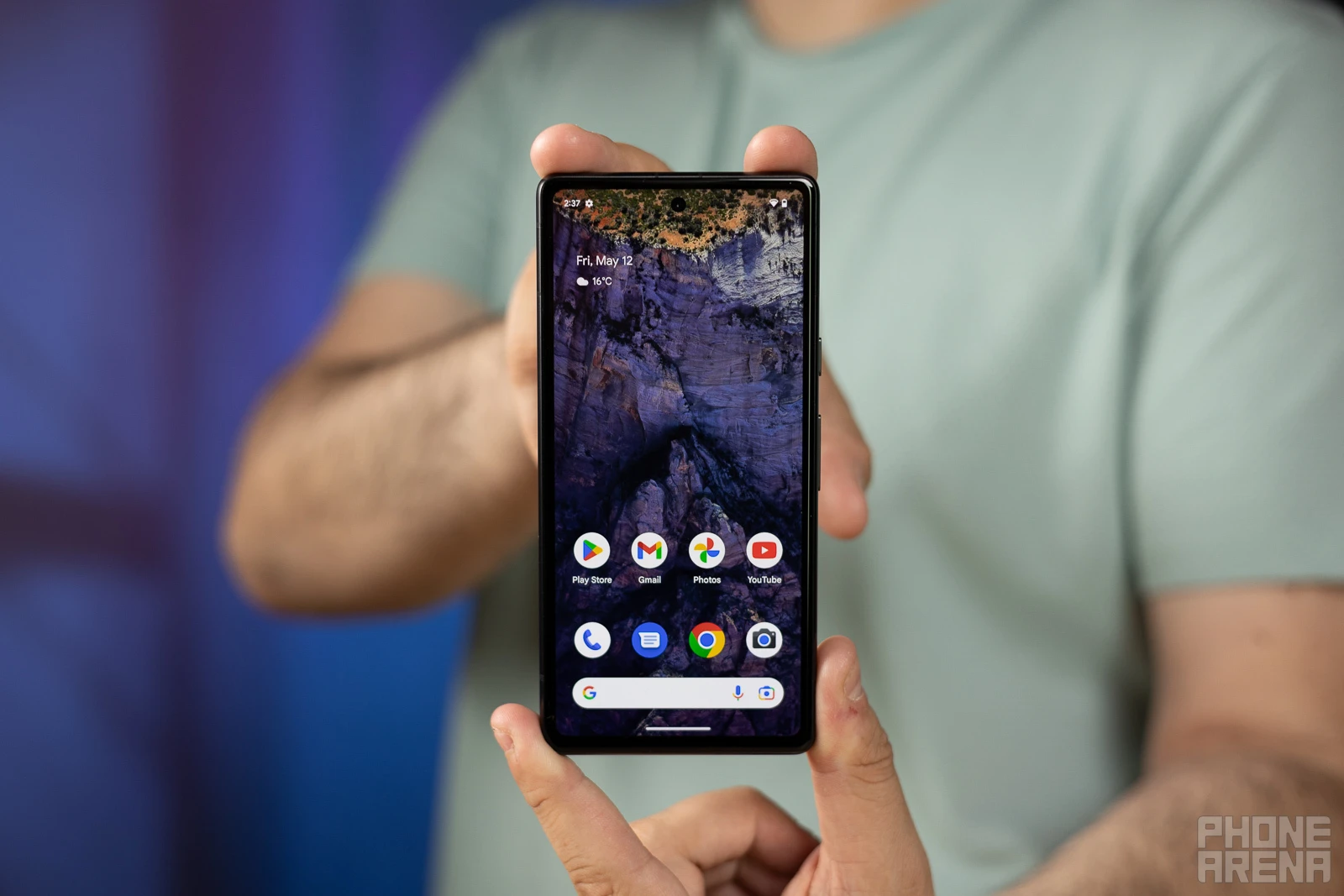
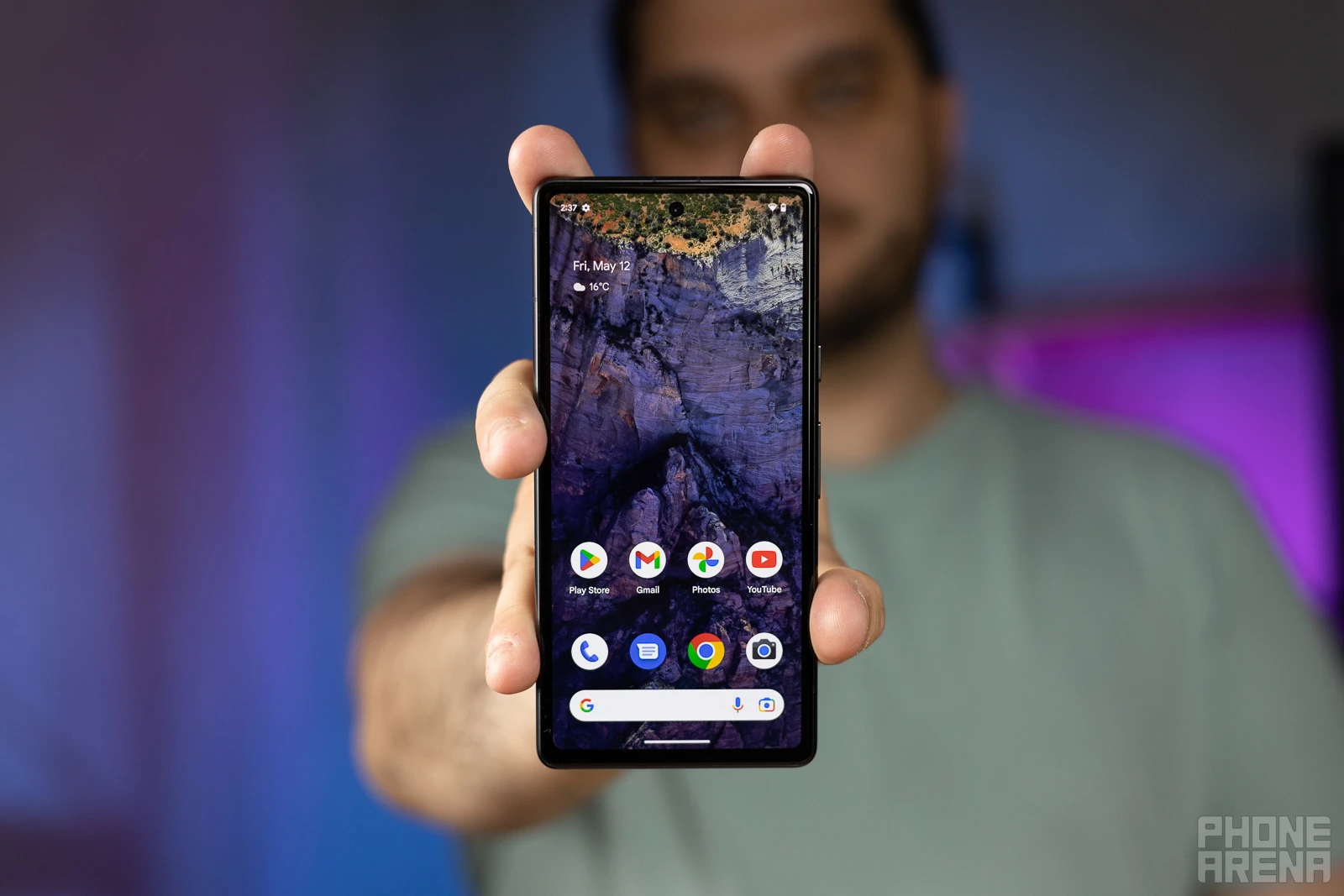
It seems that Google hasn’t broken the mold used to make the Pixel 6a, as its new and improved Pixel 7a is made of the same “winning” material.
The new and affordable Pixel 7a might not be as exciting as the foldable Google Pixel Fold, but combines the great features of the Pixel 7 series with a super-affordable price tag that’s too hard to pass up.
Google Pixel 7a Summary
The Pixel 7a employs a familiar design as the more premium Pixel 7 and Pixel 7 Pro, but cuts some corners in order to achieve its killer price. For example, it comes with a plastic back, has the smallest display among all new Pixels, and is only available with 128GB of storage.
However, there’s much more to the Pixel 7a than meets the eye. It comes with the same Tensor G2 chipset that powers all recent Pixel flagships, so you can expect excellent performance.
Moreover, the Pixel 7a delivers the same signature Pixel photography style that we’ve come to appreciate and cherish.
At $499, the Pixel 7a is a budget phone done right, with more than acceptable shortcomings and lots of other redeeming features and qualities. Those make it arguably a better buy than the premium Pixel 7 and Pixel 7 pro.
Pros
Good value for money
Flagship-grade performance
Capable camera with lots of fun features
Display finally has a 90Hz refresh rate
Compact and user-friendly size
Face Unlock on board
Wireless charging
Cons
More expensive than its predecessor
Some slight build quality issues
Only a single 128GB storage option
Uninspiring digital zoom
Google Pixel 7a NOW $50 OFF
The new budget Google Pixel 7a champ can be yours directly from Amazon at a cool $50 discount during this Prime Day sale bonanza. The offer comes in the form of a gift card that can be used on products sold at Amazon.
If you get the new Pixel 7a over at Best Buy, the retailer will give you a discount in the form of a gift card you can use towards the purchase of a Pixel 7a case or anything else your soul desires from its extensive product catalog.
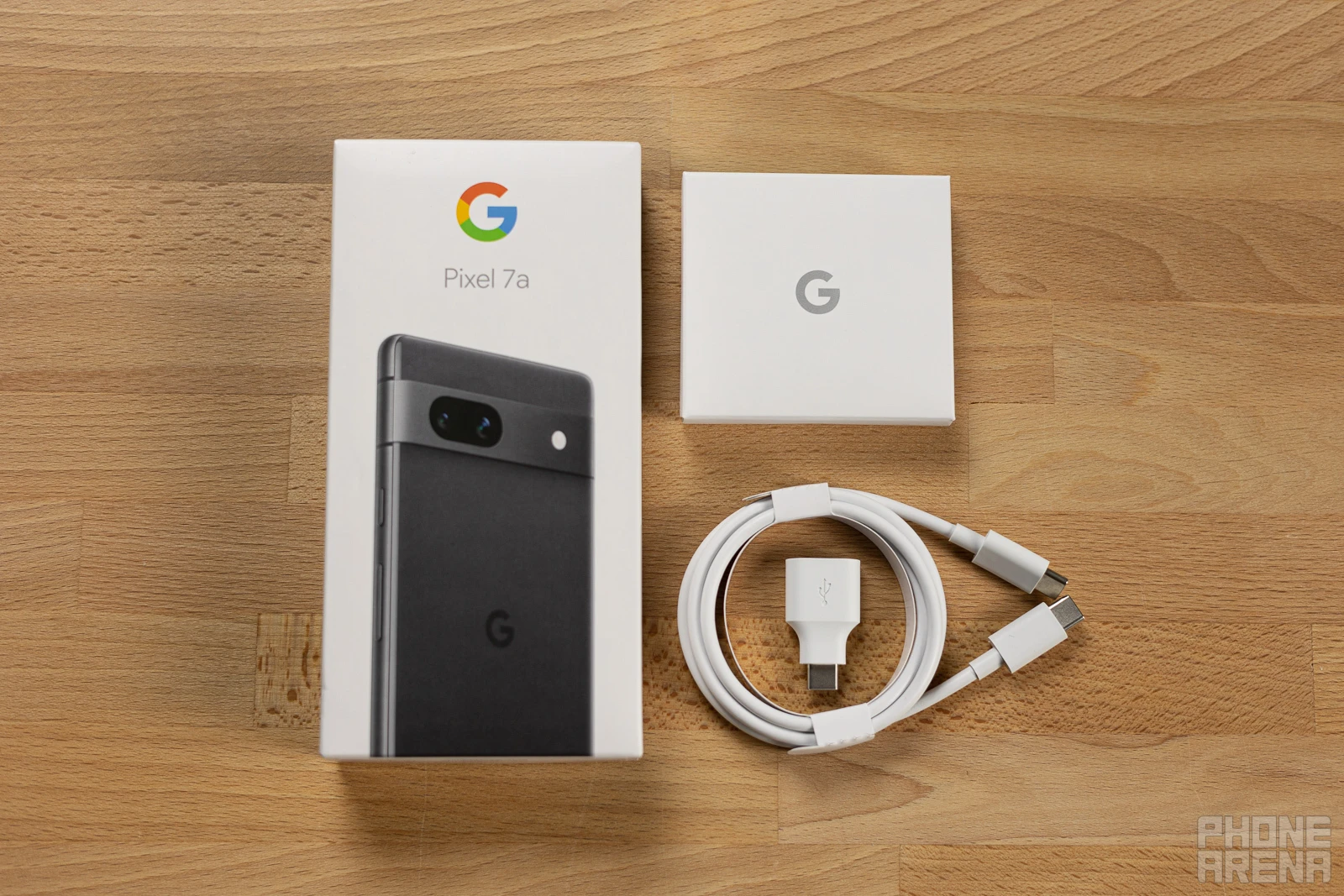
Inside the Pixel 7a box, you'll find a USB Type-C to USB Type-C cable (but no charger), A USB Type-A to USB Type-C adapter, a SIM ejector pin, and the usual booklets. Oh, and you should also find a Pixel 7a there, otherwise count yourself unlucky and ask for a refund ASAP.
Google Pixel 7a Specs
Notable hardware improvements
Specs
Google Pixel 7a
Size and Weight
152.4 x 72.9 x 9.0mm, 193gr 6.0 x 2.87 x 0.35in, 6.8oz
Display
6.1-inch, 2400 x 1080 pixels, OLED 90Hz screen
Processor
Google Tensor G2
RAM
8GB LPDDR5
Storage
128GB UFS 3.1
Software
Android 13 / Android 14*
Cameras
64MP Sony IMX787 82-degree wide camera 13MP Sony IMX712 120-degree ultra-wide camera 13MP selfie camera
Battery Size
4,385mAh
Connectivity and security
Sub6/mmWave 5G, Wi-Fi 6E, Bluetooth 5.3, Titan M2 security chip
Charging Speeds
18W wired, 7.5W wireless charging
Price
£449 / $499 / €509
Google Pixel 7a Design & Colors
A slight change of heart
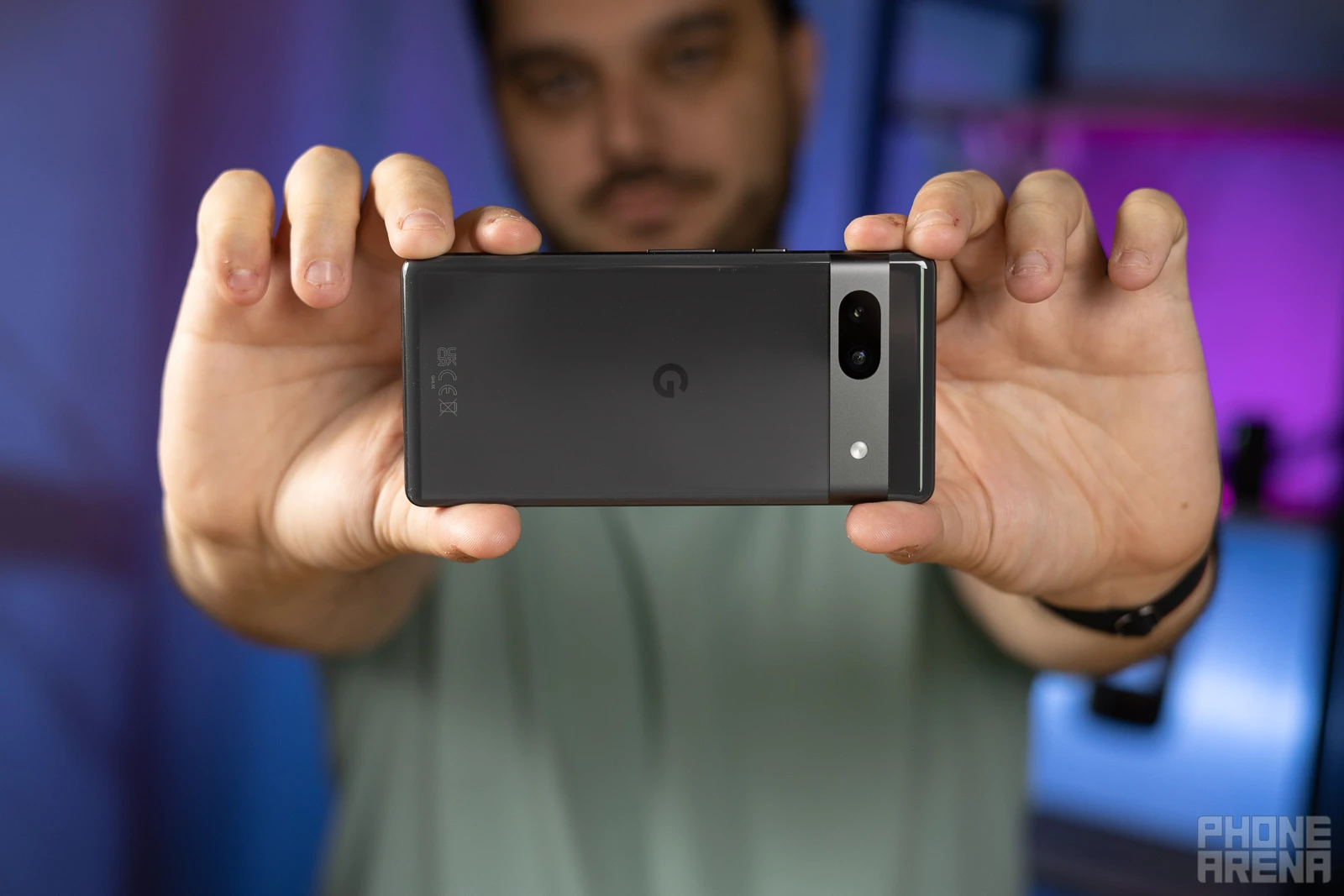
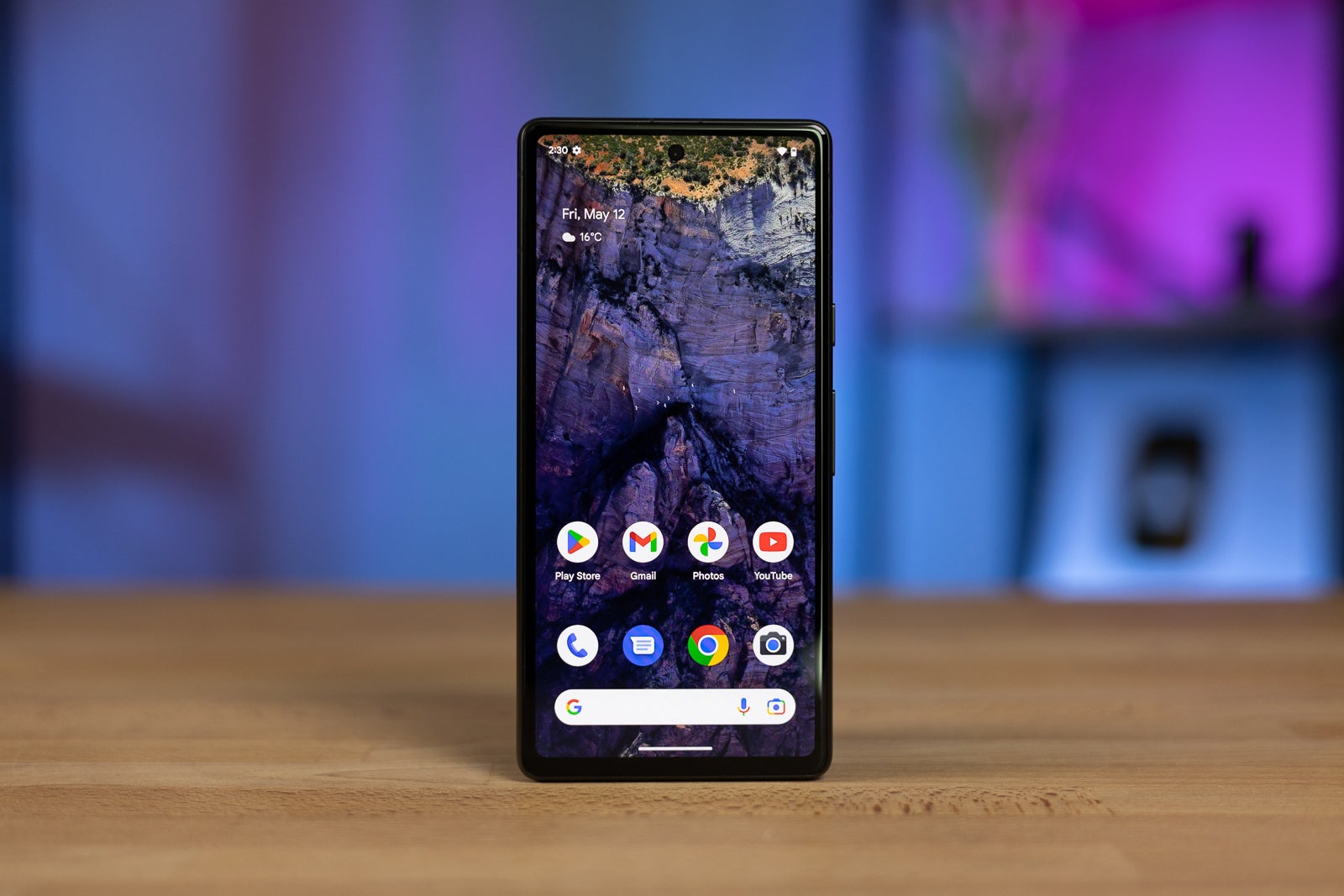
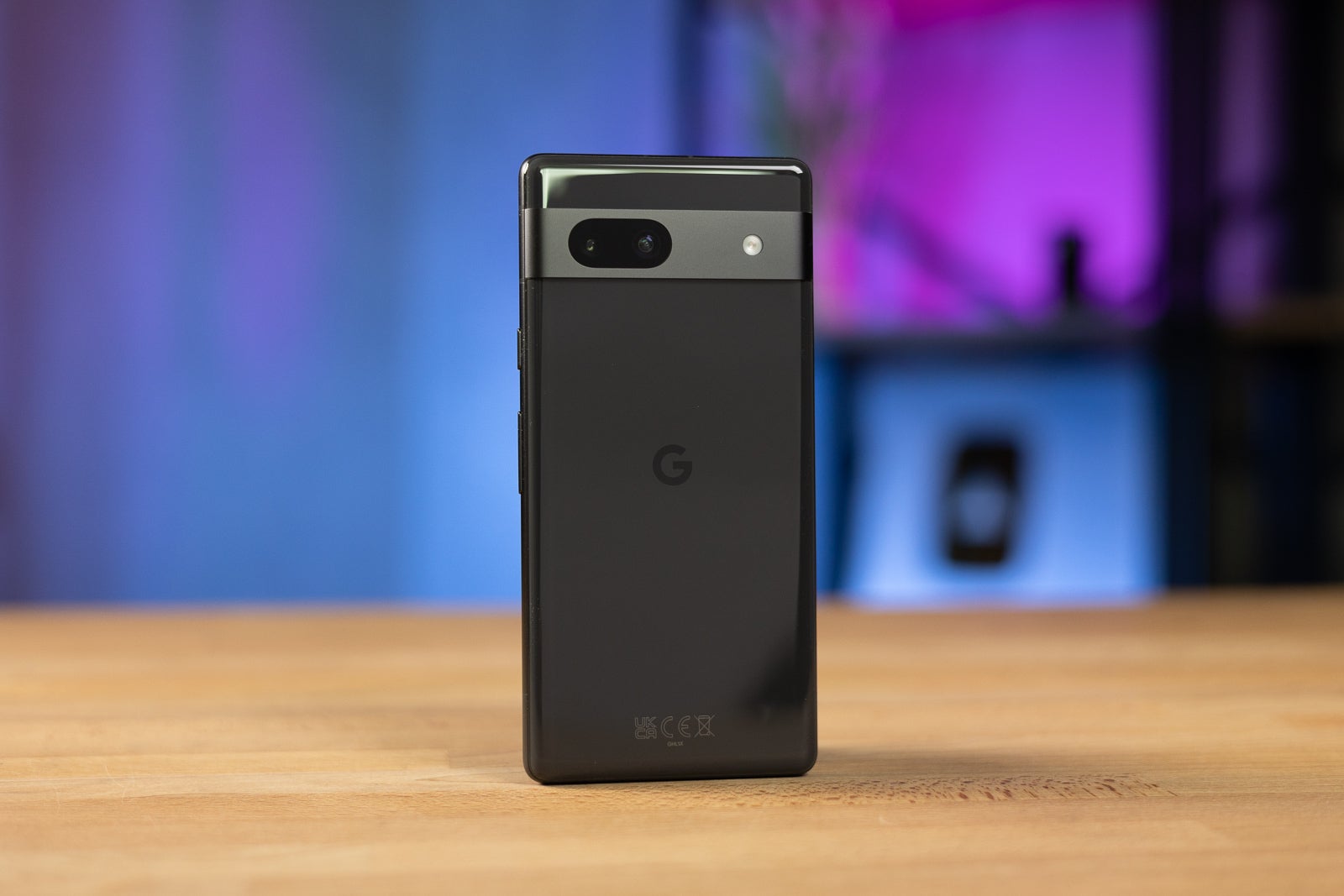
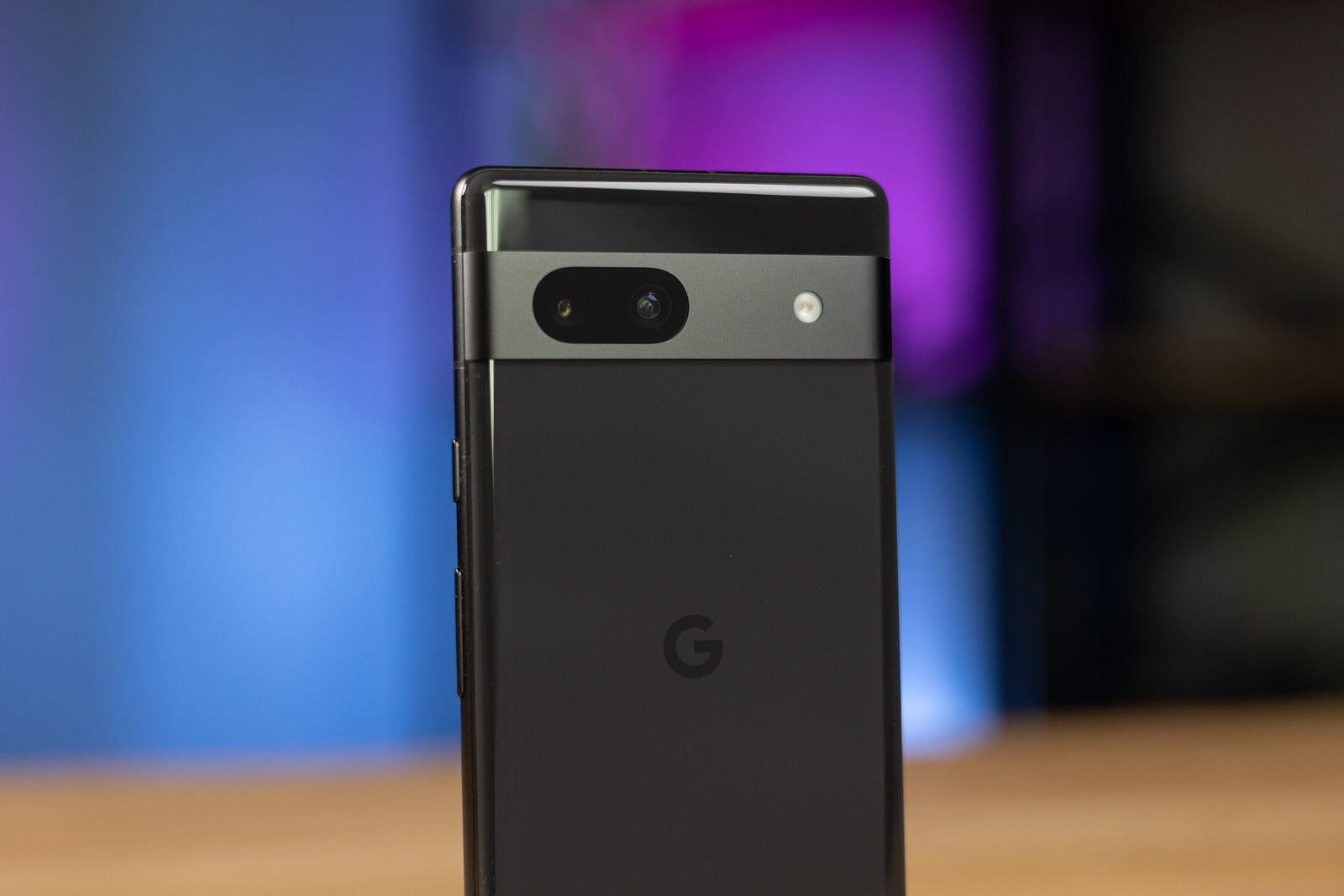
The Pixel 7a closely follows into the footsteps of the Pixel 7 series and definitely looks and feels like it belongs to Google's latest flagship series. It has a more pronounced rear camera strip, which Google calls "3D metal visor", which now neatly links up with the anodized aluminum frame. This definitely makes for a more coherent and modern look, though I'd lie if I say I wouldn't miss the understated black strip of the Pixel 6 era.
However, the camera strip still attracts pocket lint and debris like crazy, not to mention that the plastic back of the phone is a fingerprint magnet in the purest sense of the term. As far as build quality goes, there are some minor issues on the Pixel 7a: the backplate forms a slightly noticeably lip where it links up with the side frame, which isn't a big deal, but definitely triggered my OCD and doesn't really feel so nice in the hand. The Pixel 6a, for example, doesn't have such an issue and feels better in the palm.
The Pixel 7a is heavier than the Pixel 6a, but you are unlikely to notice the difference. That's regardless of the predominantly plastic build, which has allowed for wireless charging. Albeit painfully slow, it's still nice to have on an affordable Pixel
(Image credit - PhoneArena) Google Pixel 7a design
Much to the chagrin of many, the Pixel 7a does not have a 3.5mm headphone jack. It's okay, the Pixel 6a didn't have one either, so it's time to abandon all hope that Google will bring back the classic audio interface on its phones ever again.
And, just like the Pixel 6a, the Pixel 7a proudly wears an IP67 certification as a badge of honor, making it dust- and water-proof. This means that the phone is protected against prolonged exposure to dust and can survive brief contact with water in up to 3ft (1m) in depth.
What's the situation with the Pixel 7a colors? Keeping up with the tradition to come up with playful names and hues for its devices, Google has both classic and playful colorways: Charcoal (black), Snow (white), Sea (pale blue), and Coral. Decent selection that could match the taste of a wide selection of people. I had the pleasure of reviewing the Charcoal version of the phone, which is dark grey in person and looks classy and understated.
Google Pixel 7a Display
(Image credit - PhoneArena) Google Pixel 7a display
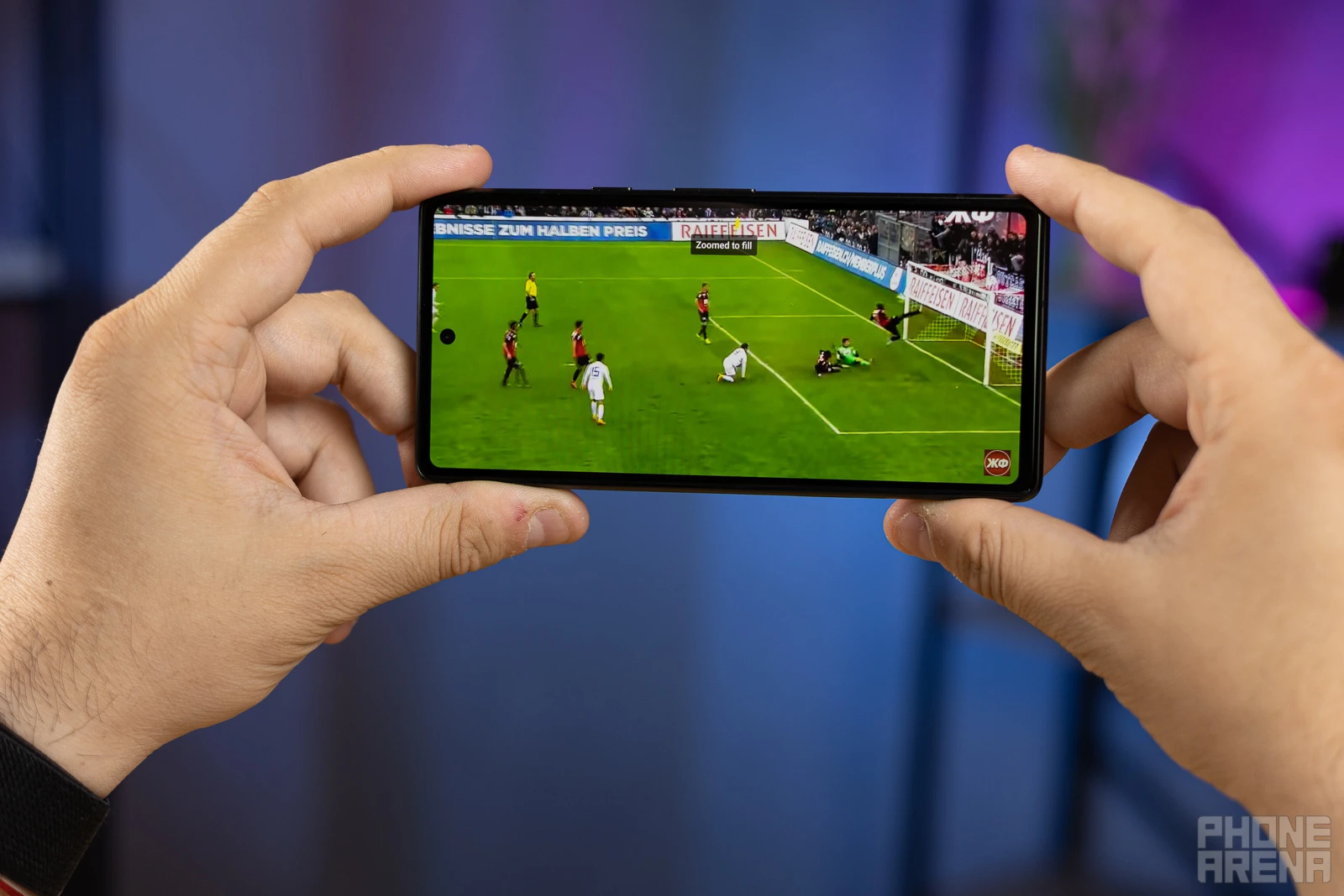
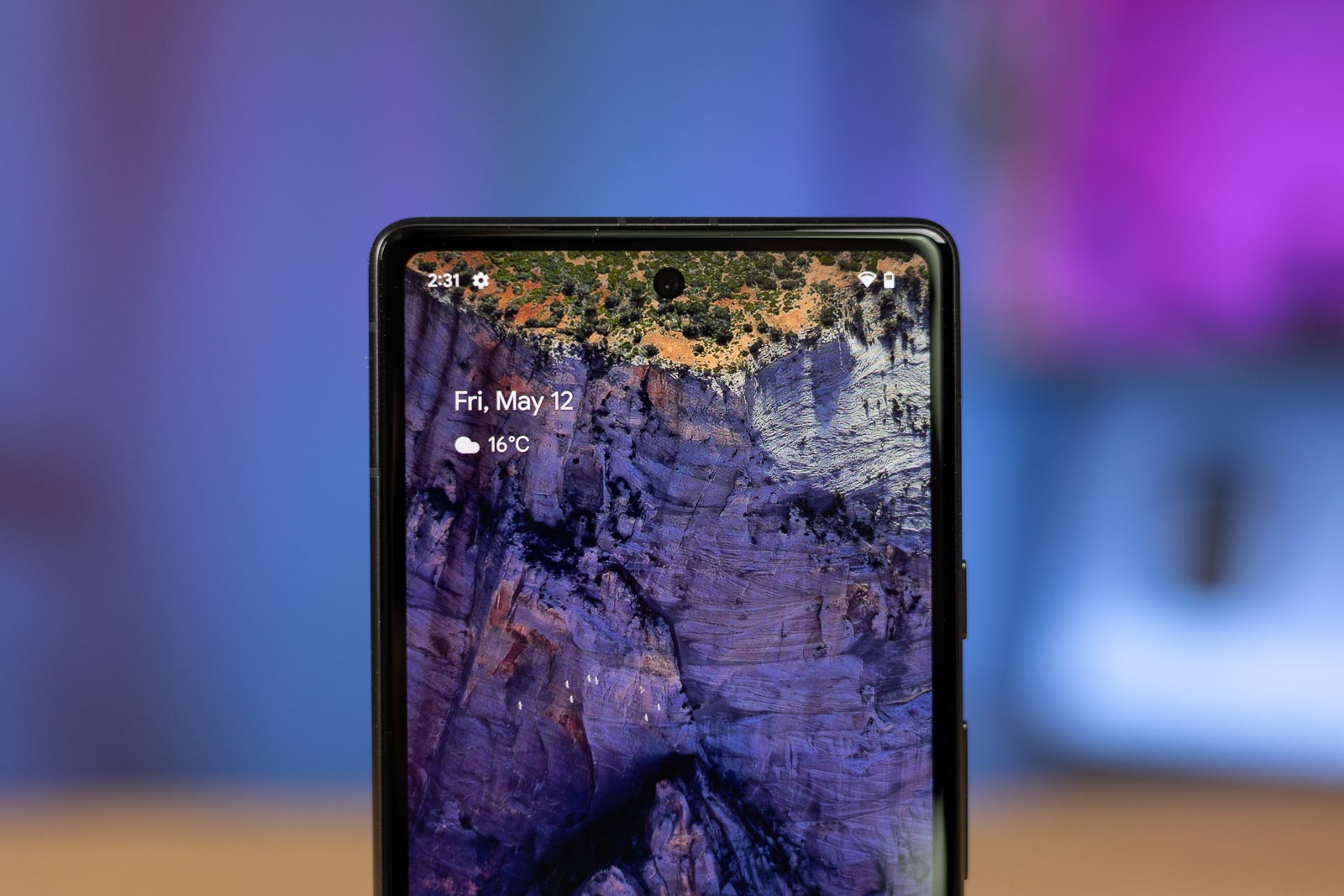
The Pixel 7a retains the 6.1-inch display of the Pixel 6a with mostly the same specs, but upgrades a vital hardware specification–– the refresh rate. Welcome to the 90Hz club, Pixel 7a!
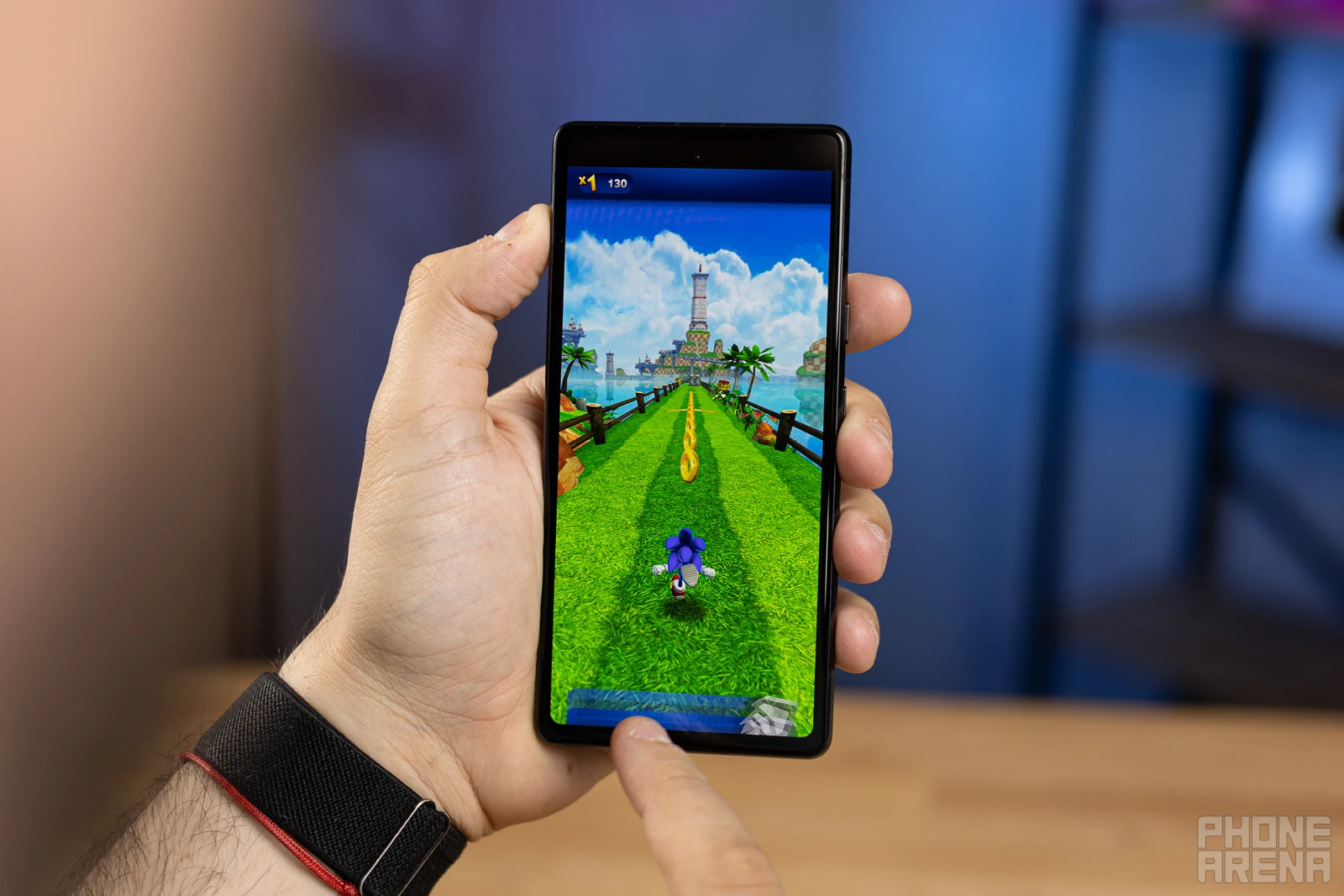
The interface is much smoother as a result, leaving the impression of being much faster than the Pixel 6a, for example, though in real-life scenarios there might not be any significant performance differences between the two phones. Having a 90Hz screen is definitely great to have on an affordable Pixel. The phone tones the refresh down to 60Hz when displaying static content (like photos), but will immediately ramp it up to 90Hz when you touch the display.
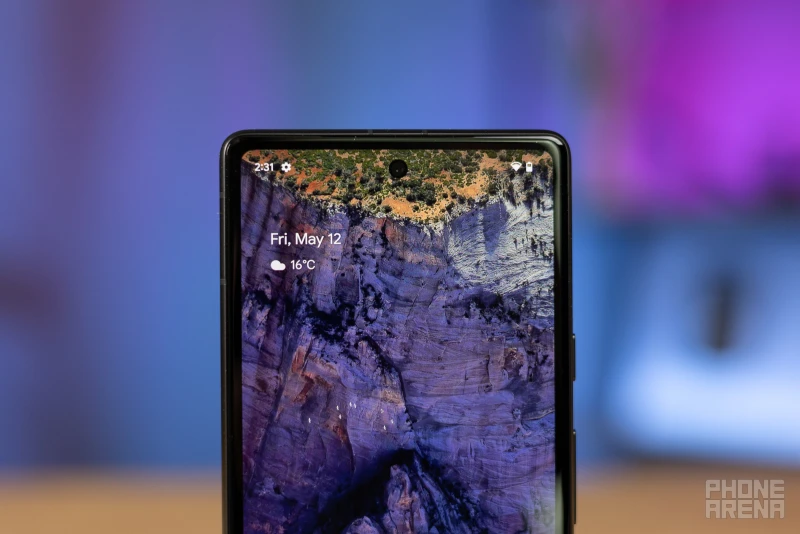
Aside from that, the Pixel 7a has that 6.1-inch OLED FHD+ display. The bezels are slightly thicker than what we saw on the Pixel 6a, but you will get used to them in no time.
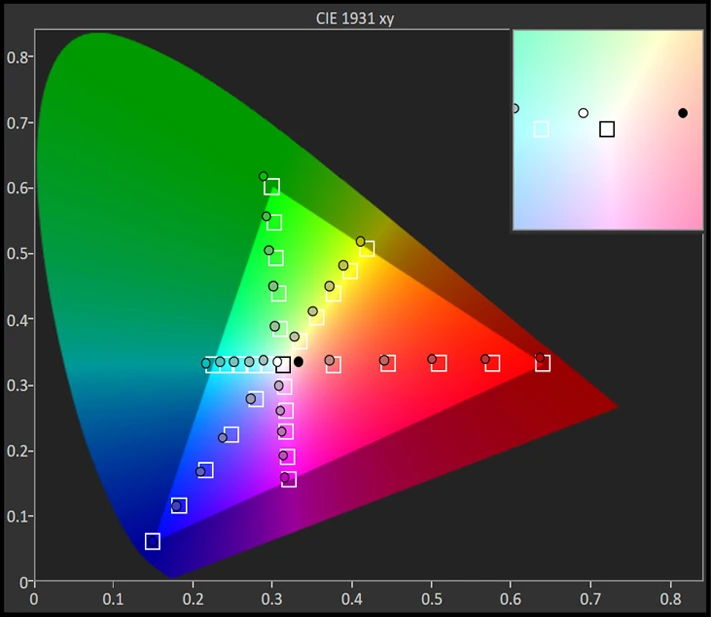
From a quality perspective, I doubt anyone could be disappointed with what the Pixel 7a has to offer. It achieves very good maximum brightness under the correct ambient lighting conditions, though it's a bit conservative and slow to amp up the brightness even in broad daylight, so an iPhone or a Galaxy will react to the changes quicker. Color rendition is also excellent on the Pixel 7a, and can be either true-to-life in the Natural mode or much livelier in the default Adaptive screen mode. Viewing angles are great as well. Overall, it's a very good display.
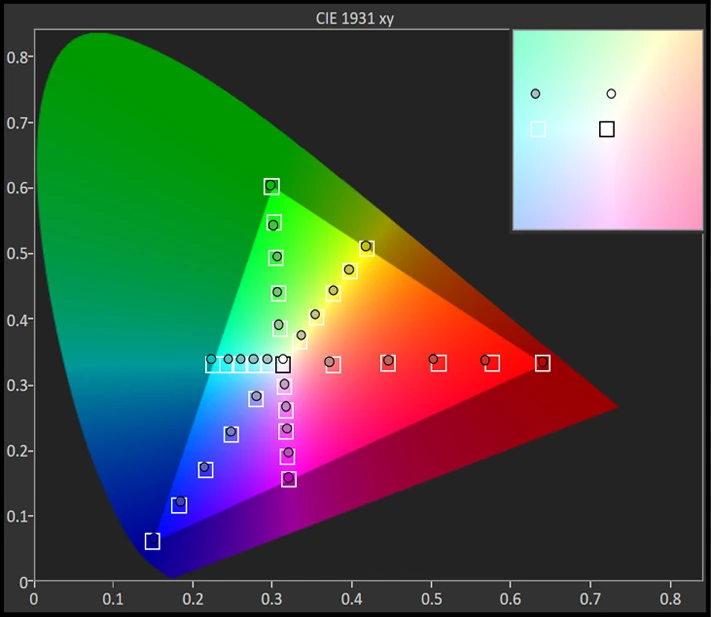
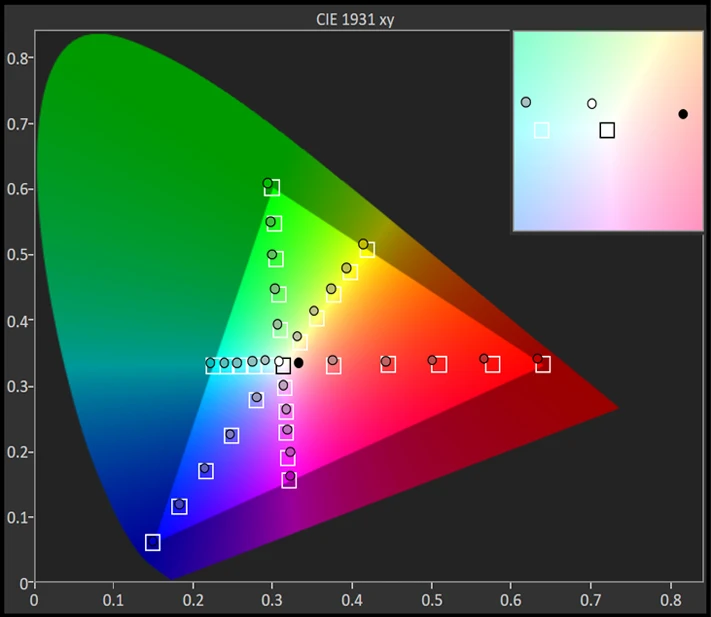
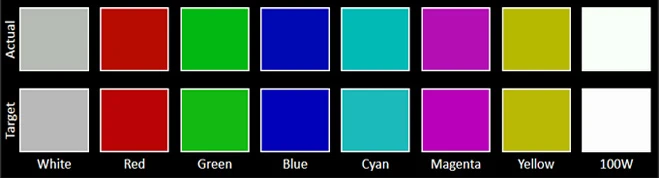
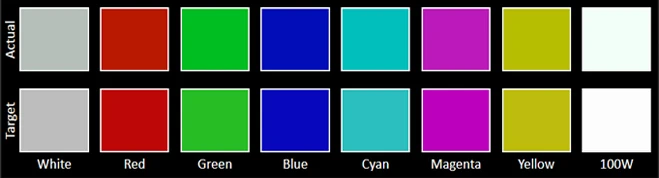
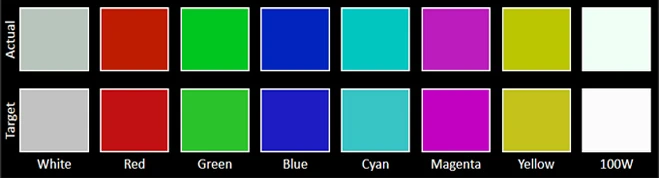
The CIE 1931 xy color gamut chart represents the set(area)of colors that a display can reproduce,with the sRGB colorspace(the highlighted triangle)serving as reference.The chart also provides a visual representation of a display's color accuracy. The small squares across the boundaries of the triangle are the reference points for the various colors, while the small dots are the actual measurements. Ideally, each dot should be positioned on top of its respective square. The 'x:CIE31' and 'y:CIE31' values in the table below the chart indicate the position of each measurement on the chart. 'Y' shows the luminance (in nits) of each measured color, while 'Target Y' is the desired luminance level for that color. Finally, 'ΔE 2000' is the Delta E value of the measured color. Delta E values of below 2 are ideal.
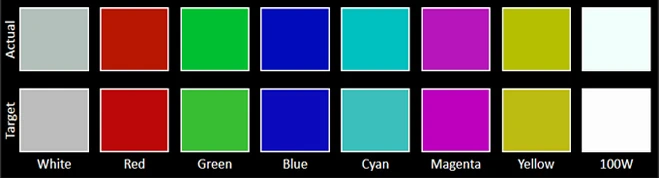
The Color accuracy chart gives an idea of how close a display's measured colors are to their referential values. The first line holds the measured (actual) colors, while the second line holds the reference (target) colors. The closer the actual colors are to the target ones, the better.
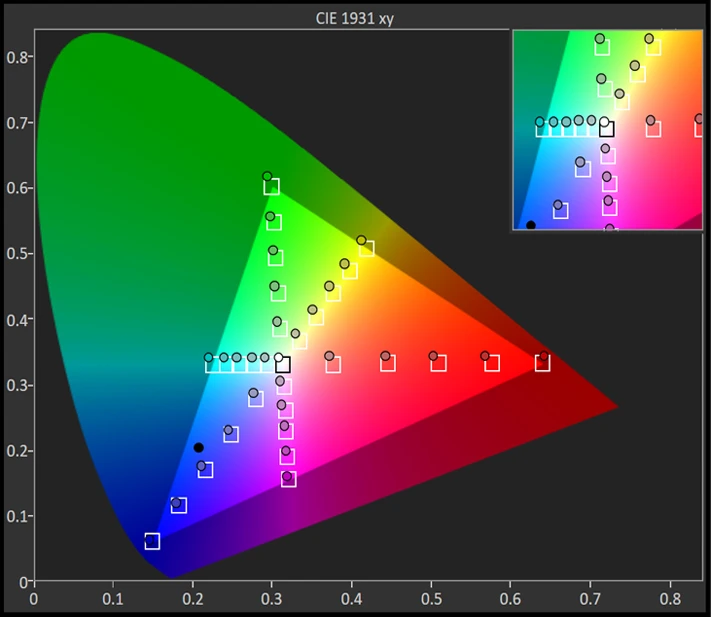
The Grayscale accuracy chart shows whether a display has a correct white balance(balance between red,green and blue)across different levels of grey(from dark to bright).The closer the Actual colors are to the Target ones,the better.
(Image credit - PhoneArena) Google Pixel 7a camera
Gone is the ol' reliable" IMX363 camera sensor, the Pixel 7a boasts a main camera with the Sony IMX787 64MP camera sensor. Have in mind that you won't be able to make use of its full resolution. Google use quad-pixel binning with the Pixel 7a, combining four pixels into one, thus outputting 16MP photos. Aside from sounding cool, pixel-binning delivers more detailed photos as it can help the sensor soak in more light. That's great for low-light image quality, too.
At the same time, the ultra-wide snapper is also getting a camera sensor change, as the Pixel 7a will employ the 13MP Sony IMX712 sensor for its ultra-wide camera. As a refresher, the Pixel 6a and many previous Pixels utilized the 12MP Sony IMX386 ultra-wide sensor. Up front, we have another 13MP selfie camera.
Enough specs and boring talk, let's see how the new camera setup fares!
Main Camera - Day
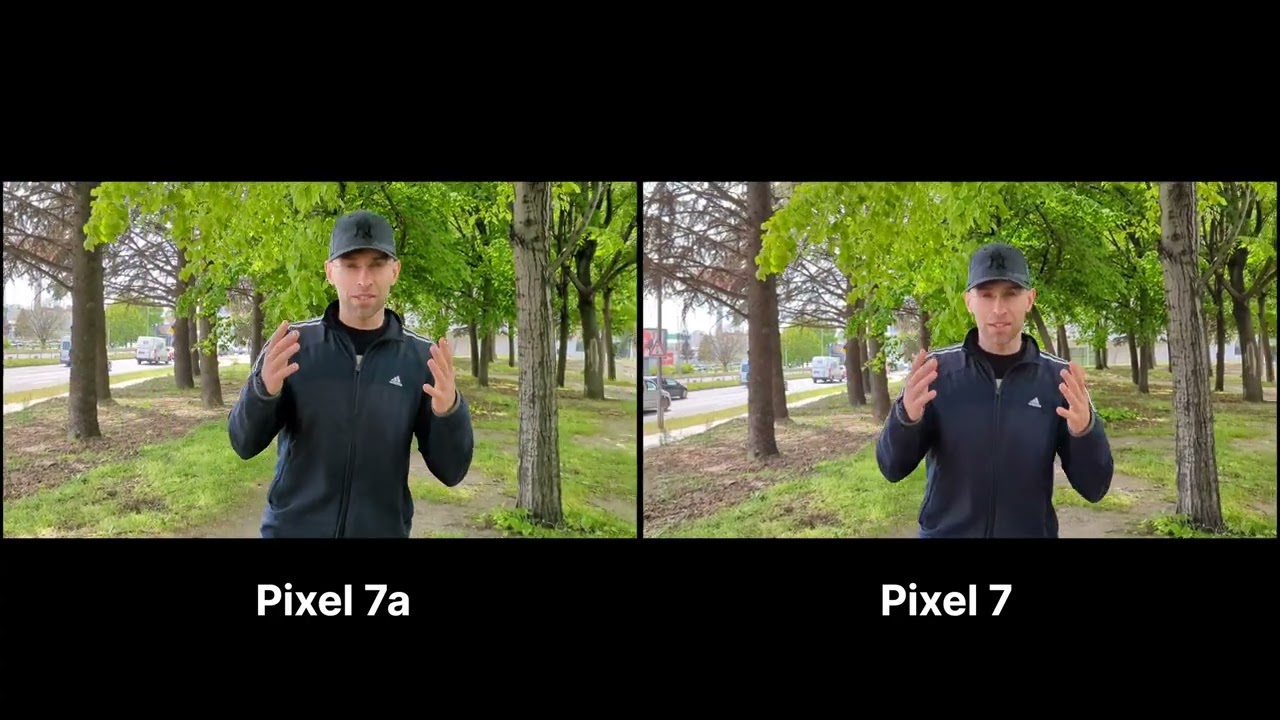
The Pixel is extremely capable when the lighting is sufficient. I love the natural yet lively color reproduction, the tack-sharp details, and great dynamics that the Pixel 7a delivers. Definitely on the same level as the Pixel 7, which is great, as you get the same unmistakable signature camera quality on a tighter budget!
Main Camera - Low-light
At night, true to its family legacy, the Pixel 7a is a very strong contender. Detail is nice across the board, with correct color rendition, but just the tiniest bit of noise in the darkest areas of a given image.
If zooming is important to you, look past the Pixel 7a. It doesn't come with a telephoto lens, so you're stuck home with digital zoom. Google boasts that Super Res Zoom is part of the Pixel 7a's arsenal, and while the 2X preset in the camera app provides decent results, anything past that is hardly usable. Not that you will have a lot of room to cover––the Pixel 7a makes out at 8X digital zoom, but anything past 2X is hardly usable.
Portrait Mode
When it comes to portraits, the Pixel 7a does a very good job at isolating the subject from the background. Sure, some strands of hair will probably fall victims to the algorithm, but that's normal. Some issues may be expected if the background is on the same plane as your subject, as evident in the portrait with the flowers. Generally though, portraits are lovely, with a moody appearance that embodies that classic Pixel look.
Ultra-wide Camera
The Pixel 7a's brand-new ultra-wide camera is wider than the one on the Pixel 6a. That's great! It makes the camera that much more usable in capturing, well, ultra-wide scenes.
Selfies
Selfies delivered by the 13MP selfie camera are very decent, with more than acceptable level of detail and lovely color rendition, as well as pleasing facial colors. Those are definitely selfies you might want to upload on social media, if you still do that on the regular.
Video
When it comes to video, the Pixel 7a will do a fine job, provided that there's ample light and you don't have to engage the stabilization often. Videos appear noisy at low light, you might have some issues with the Pixel 7a. Even though the main camera is stabilized and you have a few different stabilization modes to choose from, you might still experience undesirable jitter in your videos, so the Pixel 7a is definitely not at flagship level when it comes to stabilization. Otherwise, 4K videos at either 30 or 60 fps are perfectly fine and give you a lot of leeway for your post-processing endeavors.
Google Pixel 7a Performance & Benchmarks
Tensor G2 reporting for duty
(Image credit - PhoneArena)
The Pixel 7a is powered by the flagship-grade Tensor G2 chipset, which debuted alongside Google's Pixel 7 series in late 2022. The Tensor G2 is mostly similar to its predecessor in terms of architecture: it is built on a 5nm manufacturing process and comes with a 2+2+4 configuration; dual high-performance ARM Cortex-X1 cores, two mid-range Cortex-A78 cores, and finally, quad Cortex-A55 efficiency cores. The difference between the Tensor G2 and G1 is mainly found in the mid-range cores, which were the slightly slower Cortex-A76 on the Tensor G1.
It's not at all surprising that the Pixel 7a achieves similar synthetic benchmark results as the Pixel 7 and the Pixel 7 Pro, though not that far away from the previous generation Pixels as well. But we should always remember that the Tensor chipset was never about raw performance, it's a platform that enables improved on-device artificial intelligence and machine learning, both of which become more and more important in this day and age.
In terms of real-life usage, the Pixel 7a is quite capable and performs well. The only whiff of a serious stutter only revealed itself when navigating through Minecraft's menu interface, but once in-game, the phone performs as you'd expect, maintaining a near constant 90fps. The phone gets warm during intense gameplay, but nothing too excessive or too unpleasant to handle, as the mostly plastic back insulates from the accumulated heat.
The Pixel 7a comes with 8GB of RAM, a very decent bump of 2GB extra in comparison with the Pixel 6a, and on par with many contemporary flagships. Definitely a surprising (to me) spec bump that makes the Pixel 7a way more future-proof. In all honesty, Google could have kept the RAM at 6GB, and probably nobody would have objected.
As far as storage is concerned, 128GB of native storage is what we get on the Pixel 7a, of course with no extra hardware expansion options. Google is unlikely to offer another storage variant, so you will probably need to rely on a cloud-based storage option at some point in time. A Google One subscription is your best bet here, not only due to the extra cloud storage you get, but also thanks to the host of additional software services and features that will play extremely nice with your Pixel phone.
Google Pixel 7a Connectivity
Just like the Pixel 6a and most recent Pixels, the Pixel 7a is a 5G-capable device, with both sub-6GHz and mmWave 5G support. This means that you will be able to benefit from the low-band and high-band 5G speeds on Verizon, T-Mobile, and AT&T.
Google Pixel 7a OS / Android version
Although Android 14 is technically sort of official as it's currently available as a beta for eligible Pixel phones, the upcoming Android update will officially arrive to the Pixel 7a in August 2023. The Pixel 7a ships with Android 13 out of the box.
The Pixel 7a will receive three years of major software updates as well as five years of security patches. This means that Pixel 7a users will have the one-in-a-lifetime pleasure of experiencing Android 14, Android 15, and Android 16 earlier than most other Android users. Meanwhile, your phone will be secure up to 2028.
Of course, the appeal of the Pixel is the vanilla software on board that's chock full of excellent Google services and features. Functionalities like Clear Calling, Voice Message Transcription, Call Screening, Assistant Voice Typing, and all the smarts of the Google Assistant are part of the Pixel 7a's feature roster.
I just love how good the Pixel is when used heavily in conjunction with Google's services. Being a heavy Google user myself, usually juggling between at least two Google profiles daily, using a Pixel usually takes away a lot of stress and makes the experience more pleasant than usual. Shocking, I know, but most Android devices out there generally lack the same level of detail and amount of polish when it comes to accommodating your own
Google Pixel 7a Battery and charging
(Image credit - PhoneArena)
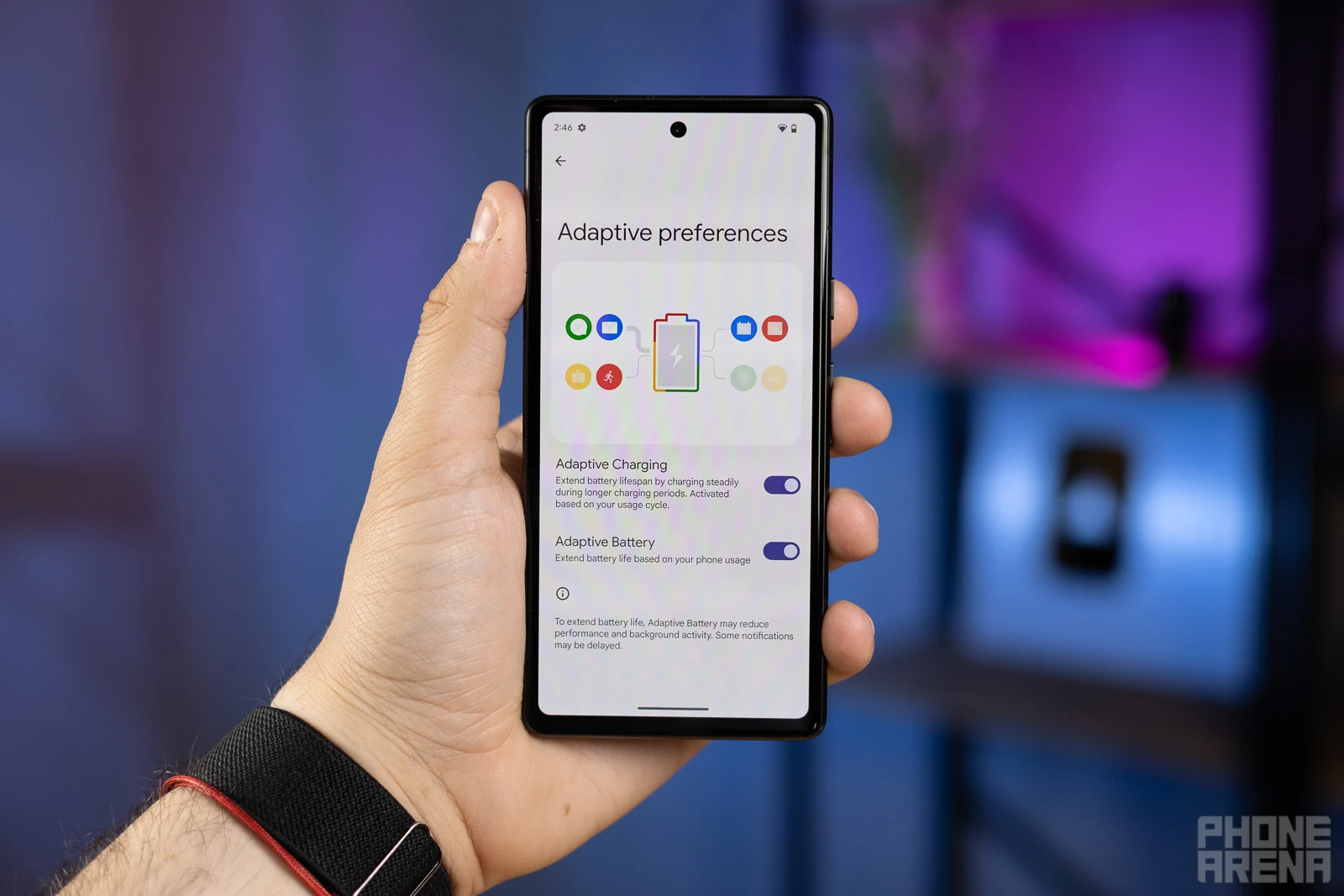
The Pixel 7a comes with a 4,385mAh battery, which is technically slightly less than the 4,410mAh one that was found inside the Pixel 6a, but the Pixel 7a has a slightly more capable chipset, so it should be more efficient, at least in theory.
In practice, the Pixel 7a battery life is more than decent. With my specific usage, which involves lots of multitasking between apps, reading, and some social media, the Pixel 7a routinely ended the day with around 30 to 40% of battery left. However, heavier usage and gaming especially might take a very serious toll on the phone's battery life and force you to seek out a wall charger prematurely. If you're an enthusiastic mobile gamer, the Pixel 7a is probably not the perfect phone for you.
When it comes to our custom battery benchmark tests, the Pixel 7a fares mostly similar to the Pixel 7 and surpasses the Pixel 6a in some regards. In our dedicated video playback battery test, which had the Pixel 7a loop through a playlist of videos with the brightness set at 200 nits, the new trooper lasted for 9 hours and 7 minutes, which is a great result if watching videos is a regular daily activity for you.
Meanwhile, in our web browsing test that simulates a regular web browsing, the Pixel 7a lasted for 15 hours and 27 minutes, surpassing both the Pixel 6a and the Pixel 7. Finally, our gaming test proved to be a bit too taxing for Google's new phone, as it endured for just 4 hours and 20 minutes (consistent with the Pixel 7's mostly similar result of 4 hours and 43 minutes in the same test).
When it comes to charging, the Pixel 7a supports 18W wired and 7.5W wireless charging, a first on an affordable Pixel phone. The phone charges slowly: it takes two hours to charge it from 0 to 100% with Google's own 30W USB-C wall adapter. The 7.5W wireless charging should only be used overnight, as it's paaaaaaainfully slow.
With two stereo speakers on board, the Pixel 7a produces a very decent soundstage that doesn't shine with deep base or super-clear highs, but delivers strong and punchy sound with bright mids. The iPhone 14 delivers clearer high frequencies, but lacks the same prowess in the mids; while the iPhone sounds like a phone, the Pixel 7a delivers an audio experience similar to a not-too-shabby smart speaker. In comparison with the Galaxy A54, the Samsung phone is both quieter and not as fun to listen to.
The haptics are decent, but nothing to really write home about. Mostly unchanged from the Pixel 6a, the Pixel 7a delivers exact vibrations that aren't too strong, but aren't too mushy either.
Google Pixel 7a Models
The Pixel 7a joins the ranks of the Pixel 7 and the Pixel 7 Pro, which were announced back in late 2022. Check out their respective reviews by following any of the links below:
The fresh new Galaxy A54 5G is one of the more serious Pixel 7a competitors at the same price point. The fresh Samsung upper mid-range phone comes with a 6.4-inch Super AMOLED display, FHD+ resolution, smoother 120Hz refresh rate, as well as 6GB of RAM, 128GB of storage, and a microSD card slot for some storage expansion.
Powered by the Exynos 1380 chipset, this one has a triple camera setup, consisting of a wide, ultra-wide, and macro camera. There's also a 5,000mAh battery with 25W wired charging, but no wireless charging. Prices for this one start at $450, so definitely in the ballpark of the Pixel 7a.
But guess what, the Pixel 7 itself is also a very decent alternative of the Pixel 7a. With a slightly higher price tag, but a mostly similar camera setup and image quality, as well as even more native storage if you pay $100 more, available with 256GB of storage, it could be a noteworthy alternative that should be considered.
Google Pixel 7a Summary and final verdict
(Image credit - PhoneArena)
Overall, the Pixel 7a is a more than a decent phone with very decent improvements over the Pixel 6a. Should you upgrade from last year's affordable Pixel? No. You shouldn't, just save your money.
But if you're coming from an older Pixel, say, a Pixel 4a or a Pixel 5, the the Pixel 7a is a very, very, very lucrative and appealing offer. It brings the best of Google in a user-friendly and affordable package that makes.
If you don't need some of the exclusive flagship features of the pricier Pixels, then this stock Android champ is certainly the phone to get. After all, it has it all, the AI/ML chops of the larger Pixels, a capable camera with many software features, a super compact size in comparison with your average Android phone, and finally, a $500 price tag that is very sensible.
Pros
Good value for money
Stock Android with tons of AI/ML-powered software features
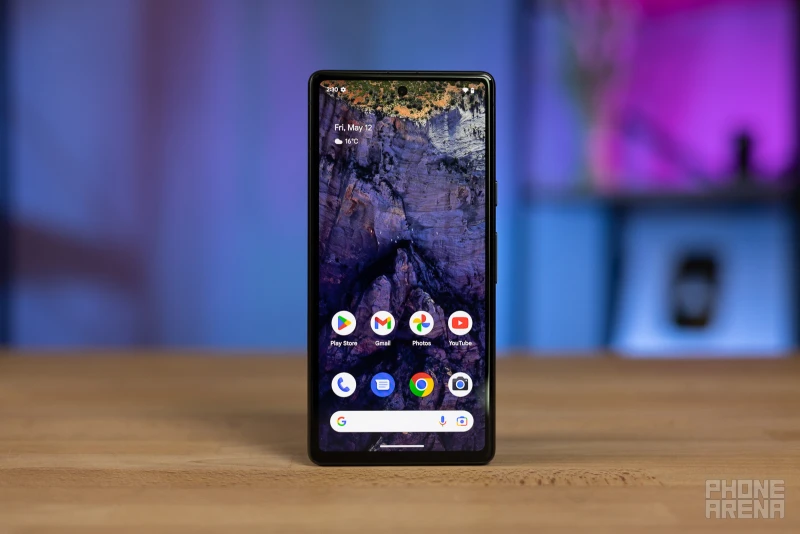
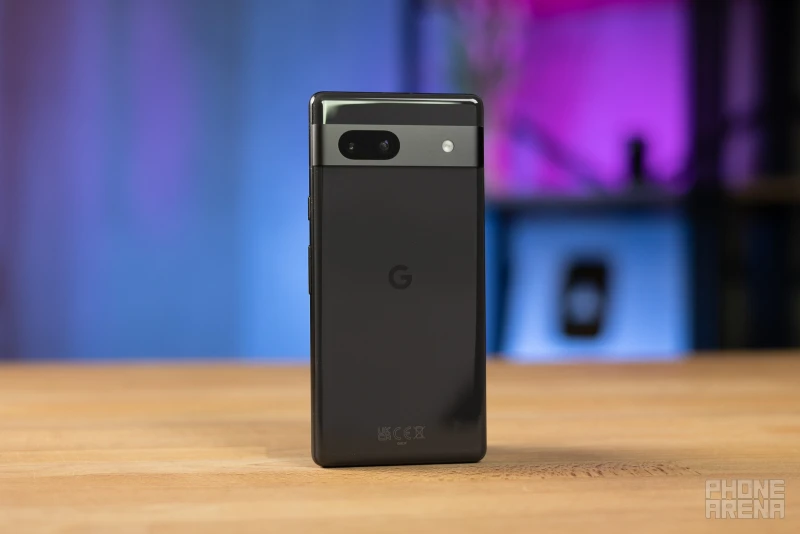
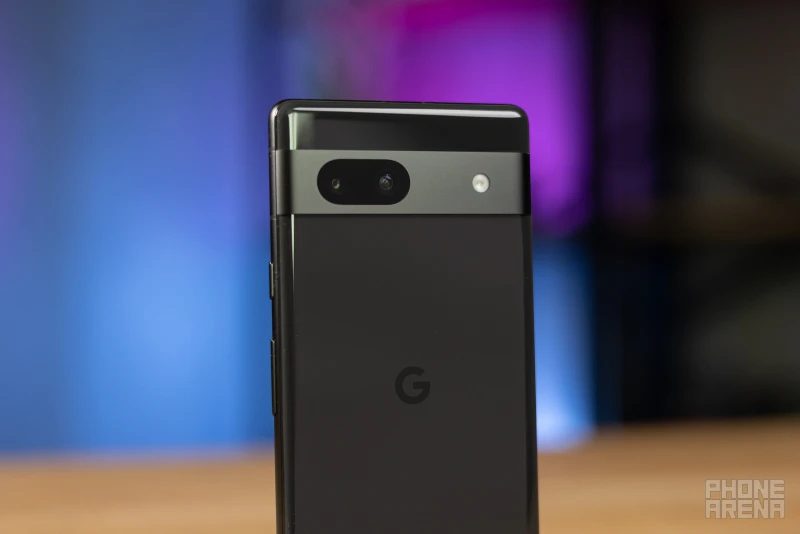 The Pixel 7a closely follows into the footsteps of the Pixel 7 series and definitely looks and feels like it belongs to Google's latest flagship series. It has a more pronounced rear camera strip, which Google calls "3D metal visor", which now neatly links up with the anodized aluminum frame. This definitely makes for a more coherent and modern look, though I'd lie if I say I wouldn't miss the understated black strip of the Pixel 6 era. The Pixel 7a is heavier than the Pixel 6a, but you are unlikely to notice the difference. That's regardless of the predominantly plastic build, which has allowed for wireless charging. Albeit painfully slow, it's still nice to have on an affordable Pixel