Intro
The Pixel 8 is right around the corner, and in the tight market for compact flagship phones, its smaller size and friendly price tag could potentially put it on the glory path. It's clear that Google is aiming to take down two of the most popular flagships on the market, the Samsung Galaxy S23 and the iPhone 14.
Today, we're going to pit the Pixel 8 and the iPhone 14 against each other in order to help you decide which one suits your needs better. It's a guessing game to some extent, as the Pixel 8 hasn't been announced yet, but we have enough meat to cook that particular stew.
Both phones come in very similar sizes, catering to the compact flagship audience, and even though the iPhone 14 is getting a bit old now, it packs more than enough punch to be a respectful opponent and tackle the upcoming Pixel 8. The deep dive starts now!
- Android 14 vs iOS 16
- Tensor G3 vs A15 Bionic
- 6.17-inch screen on the Pixel vs 6.1-inch on the iPhone
- 4,485 mAh battery on the Pixel vs 3,279 mAh on the iPhone
- Dual main cameras on both
- Pixel 8 could be $100-$200 cheaper
Table of Contents:
Read more:
iPhone 15 Pro Max vs Google Pixel 8 Pro preview
Pixel 8 vs iPhone 15
Google Pixel 7a vs Pixel 8
Design and Size
Flat screens and pocket friendliness

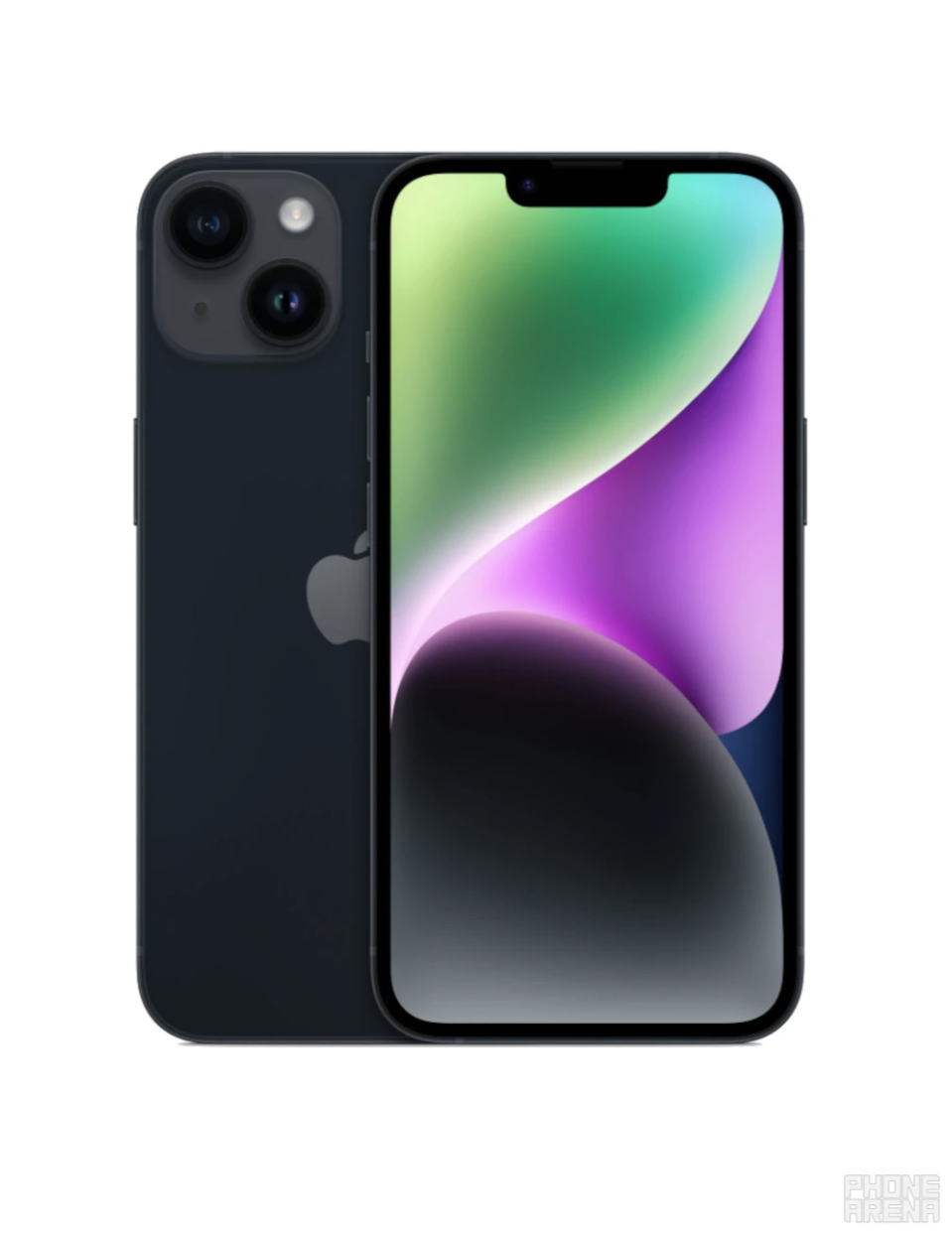
Both the Pixel 8 and the iPhone 14 closely follow the design language of their predecessors. The iPhone 14 comes with the same flat aluminum sides as the 12 series brought to the smartphone world, and the same flat screen and flat glass back. The camera bump is also very similar to what we've seen so far in the last few generations.
The Pixel 8 hasn't been officially announced yet, but we have more than a few leaks, and some of them include live photos, so we have a good idea of what the design should look like. It's very similar to what the Pixel 6 series started a couple of years ago, with a long camera strip stretching across the phone, a slightly curved back, and a flat front.
Both phones share similar dimensions, with the iPhone 14 being a bit more compact. Of course, we don't know the exact dimensions of the Pixel 8 yet, but given the 6.17-inch size of the screen, both phones should be very similar in that regard: compact and pocket-friendly.
Pixel 8 expected colors:
- Licorice
- Peony
- Haze
We have a dedicated piece about the expected Pixel 8 series hues, so you should check it out for more detail.
iPhone 14 available colors:
- Yellow
- Purple
- Midnight
- Starlight
- Blue
- Product RED
If you want to know more about the available iPhone 14 colors, check out our article.
Display Differences
My refresh rate is faster than your refresh rate
The Pixel 8 and iPhone 14 displays are very similar in size (6.17 inches vs 6.1 inches, respectively), but they differ in one very important metric: refresh rate. We're pretty sure that the Pixel 8 will feature a fast and smooth 120 Hz refresh rate on its 6.17-inch OLED display, while Apple just refuses to give the vanilla iPhone the much needed and long overdue ProMotion treatment. So, the iPhone 14 is stuck in the past with a meager 60 Hz refresh rate on its display.
When it comes to biometrics, things haven't changed much through the generations. The iPhone 14 still relies on Face ID, and the Pixel 8 will most likely retain the under-display fingerprint scanner, although there will be a face recognition feature, that is not as secure as the one found on the iPhone.
Performance and Software
Tensor G3 vs A15 Bionic
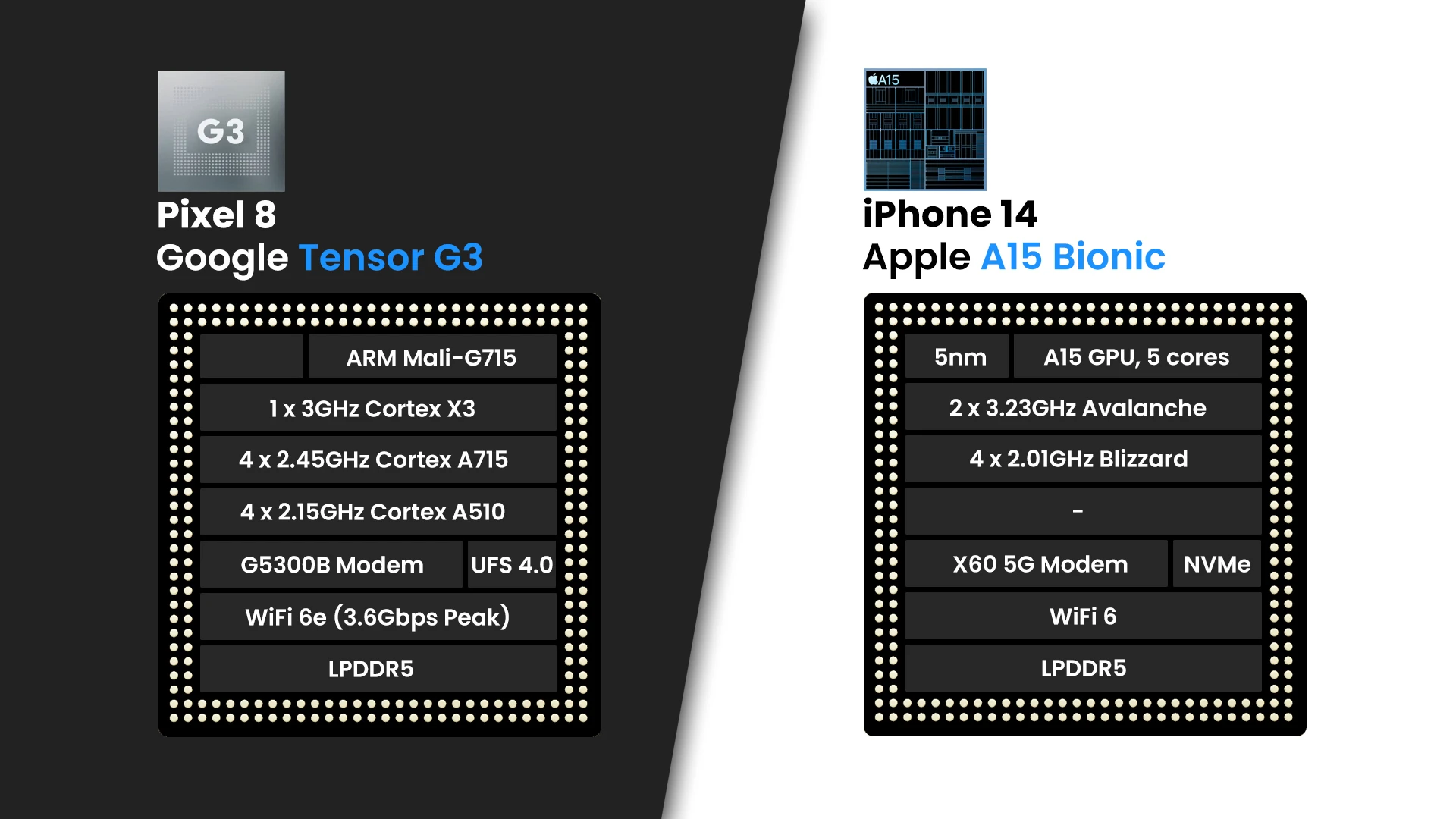
When it comes to performance, things are radically different on paper, mainly due to the different hardware architectures and the different ways Android and iOS handle apps and resources. At the end of the day, though, performance should be smooth and very similar; after all, these are flagship phones.
If we want to dig into the specs, we expect the Pixel 8 to sport more RAM, but on the other hand, we expect the A15 Bionic to give the new Tensor G3 a run for its money, even though it's two years old now. We'll have to wait until the Pixel 8 gets official to run our benchmark tests and offer you a neat little table, so stay tuned.
The iPhone 14 comes with five years of major OS updates, but the Pixel 8 is not far behind. Google promises to a three-year update cycle, so you'll be fine whichever you choose, given most people change their phone every two to three years.
Camera
A dual-camera affair
The iPhone 14 is a known entity, so we'll start with it. The phone features a dual camera system on its back; it is the conventional wide-ultrawide pair, featuring a 12MP sensor on both, with differences in aperture and focal length. You can check out our detailed iPhone 14 camera piece for a deep dive.
The Pixel 8, on the other hand, is expected to come with a big 50MP main sensor (probably the ISOCELL GN2 made by Samsung), and a 12MP ultrawide. Whether or not the difference in megapixels would translate into different image quality, is too early to tell. We will make a detailed camera comparison once the Pixel 8 launches, so stay tuned for that.
The selfie camera on the iPhone 14 is a 12 MP shooter. You can check out some samples in our review. The Pixel 8 is expected to get a 32-megapixel front camera, but we don't know whether or not this will result in better selfies and portraits.
Battery Life and Charging
USB-C vs Lightning
The iPhone 14 is the last generation of Apple phones to sport the proprietary Lightning port. Regulatory bodies are mandating the adoption of the USB-C standard, and the next iPhones will benefit from USB-C's faster charging speeds, in comparison to Lightning. Speaking of which, the iPhone 14 caps at 20W wired and 15W wireless.
The iPhone 14 comes equipped with a 3,279 mAh battery, while the Pixel 8 is expected to get a bigger cell at 4,485 mAh, but once again, this doesn't automatically mean a better battery life.
Specs Comparison
| Specs | iPhone 14 | Pixel 8 |
|---|---|---|
| Dimensions | 5.78 x 2.81 x 0.31 inches (146.7 x 71.5 x 7.80 mm) | 5.93 x 2.79 x 0.35 inches (150.5 x 70.8 x 8.9 mm) |
| Weight | 6.07 oz (172.0 g) | - |
| Screen | 6.1-inch, 60Hz | 6.17-inch, 120Hz |
| Processor | Apple A15 Bionic | Google Tensor G3 |
| RAM, Storage and Price | 6GB, 128GB, $799 | 8GB, 128GB, $599 (potentially $649-$699) |
| Cameras | Wide: 12MP Ultra-wide: 12MP | 50MP ISOCELL GN2 12MP ultrawide |
| Battery Size | 3,279mAh | 4,485mAh |
| Charging Speeds | 20W wired, 15W wireless | 24W wired, 12W wireless |
Summary
Which one is better, then? That's a tough question to answer. The iPhone 14 is still new, and even though it will be replaced by the upcoming iPhone 15 series soon, we don't expect a major price drop, beside the usual $100 off. This means you'll have to cough up around $700 to get one.
The Pixel 8, on the other hand, will be the newest Google phone when it launches, and it will come with many (now unknown) new features, including the Tensor G3 chipset. Even though there are rumors of a price hike, putting the price tag of the Pixel 8 north of the $599 we're used to ($649–$699), the device will still be cheaper than the iPhone 14.
So, at the end of the day, it depends on the price and the ecosystem. If you're deeply into the Apple one, you should probably stick with it and choose the iPhone 14. If you're coming from an Android background, the Pixel 8 could offer some familiar experiences with sprinkles of new features, both hardware and software.