Intro
Last year, Apple brought back the "Plus" version to the iPhone lineup, giving us a bigger-screen, budget-friendly option to the iPhone Pro Max. Now, with the iPhone 15 series officially unveiled, the company is sticking to the same "new and improved" idea with the iPhone 15 Plus. But what's the deal with the regular iPhone 15 and how these two stack against each other?
Apple isn't straying too far from the standard model with the iPhone 15 Plus. The main differences are just the screen size and battery. Both of these fresh models rock last year's A16 chip and feature a camera upgrade, borrowed from the Pro lineup of 2022. Plus, they now have that funky pill-shaped cutout and the cool Dynamic Island feature.
But let's not get ahead of ourselves. Read our detailed iPhone 15 Plus vs iPhone 15 comparison to learn every small difference between these two and most importantly, answer the most important question of them all. Which one should you get?
- A16 chip
- Same 6GB RAM
- Bigger screen on the Plus
- Dynamic Island on both phones
- Same storage options
- 48MP main camera
- Better battery life on the Plus
- Same charging speeds
- USB-C on both phones
Table of Contents:
Read more:
iPhone 15 series: all you need to know
Design and Size
Honey, I enlarged the iPhone 15
For better of for worse, there are no big differences in design this year. Apple hasn't made a radical change in the past couple of generations, and the glass-aluminum trend continues with the iPhone 15 series. This time around the back glass sports a textured matte finish, a small change compared to the last generation glossy backs.
Now, obviously, the iPhone 15 Plus can be viewed as a bigger version of the iPhone 15, both phones are nearly identical. The biggest difference is the size, the iPhone 15 Plus sports a 6.7-inch screen, while the vanilla iPhone 15 comes equipped with a smaller, 6.1-inch display.
This preserves the status quo between the Plus models and the regular iPhone, so the plus-sized iPhone seems to be a well-performing concept for Apple. Not much else can be said here, the colors for the non-Pro models in the iPhone 15 series are the same, you can find them below.
- Black
- Green
- Pink
- Blue
- Yellow
The big change this year is the transition from Lightning to USB-C, so don't be surprised when you see that port on the bottom of the iPhone 15 series. Both the iPhone 15 Plus and iPhone 15 come equipped with this port.
The other design difference is the retirement of the notch, all iPhone 15 series models now come with a pill-shaped cutout in the display to accommodate the front camera and hardware, and this includes the Dynamic Island software feature as well.
Display Differences
It's all about that size, size, size
The display size is one of the biggest (if not THE biggest) differences between the iPhone 15 Plus and the iPhone 15.
The iPhone 15 comes with a 6.1-inch OLED screen with a 60Hz display refresh rate and 800 nits of brightness (1,600 HDR peak brightness, 2,000 nits peak outdoor brightness), and the same goes for the iPhone 15 Plus, with the only difference being the size—we're taking about a 6.7-inch OLED with the same 60Hz display refresh rate.
The lack of ProMotion might be a downer for some, as might be the omission of an Always On mode, but these two are tied together, and you can't have one without the other, so to speak. The good news is that the notch is no longer present, and the Dynamic Island feature does its magic on the pill-shaped cutout on both the iPhone 15 Plus and the standard iPhone 15.
Performance
Last year's grace
The hardware situation around the iPhone 15 Plus and the iPhone 15 is pretty clear. Both phones inherit the A16 chip from last year's Pro models, and this silicon is a known entity, so we know what to expect. It's tempting to include some A16 benchmarks from last year but there might be tiny differences due to iOS 17, optimization and so on.
That being said, the performance between the two models will most likely be identical, with small fluctuations depending on the specific test and conditions. The A16 chip is made using a 4nm process, so the efficiency is quite good, and we expect good results on that front from both models. Stay tuned for our benchmark results, we'll be posting them here soon!
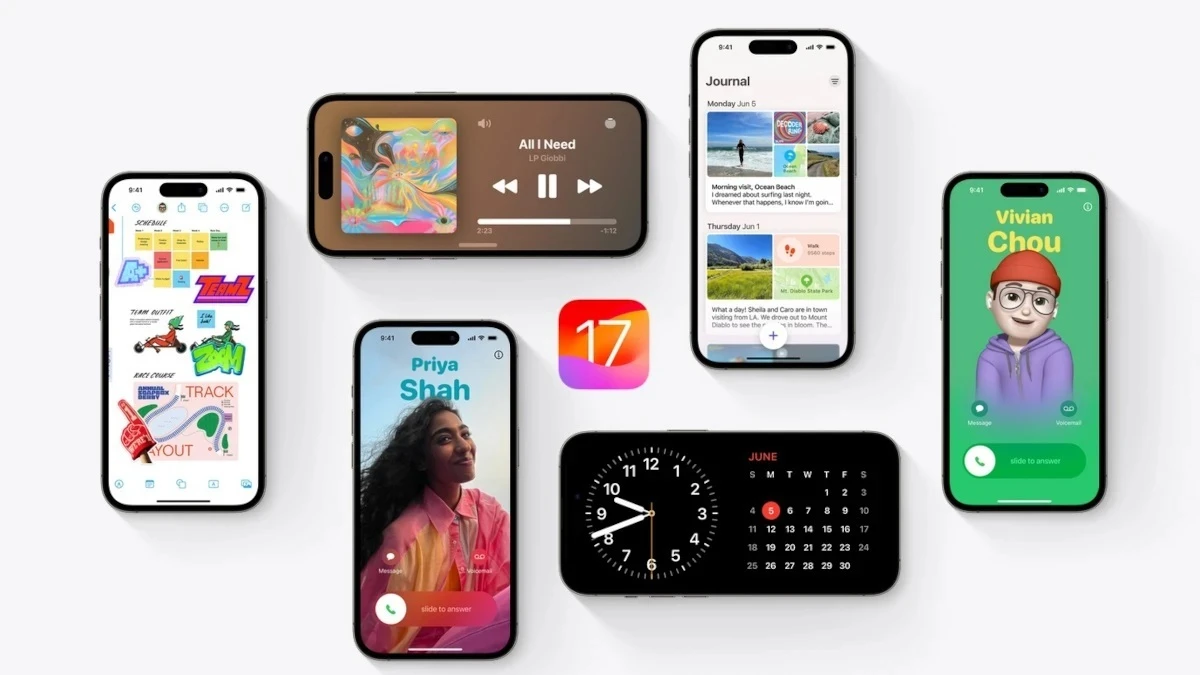
The storage options are also identical for both phones, starting at 128GB and moving through 256GB to land at the largest 512GB option. As for software, the iPhone 15 Plus and the iPhone 15 run iOS 17 out of the box, this next-gen version of Apple's mobile OS is expected to be available for download on September 18. If you're interested, you can already download the iOS 17 developer beta to give it a try.
At the annual WWDC forum, Apple revealed some exciting new features of iOS 17, which you can explore in detail following our iOS 17 coverage. Among the highlights are updates to Phone, iMessage, and FaceTime, along with the introduction of a fun new feature called NameDrop. You can now check out our iOS 17 preview as well, if you need a deep dive and some first hand experience with Apple's latest mobile OS.
Camera
Twin brothers
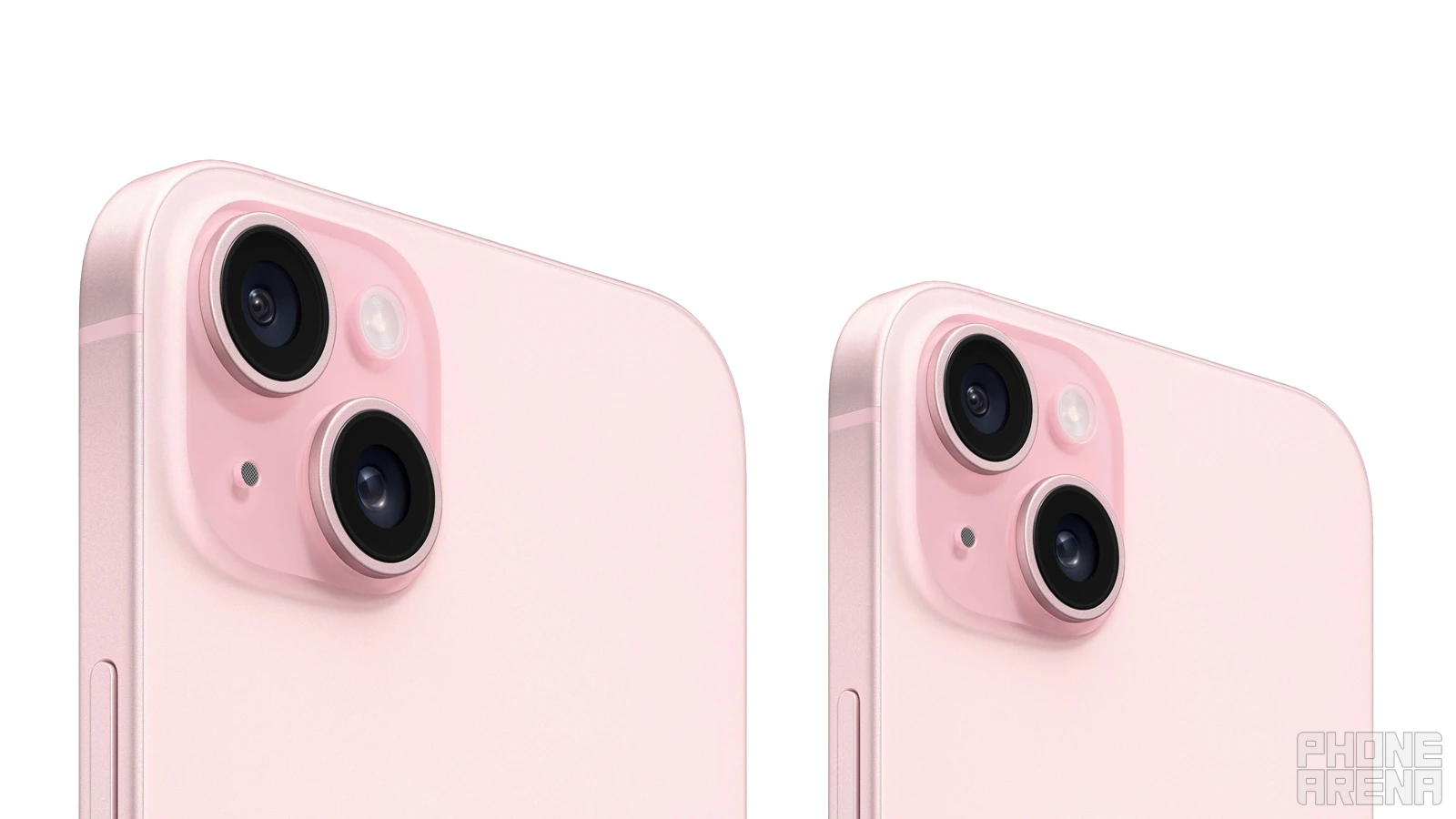
The camera configuration is identical on both the iPhone 15 Plus and the iPhone 15. However, we're looking at a new main camera featuring a 48MP sensor inherited from the Pro models of last year. This new high-resolution sensor allows for what Apple calls Optical-quality 2x telephoto, which is actually just a crop from the full-resolution. By the way, both phones output 24MP images from the main sensor as a default. There's some magic going on here, as the images are first captured as 12MP shots through 4-1 pixel-binning, and then processed to increased detail and stored as 24MP files. All this should improve image quality, especially in low-light conditions but we have to snap some samples to confirm this.
All in all, you shouldn't take the camera into consideration if you're trying to decide between the iPhone 15 Plus and the iPhone 15, both of which have the exact same camera systems.
Audio Quality
Boom, boom, boom
The loudspeakers Apple uses in its iPhone models are generally of very high quality and produce a nice, balanced, and rich sound. We expect the same quality to be preserved in this year's iPhone 15 Plus and iPhone 15 models, alongside the stereo setup, which uses the speakerphone as a second, well, speaker.
The bigger body of the iPhone 15 Plus could give that model a slight advantage when it comes to bass and resonance, giving it more oomph in the low frequencies (they need more space to travel and resonate properly).
The Taptic Engine is another strong point on most iPhones of late, and we don't expect that to change with the new lineup. Again, the bigger iPhone 15 Plus could result in subjectively more prominent vibrations, mainly due to the size, but overall, the difference won't be night and day. Stay tuned for our full review and audio quality reports.
Battery and Charging
Welcome, USB-C
The big change (and a needed one) in the iPhone 15 lineup is the switch to USB-C. Sadly, the USB 3.0 is reserved for the Pro models, so the iPhone 15 and iPhone 15 Plus feature the same charging and transfer speeds as their predecessors, despite the new connectivity. Apple cites 50% in 30 minutes with a 20W charger, so it's the same old, same old.
Here we have the other big difference between the iPhone 15 Plus and the iPhone 15 - the battery size. The bigger body of the Plus model allows for a larger battery. The Plus most likely sports the same 4,325mAh battery as its predecessor (judging by the usage hours Apple cites on its site), while the vanilla iPhone 15 probably inherits the same 3,279mAh battery seen in the iPhone 14. We have to run our battery tests to see how these batteries perform with the A16 bionic but don't expect huge differences, compared to last year's models.
Specs
| iPhone 15 Plus | iPhone 15 | |
|---|---|---|
| Size, weight | 160.8 x 77.8 x 7.8 mm, 201 grams | 147.6 x 71.6 x 7.8 mm, 171 grams |
| Screen | 6.7" OLED 60Hz | 6.1" OLED 60Hz |
| Processor | A16 Bionic 4nm | A16 Bionic 4nm |
| RAM, Storage | 6/128GB 6/256GB 6/512GB - LPDDR5 | 6/128GB 6/256GB 6/512GB - LPDDR5 |
| Cameras | 48MP main 12MP ultra - 12MP front | 48MP main 12MP ultra - 12MP front |
| Battery | 4325 mAh* | 3279 mAh* |
| Charging | USB-C 20W wired MagSafe | USB-C 20W wired MagSafe |
Summary
Which one should you choose, then? It's a very straightforward question, given that these two phones are almost identical. It's pretty much down to screen size and battery life. If you like big phones, then the iPhone 15 Plus is the right one for you. If you prefer a more compact form factor, then get the iPhone 15.
Things are not so simple if you're upgrading from a previous generation iPhone or an Android device. Again, the same basic rules apply here, but if you already have the iPhone 14 or the iPhone 14 Plus, there's little to no reason to get the new models.