It's been a momentous year for the smartphone industry, with virtually every manufacturer getting in on the foldable craze, Samsung pushing the boundaries in camera technology, and Apple continuing to reign supreme.
And if the grand calculus of smartphone release schedules holds true, new iPhones will arrive at storefronts in a matter of weeks, ushering in the next era of Apple handsets.
Also: Best Android phones you can buy right now
For now, ZDNET's team of subject matter experts has compiled the definitive list of top phones you can buy based on months of hands-on testing. Our pick for the best phone overall is the Samsung Galaxy S23 Ultra, due to its eye-candy display, reliable battery life, and wealth of useful features. Check out all of our picks for the best phones of 2023 below, no matter your budget or your preferred phone manufacturer.
The best phones of 2023
prosMost complete smartphone experience money can buy
Reliable quad-camera setup
256GB base storage leads the competition
Integrated S Pen stylus for enhanced functionality
consPhone can be unwieldy for some, especially with a case
Fast charging is still capped at 45W
Pricier than most Android phones
Samsung Galaxy S23 Ultra specs: Screen size: 6.8 inches | Storage: Up to 1TB | Processor: Qualcomm Snapdragon 8 Gen 2 for Galaxy | Panel type: WQHD+ Edge | Color: Phantom Black, Cream, Green, Lavender | Battery life: 5,000mAh | Water and dust resistant: IP68
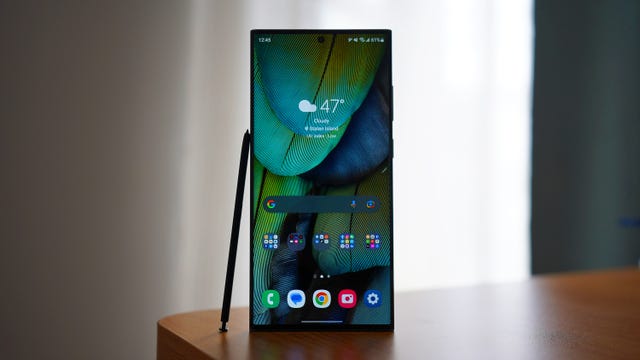
Samsung's Galaxy S23 Ultra is undeniably the most complete smartphone you can buy right now. It's built with a large 6.8-inch AMOLED display that produces vibrant visuals both in the brightest and dimmest environments, a reliable 5,000mAh battery, four cameras at the rear to help you capture a variety of shots, and an overclocked Snapdragon 8 Gen 2 for Galaxy chipset.
That last bit is especially important given how much more powerful yet efficient the new Ultra flagship is, even when compared to last year's S22 series. In my ZDNET review, I mentioned that "the mobile platform brings meaningful improvements to the Galaxy phone experience, while Samsung's done its part to optimize the S23 Ultra with a larger vapor cooling chamber and more efficient back-end processing.
Together, you get a phone that's powerful enough for any type of user, including mobile gamers." For a smartphone that's not made specifically for gaming, that's as high praise as it gets, right?
The S23 Ultra proves just as much of its worth through unique specs and features, ones that truly matter to day-to-day usage. That includes the base storage of 256GB (versus the industry's 128GB standard), the integrated S Pen that gives you enhanced precision and inputs, Samsung's five-year commitment to security updates, and even Samsung DeX, its mobile-to-desktop service that turns your S23 Ultra into a full-on computer when connected to a monitor or TV.
Review: Samsung Galaxy S23 Ultra
prosExcellent battery life and camera performance
4K and Dolby Vision support
Wi-Fi 6 support
Satellite SOS and crash detection
iPhone 14 Pro Max specs: Screen size: 6.7 inches | Storage: Up to 1TB | Processor: A16 Bionic | Panel type: Super Retina XDR | Color: Midnight, Space Black, Purple, Deep Purple, (Product)RED, Silver, Starlight | Battery life: 29 hours | Water and dust resistant: Yes
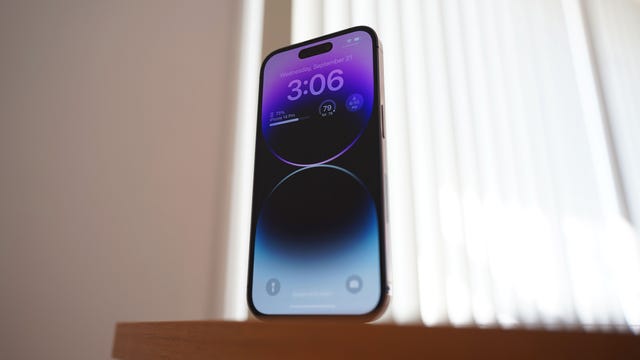
The iPhone 14 Pro Max may not be the latest and greatest in a matter of weeks, but it continues to prove why Apple dominates the mobile space. The 6.7-inch display uses Apple's Super Retina XDR panel for bright colors, finer details, and enhanced contrast. It even supports 4K resolution for video playback as well as Dolby Vision for HDR. But perhaps the most intriguing visual feature is the new Dynamic Island, which transforms that notch of dead space on previous models into a notification hub.
During testing, ZDNET Editor-in-Chief Jason Hiner remarked that "Despite its silly name, Dynamic Island is both functional and elegantly designed. And there are now subtle and useful new animations for a whole host of activities, from FaceID unlock to AirPods pairing to live sports scores."
New sensors are also present on the Pro iPhone, allowing users to use Apple's new crash detection feature, which automatically knows when you've been in a car accident or have fallen and contacts emergency services. The 14 Pro Max is also equipped with the new satellite SOS system, which allows you to call for help even if you don't have LTE service.
Just as important is the upgraded battery, now giving you up to 29 hours of use on a full charge. And with fast charging, you can get up to 50 percent battery with just 35 minutes of charging; which is perfect for when you forget to charge overnight and need to top up on your lunch break or during a work meeting.
Can't decide between the Pro and Pro Max? You can read our full comparison to see what differences there are between the two models.
Review: iPhone 14 Pro and Pro Max
prosQuality cameras all across the board
User-first software approach
5,000mAh battery with LTPO display
Priced competitively at $899
consNo 1TB storage option like Apple/Samsung
Stock Android can feel too minimal
Capped at 30W fast charging
Google Pixel 7 Pro specs: Screen size: 6.7 inches | Storage: Up to 512GB | Processor: Google Tensor G2 | Panel type: OLED | Color: Snow, Obsidian, Hazel | Battery life: 5,000mAh | Water and dust resistant: IP68
Nearly a year later, the Google Pixel 7 Pro still impresses with a camera array that features a 50MP main lens, a 48MP telephoto, and a 12MP ultrawide that shoots better low-light photography than ever before. ZDNET's Jason Cipriani tested both the Pixel 7 and the Pixel 7 Pro back in October and found the latter the most impressive for its new 30x Super Res Zoom, suggesting that "Google finally showed Samsung how these fancy zoo features are supposed to look."
Like the year before's Pixel 6 Pro, the latest Google flagship complements the improved camera hardware with its tried-and-tested computational chops, including Magic Eraser for on-the-fly content-aware fill, a new Macro Focus for enhanced zoom-in shots (up to 30x), and more.
That's not to take away from the overall design and performance of the Pixel smartphone. The Pro model still features the now-iconic Pixel camera bump that beams from side to side, polished aluminum build quality, and a vivid 6.7-inch LTPO display that refreshes between 1 to 120Hz. The larger footprint also gives room for a beefy 5,000mAh battery that should keep the Pixel running for hours on end.
At $899, the Pixel 7 Pro undercuts its closest competitors, the iPhone 14 Pro and Samsung Galaxy S23 Ultra. Even then, you can expect snappy performance thanks to the Tensor G2 chip, with at least five years of consistent software and security updates.
Review: Google Pixel 7 and 7 Pro
prosLarge cover screen is a phone in and of itself
Incredibly compact
First dust-resistant foldable
Form factor lends itself to creative camera features
consBattery is just good enough for a day of use
Repair solutions remain up in the air
Undeniably more fragile than the typical slab phone
Motorola Razr Plus specs: Screen size: 3.6 inches and 6.9 inches | Storage: 256GB | Processor: Qualcomm Snapdragon 8+ Gen 1 | Panel type: OLED | Color: Infinite Black, Glacier Blue, Viva Magenta | Battery life: 3,800mAh | Water and dust resistant: IP52
Flip phones have made a (somewhat) triumphant return, even if teenagers and young adults are opting for the dumber option of the two types. The Motorola Razr Plus marks the return of the old-school handset, or as I put it in my full review, "a return to form, modernizing a classic flip phone into one of today's best foldables."
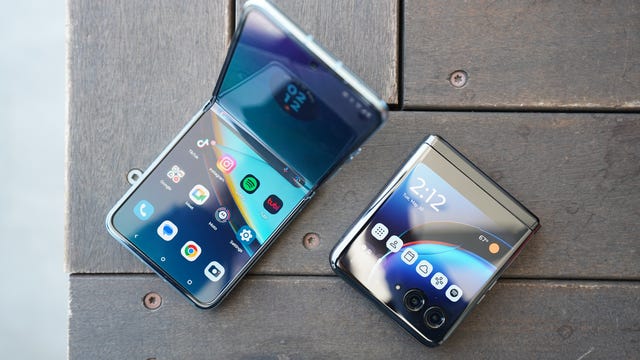
With the new Razr Plus, Motorola has equipped the outer cover of the phone with a 3.6-inch display. Besides doubling as a rear-camera viewfinder, the external display basically serves as a secondary, smaller phone. You're able to run the same apps and services that you would on the inner 6.9-inch panel, including making phone calls, text messaging, watching TikToks, and playing games. The same can be achieved with the Samsung Galaxy Z Flip 5, though you'd have to jump through a loophole or two.
The foldable form factor of the Razr Plus ultimately lends itself to an improved camera experience. Since you're able to flex the display at an upright angle, it's easier to get everyone in the frame for group photos, take selfies, and capture long-exposure shots that would typically require a tripod or mounting accessory.
Review: Motorola Razr Plus (2023)
prosCompetitively priced at under $450
Large and bright 120Hz AMOLED display
Long-lasting 5,000mAh battery
Up to five years of software updates
consPlastic body can feel cheaper than glass
Front-facing camera is just passable
Exynos processor still lags behind Qualcomm
Samsung Galaxy A54 5G specs: Screen size: 6.3 inches | Storage: 128GB | Processor: Exynos 1380 | Panel type: AMOLED | Color: Graphite, Lime, Violet, White | Battery life: 5,000mAh | Water and dust resistant: Yes
Believe it or not, Samsung's best-selling smartphone last year was not one of its S-series or foldable devices, rather it was the humble Galaxy A53 5G, which delivered an uncompromising phone experience with a smooth-scrolling screen, reliable battery, and up to five years of software support. The device was priced at just $449, undercutting its more premium competitors and heavy-handedly beating Apple's own mid-range handset, the iPhone SE.
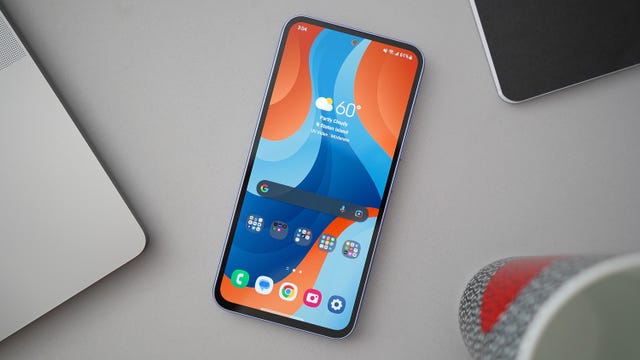
This year's A54 5G ticks just as many boxes as its predecessor but with a series of subtle yet useful upgrades. For example, the display is still a large 6.4-inch panel that ramps up to 120Hz refresh rate, but now shines at 1,000 nits of brightness (from 800 nits), the battery size is still a healthy 5,000mAh capacity, and the unit is now powered by an Exynos 1380 chipset. That's a minor bump from last year's Exynos chip, but a bump nonetheless.
The Galaxy A54 also features an exterior design that's more in line with Samsung's S-series phones and a new camera system that's headlined by a 50-megapixel main lens. From our testing, the photo results -- both in daytime and nighttime -- were evenly lit and sharpened just enough for you to share with others with confidence. Video capturing is capped at 4K, though the 128GB internal storage that can be expanded via MicroSD card should be ample enough for use.
Review: Samsung Galaxy A54 5G
prosSnappy and smooth performance
100W fast-charging (80W in the US) with charger in the box
Premium build quality for the price
Competitive main camera for photos
OnePlus 11 specs: Screen size: 6.7 inches | Storage: Up to 256GB | Processor: Qualcomm Snapdragon 8 Gen 2 | Panel type: AMOLED | Color: Titan Black and Eternal Green | Battery life: 5,000mAh | Water and dust resistant: IP64
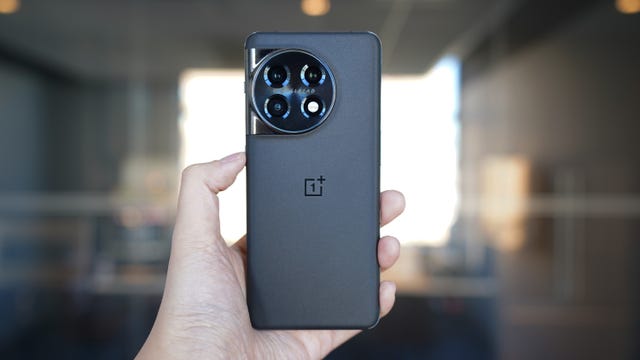
A slow-charging phone can be a real pain point, especially if you're always on the go. That's why the OnePlus 11 carves out its own best category, beating Apple, Google, and even Samsung when it comes to charging speed. The latest model comes with 100W SuperVooc fast charging or 80W in the US, which is still great.
For reference, the highest-end iPhone 14 Pro Max has a charging speed limit of 30W and Samsung's just-released Galaxy S23 Ultra caps out at 45W. From ZDNET's testing and comparisons, both of those devices take a least an hour to go from 0% to 75% battery, falling noticeably short of the OnePlus 11's numbers.
In less than 27 minutes, the OnePlus can go from empty to full. That charging speed, and the fact that OnePlus includes its proprietary charger in the box, put it a step above the rest.
The best part is that the rest of the phone is no slouch either; you're getting a 6.7-inch AMOLED display with a 120Hz refresh rate, the latest Snapdragon 8 Gen 2 processor, a 5,000mAh dual-cell battery, and a competitive triple-camera array that gets the job done. In total, OnePlus is charging you a starting rate of $699, which is just as good of a value pickup as the best budget smartphone on this list.
Review: OnePlus 11
Asus Zenfone 10 specs: Screen size: 5.9 inches | Storage: Up to 512GB | Processor: Qualcomm Snapdragon 8 Gen 2 | Panel type: AMOLED | Color: Black, Blue, Hazel, White, Red | Battery life: 4,300mAh | Water and dust resistant: IP68
There's no denying that, over the past five years, smartphones have become more and more unwieldy. Apple now offers Plus and Max-sized iPhones, Samsung has an "Ultra" beast, and even Google has a foldable that opens up to 7.6 inches. On the other end of the spectrum sits the Asus Zenfone 10, a device that deviates from the norm in favor of ergonomics and in-hand comfort, and the decision pays off.
Like last year's Asus Zenfone 9, which I called "the iPhone Mini alternative for Android enthusiasts," the newest model features a compact 5.9-inch AMOLED display, all the power you'd need in a modern-day phone thanks to the Qualcomm Snapdragon 8 Gen 2 chipset, and two capable cameras on the rear.
The battery life on the Asus holds up surprisingly well, too, with my review unit recording nearly two days of usage before hitting 0%. Some smaller yet significant details to note include the 3.5mm headphone jack on top, a physical side-mounted fingerprint sensor, and a texturized back cover that looks and feels great in the hand.
Review: Asus Zenfone 10
Our pick for the best phone overall is the Samsung Galaxy S23 Ultra. It features everything you could want from a smartphone including a large display, four cameras that can shoot 200MP photos and 8K video, up to 1TB of storage, a built-in S Pen for writing and drawing, and a 5,000mAh battery powering the system. Here's how the S23 Ultra fares with the rest of our top picks.
Best phone model | Price | Storage | Screen size | Battery size | Processor |
Samsung Galaxy S23 Ultra | $1,199 | Up to 1TB | 6.8 inches | 5,000mAh | Qualcomm Snapdragon 8 Gen 2 for Galaxy |
iPhone 14 Pro Max | $1,099 | Up to 1TB | 6.7 inches | 4,323mAh | A16 Bionic |
Google Pixel 7 Pro | $899 | Up to 512GB | 6.7 inches | 5,000mAh | Google Tensor G2 |
Motorola Razr Plus | $999 | 256GB | 3.6 inches and 6.9 inches | 3,800mAh | Qualcomm Snapdragon 8+ Gen 1 |
Samsung Galaxy A54 5G | $449 | 128GB | 6.4 inches | 5,000mAh | Exynos 1380 |
OnePlus 11 | $699 | Up to 256GB | 6.7 inches | 5,000mAh | Qualcomm Snapdragon 8 Gen 2 |
Asus Zenfone 10 | $699 | Up to 512GB | 5.9-inch | 4,300mAh | Qualcomm Snapdragon 8 Gen 2 |
Choosing a phone can be a daunting task. But having a list of your must-have features can go a long way toward narrowing down your options. If you're a mobile professional or travel a lot for work, you'll want to choose a phone that can provide you with at least a full day of use on a full battery as well as both LTE and Wi-Fi connectivity.
If you're looking for your teen's first smartphone, a budget-friendly and less feature-heavy option may be better to prevent overspending as well as misuse. And if you're a content creator or other creative professional, you'll want a phone with an excellent front and rear camera to capture photos and videos for your social media feed.
Choose this best phone... | If you want... |
Samsung Galaxy S23 Ultra | A no-compromise smartphone that virtually any type of user can take advantage of. It's the only 2023 smartphone with a built-in stylus. |
iPhone 14 Pro Max | The best iPhone money can buy. It has a large screen, the longest-lasting battery out of all the models, and a toolbox of a camera system. |
Google Pixel 7 Pro | A flagship camera experience at your fingertips. The Pixel 7 Pro differentiates itself with a slew of AI-powered camera tricks like Magic Eraser and Photo Unblur. |
Motorola Razr Plus | A flip-style foldable that's both compact and performant. With a large 3.6-inch external display and the market's first dust-resistant build, this is the foldable to buy for most people. |
Samsung Galaxy A54 5G | A more budget-friendly smartphone that doesn't compromise on performance and battery life. The A54 5G is also eligible for up to five years of software and security updates, besting that of any phone of a similar price. |
OnePlus 11 | A phone that lasts long and charges from 0% to 100% in just 30 minutes. The OnePlus 11 is quietly good value, too, starting at $699. |
Asus Zenfone 10 | A compact phone that's easy to pocket but doesn't compromise on performance and specs. The Zenfone 10 is also competitively priced, starting at $699. |
The process to make our phone selections includes real-world testing and researching about the phones for weeks, consulting with colleagues, industry experts, and analysts who also have hands-on experience with the smartphones, and then selecting the best from all of the available choices.
Ultimately, we weigh in the following aspects when curating this list:
Design: There's only so much you can do with a slab design, but size differences, material choices, color options, and even the ability to bend a screen in half give shoppers enough diversity to have a preference. That's why we have a recommendation for every form factor.
Performance: For many, smartphones are the center of our lives, which means the best ones are performant and can handle most, if not all, tasks you throw at them.
Camera: Arguably the most valuable feature of a smartphone; the consistency and reliability of a camera system can make or break the overall mobile experience. We test every device in broad daylight and in the darkest of nights when finalizing this list.
Battery: Every option in this guide should last you at least a day of moderate use. We also take into consideration what devices support fast charging and/or wireless charging.
Value: Price points are noted, but the most important thing with buying a phone is getting your money's worth. With these picks, you can rest assured that you're getting the best bang for your buck.
It's debatable between the iPhone 14 Pro, Google Pixel 7 Pro, and Samsung Galaxy S23 Ultra. For long-distance shots, Samsung's 200MP rear camera with 100x Space Zoom can capture subjects as far out as the moon. For point-and-shoot pictures and a rather simplified (but effective) camera experience, Google's Pixel phones have always been at the top. If you're a videographer at heart, then the iPhone 14 Pro, with Cinematic mode and Action mode, makes for an excellent tool to get the shots you need.
Also: Google Pixel 7 Pro vs iPhone 14 Pro: Which flagship should you buy?
The average phone battery gives you about 22 hours of use on a full charge, which is great for staying connected on your commutes, work flights, and at home in the evenings. But that's just the average, actual use time varies by phone model and by what you're using your phone for.
For example, the latest iPhone 14 Pro Max boasts a 29-hour battery life. But you'll most certainly get less than that if you habitually scroll through social media or stream video and music. And the Samsung Galaxy Z Flip 4 has just a nine-hour battery life, which is further reduced by streaming, social media, and making calls.
Most smartphones have a base storage capacity of 128GB, which is plenty of space for average users to download apps and music, take photos, and shoot videos. However, if you're a mobile or creative professional, you'll need more space. Many smartphones have expanded storage options up to 512GB or even 1TB, and you can always sync your phone to your preferred cloud storage service to free up local storage space.
If you're in the market for a new smartphone, there are tons of options out there. Whether you're looking to upgrade or get your first smartphone, Apple, Samsung, and OnePlus have great choices.