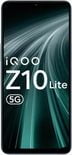
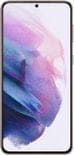
Samsung Galaxy S21 vs Apple iPhone SE (2022)
70
out of 100
VS
67
out of 100
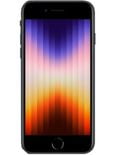
Here we compared two smartphones: the 6.2-inch Samsung Galaxy S21 (with Exynos 2100) that was released on January 14, 2021, against the Apple iPhone SE (2022), which is powered by Apple A15 Bionic and came out 14 months after. On this page, you will find tests, full specs, strengths, and weaknesses of each of the devices.
Key differences
Reasons to consider the Samsung Galaxy S21
- Comes with 1982 mAh larger battery capacity: 4000 vs 2018 mAh
- Thinner bezels – 21.8% more screen real estate
- Higher display refresh rate – 120 Hz
- Has a 1.5 inches larger screen size
- Has 2x more RAM: 8GB versus 4GB
- Better camera quality (According to DxOMark rating)
- Delivers 33% higher peak brightness (864 against 652 nits)
- The rear camera has a 1.1x optical zoom
- Waterproof body (IP68 classification)
- Slow-motion recording at 960FPS
- Uses a faster type of memory: LPDDR5 2750 MHz
- Has an ultra-wide angle camera lens
- Has 2 SIM card slots
Reasons to consider the Apple iPhone SE (2022)
- 45% better performance in AnTuTu Benchmark (1171K versus 806K)
- Apple releases software updates and supports their phones a few years longer than Samsung
- The phone is 1-year and 2-months newer
- 68% faster in single-core GeekBench 6 test: 2247 and 1340 points
- Weighs 25 grams less
Review
Display
Screen quality, color accuracy, brightness
Camera
Photo and video recording quality
Performance
CPU and memory performance (apps, system)
Gaming
Capabilities for playing modern games
Battery
Battery life, charging type and speed
Connectivity
Networks, ports, data transmission
Value for money
Tests and specifications
Comparison table of technical specifications and testsDisplay
| Type | Dynamic AMOLED | IPS LCD |
| Size | 6.2 inches | 4.7 inches |
| Resolution | 1080 x 2400 pixels | 750 x 1334 pixels |
| Aspect ratio | 20:9 | 16:9 |
| PPI | 421 ppi | 326 ppi |
| Refresh rate | 120 Hz | 60 Hz |
| Adaptive refresh rate | No | No |
| Max rated brightness | 800 nits | 625 nits |
| HDR support | Yes, HDR10+ | Yes, Dolby Vision |
| Screen protection | Gorilla Glass Victus | Tempered glass |
| Screen-to-body ratio | 87.2% | 65.4% |
| Display features |
- DCI-P3
- Always-On Display |
- DCI-P3 |
| RGB color space | 99.5% | 99.9% |
| PWM | 240 Hz | - |
| Response time | 5 ms | 38 ms |
| Contrast | ∞ Infinity | 1655:1 |
Peak brightness test (auto)
Design and build
| Height | 151.7 mm (5.97 inches) | 138.4 mm (5.45 inches) |
| Width | 71.2 mm (2.8 inches) | 67.3 mm (2.65 inches) |
| Thickness | 7.9 mm (0.31 inches) | 7.3 mm (0.29 inches) |
| Weight | 169 g (5.96 oz) | 144 g (5.08 oz) |
| Waterproof | IP68 | IP67 |
| Rear material | Plastic | Glass |
| Frame material | Metal | Metal |
| Colors | White, Gray, Pink, Purple | White, Black, Red |
| Fingerprint scanner | Yes, in-display | Yes, in-button |
Screen-to-body ratio
Performance
| Chipset | Samsung Exynos 2100 | Apple A15 Bionic |
| Max clock | 2900 MHz | 3223 MHz |
| CPU cores | 8 (1 + 3 + 4) | 6 (2 + 4) |
| Architecture |
- 4 cores at 2.2 GHz: Cortex-A55
- 3 cores at 2.81 GHz: Cortex-A78 - 1 core at 2.91 GHz: Cortex-X1 |
- 4 cores at 2.02 GHz: Blizzard
- 2 cores at 3.23 GHz: Avalanche |
| Lithography process | 5 nanometers | 5 nanometers |
| Graphics | Mali-G78 MP14 | Apple A15 GPU |
| GPU shading units | 896 | 640 |
| GPU clock | 854 MHz | 1338 MHz |
| FLOPS | ~1530.4 GFLOPS | ~1712.6 GFLOPS |
Benchmarks
Geekbench 6 (Single-Core)
Geekbench 6 (Multi-Core)
AnTuTu Benchmark 10
| CPU | 150223 | 268130 |
| GPU | 340353 | 325843 |
| Memory | 151885 | 182253 |
| UX | 158712 | 388874 |
| Total score | 806977 | 1171074 |
3DMark Wild Life Performance
| Max surface temperature | 38.9 °C | 46.2 °C |
| Stability | 66% | 72% |
| Graphics test | 34 FPS | 47 FPS |
| Graphics score | 5714 | 7914 |
PCMark 3.0
| Web score | 12591 | - |
| Video editing | 7113 | - |
| Photo editing | 29385 | - |
| Data manipulation | 10438 | - |
| Writing score | 16561 | - |
Memory
| RAM size | 8 GB | 4 GB |
| Memory type | LPDDR5 | LPDDR4X |
| Memory clock | 2750 MHz | - |
| Channels | 2 | 2 |
| Storage size | 128, 256 GB | 64, 128, 256 GB |
| Storage type | UFS 3.1 | NVMe |
| Memory card | No | No |
Software
| Operating system | Android 11 (Can be upgraded to Android 13) | iOS 15.3 (Can be upgraded to iOS 17) |
| ROM | One UI 5.1 | - |
| OS size | 28.1 GB | 12 GB |
Battery
| Capacity | 4000 mAh | 2018 mAh |
| Max charge power | 25 W | 20 W |
| Battery type | Li-Ion | Li-Ion |
| Replaceable | No | No |
| Wireless charging | Yes (15 W) | Yes |
| Reverse charging | Yes, (wireless) | No |
| Fast charging | Yes (55% in 50 min) | Yes (61% in 30 min) |
| Full charging time | 1:35 hr | 1:18 hr |
| Web browsing | 07:27 hr | 09:55 hr |
| Watching video | 12:26 hr | 08:38 hr |
| Gaming | 04:31 hr | 03:18 hr |
| Standby | 92 hr | 93 hr |
General battery life
Camera
| Matrix | 12 megapixels | 12 megapixels |
| Image resolution | 4000 x 3000 | 4032 x 3024 |
| Zoom | Optical, 1.1x | Digital |
| Flash | Dual LED | Quad LED |
| Stabilization | Optical | Optical |
| 8K video recording | Up to 24FPS | No |
| 4K video recording | Up to 60FPS | Up to 60FPS |
| 1080p video recording | Up to 60FPS | Up to 60FPS |
| Slow motion | 960 FPS (720p) | 240 FPS (1080p) |
| Angle of widest lens | 120° | - |
| Lenses | 3 (12 MP + 64 MP + 12 MP) | 1 (12 MP) |
| Wide (main) lens |
- 12 MP
- Aperture: f/1.8 - Focal length: 26 mm - Pixel size: 1.8 micron - Sensor: 1/1.76", Sony IMX555 (Exmor-RS CMOS) - Phase autofocus (Dual Pixel) - Optical stabilization |
- 12 MP
- Aperture: f/1.8 - Pixel size: 1.22 micron - Phase autofocus - Optical stabilization |
| Telephoto lens |
- 64 MP
- Aperture: f/2.0 - Focal length: 28 mm - Pixel size: 0.8 micron - Sensor: 1/1.72", Samsung Bright S5KGW2 (ISOCELL Plus CMOS) - Phase autofocus (Dual Pixel) - Optical stabilization |
- |
| Ultra-wide lens |
- 12 MP
- Aperture: f/2.2 - Focal length: 13 mm - Pixel size: 1.4 micron - Sensor: 1/2.55", Sony IMX563 (Exmor-RS CMOS) - Phase autofocus (Dual Pixel) |
- |
| Camera features |
- Bokeh mode
- Pro mode - RAW support |
- Bokeh mode
- Pro mode |
| Samples | Photo samples of Samsung Galaxy S21 from DxOMark | Photo samples of Apple iPhone SE (2022) from DxOMark |
| Megapixels | 10 megapixels | 7 megapixels |
| Image resolution | 3872 x 2592 | 3088 x 2320 |
| Aperture | f/2.2 | f/2.2 |
| Focal length | 26 mm | - |
| Pixel size | 1.22 microns | - |
| Sensor type | CMOS | - |
| Sensor size | 1/3.24" | - |
| Video resolution | 2160p (4K) at 60 FPS | 1080p (Full HD) at 30 FPS |
DxOMark camera tests
Photo quality
Video quality
Generic camera score
Connectivity
| Wi-Fi standard | Wi-Fi 6 (802.11 a/b/g/n/ac/ax) | Wi-Fi 6 (802.11 a/b/g/n/ac/ax) |
| Wi-Fi features |
- Dual Band
- Wi-Fi MiMO - Wi-Fi Direct - Wi-Fi Hotspot - Wi-Fi Display |
- Dual Band
- Wi-Fi MiMO - Wi-Fi Direct - Wi-Fi Hotspot - Wi-Fi Display |
| Bluetooth version | 5 | 5 |
| Bluetooth features | LE, A2DP | LE |
| USB type | USB Type-C | - |
| USB version | 3.2 | 2 |
| USB features |
- Charging
- USB-Storage mode - USB-Host mode - OTG |
- Charging
- USB-Storage mode - OTG |
| GPS | GPS, GLONASS, Beidou, Galileo | GPS, GLONASS, Beidou, Galileo, QZSS |
| NFC * | Yes | Yes |
| Infrared port | No | No |
| Number of SIM * | 2 | 1 |
| Type of SIM card | Nano | Nano |
| Multi SIM mode | Standby | - |
| eSIM support * | Yes | Yes |
| Hybrid slot | No | No |
| LTE Cat * | 24 | - |
| 5G support | Yes | Yes |
Sound
| Speakers | Stereo | Stereo |
| Headphone audio jack | No | No |
| FM radio | No | No |
| Dolby Atmos | Yes | Yes |
Speakers test
Max loudness
Other
| Category | Flagship | Mid-range |
| Announced | January 2021 | March 2022 |
| Release date | February 2021 | March 2022 |
| SAR (head) | 0.46 W/kg | - |
| SAR (body) | 1.51 W/kg | - |
| Sensors |
- Hall-effect sensor
- Barometer - Proximity sensor - Gyroscope - Accelerometer - Ambient light sensor - Compass - Fingerprint |
- Barometer
- Proximity sensor - Gyroscope - Accelerometer - Ambient light sensor - Compass - Fingerprint |
| Bundled charger | - | Not included |
*
Disclaimer!
NFC, GSM network support, and some other specs can be different depending on the country.
Conclusion
If the display, camera, battery life, and connectivity are more important to you, then choose the Samsung Galaxy S21 . But if the performance, gaming, and software are more of a priority – go for the Apple iPhone SE (2022) .